For a long time, ChatGPT was regarded as the spearhead of AI systems. As the first major product on the market – and with Google struggling to get off the ground in the early stages – it certainly deserved that title. I’ve explored why this is now changing and why Google will ultimately come out on top in a presentation for the OMT Summit in Düsseldorf, which I’ve summarised here in this blog post.
In December 2022, a “Code Red” was declared at Google. The public narrative was clear: Google was caught in the innovator’s dilemma and was being rendered obsolete by the emerging “answer engine” ChatGPT. Three years later, in December 2025, the tide has turned dramatically. Internal memos at OpenAI are now warning of a “Code Red”, as ChatGPT’s growth stagnates whilst infrastructure costs skyrocket.
To understand, beyond the headlines, how Google has regained this lead, one must measure its development against three key pillars: usage (who has access?), economics (who can afford it?) and integration (who owns the data?).
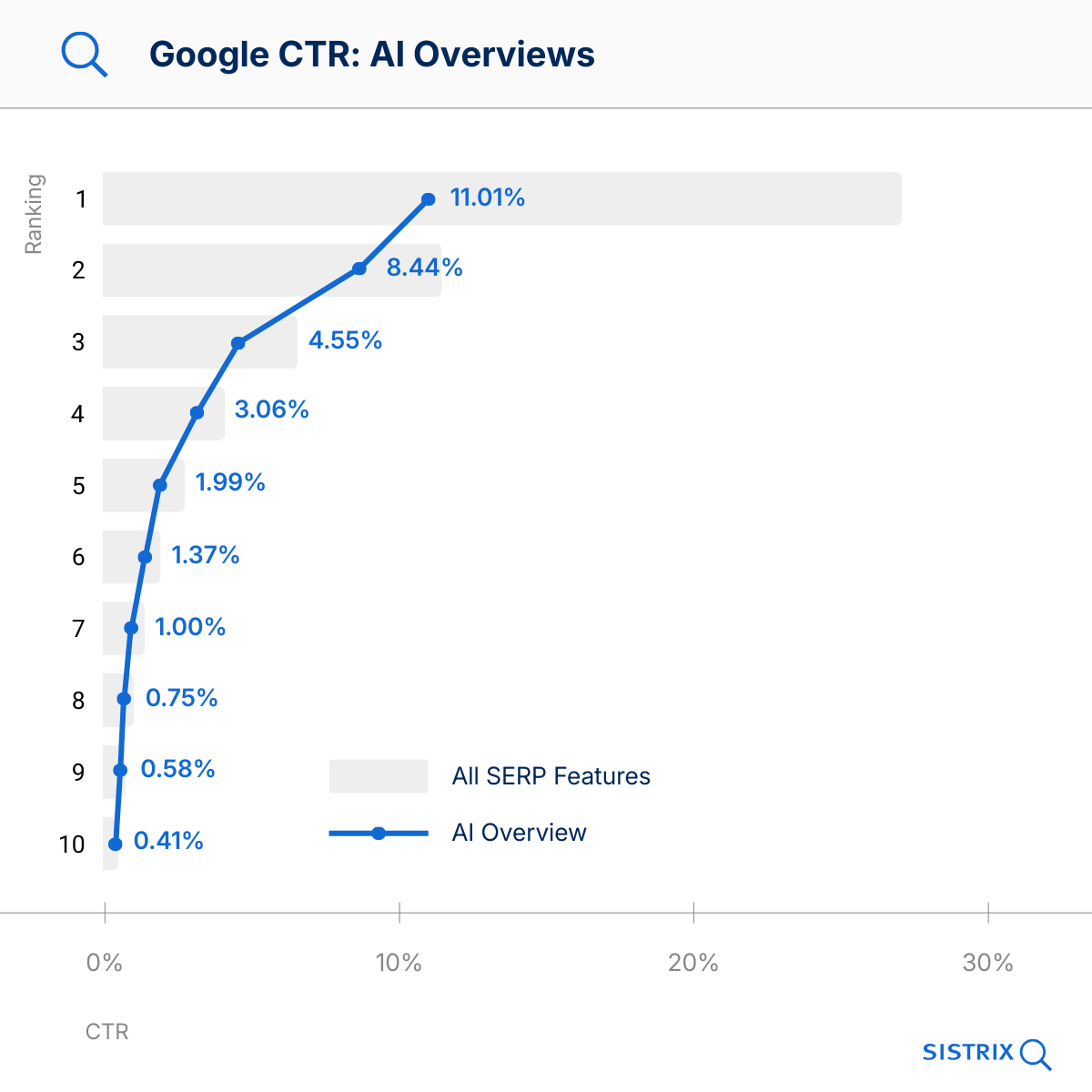
But even if Google wins the AI race, not everything will remain the same. Already, the integration of AI Overviews has reduced click-through rates in Germany by up to 60%. Anyone wishing to remain visible now must not only optimise technically, but above all create content that is relevant.
Usage: The battle for access
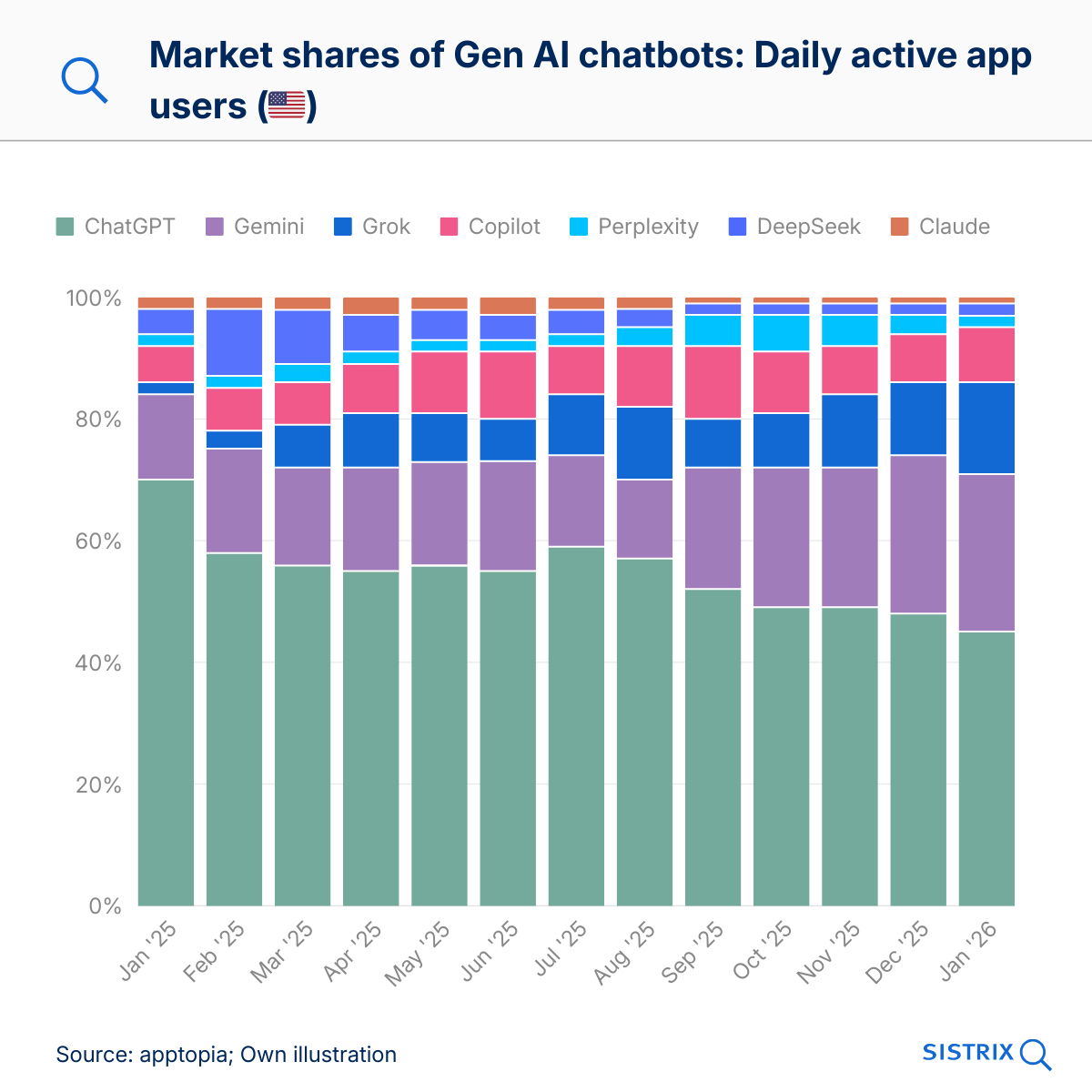
Success in AI search depends largely on direct access to the user. Google dominates the field primarily because its AI Overviews and AI Mode are seamlessly integrated into standard search. Whilst competitors struggle to establish new habits, Google meets users where they are in their established search behaviour. Traffic data also shows a clear trend here:
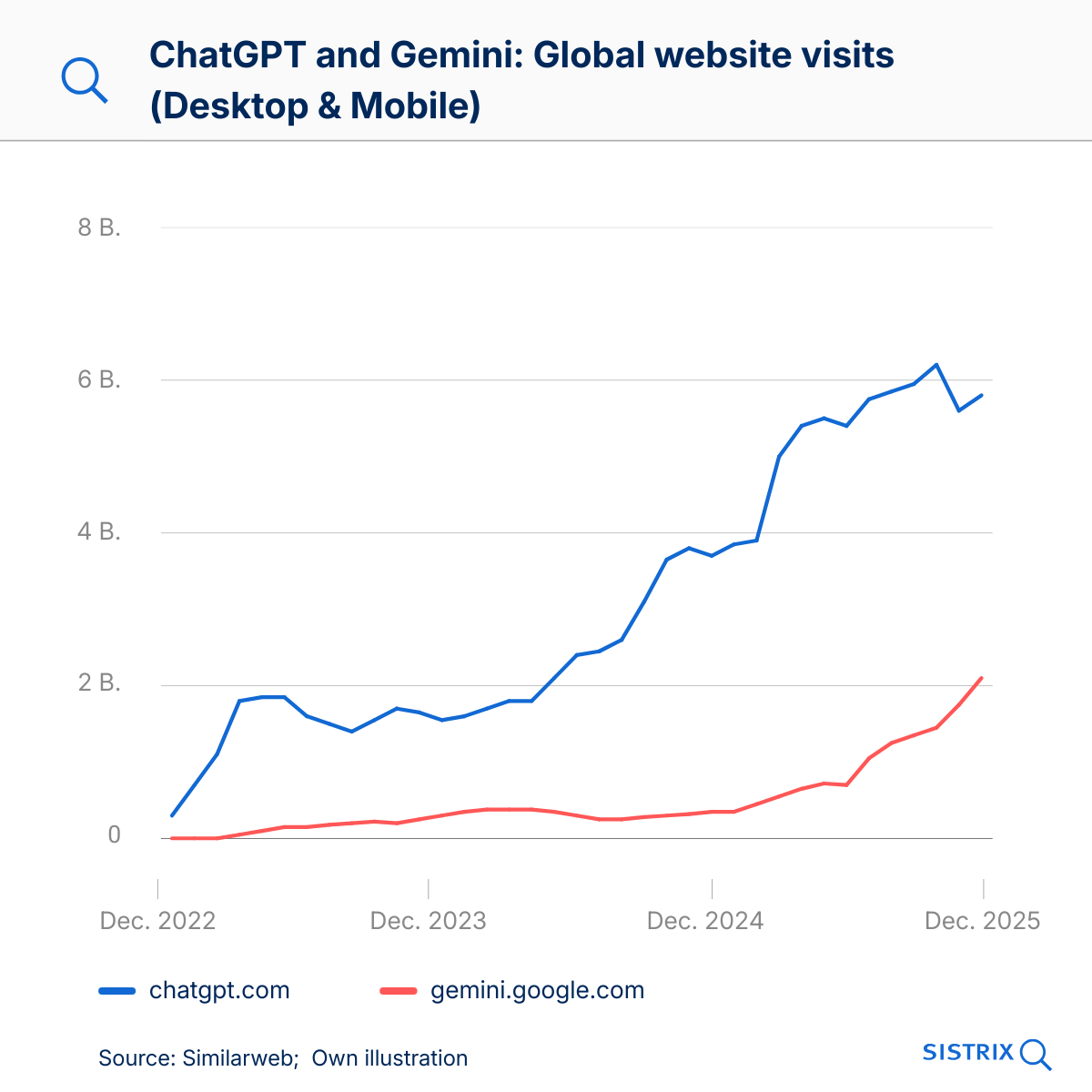
- Web traffic growth: Whilst ChatGPT has plateaued at around 6 billion monthly visits, Gemini’s traffic tripled in the second half of 2025.
- Android integration: Gemini benefits from being pre-installed on new Android phones and receiving automatic updates on older devices, whereas ChatGPT must be installed manually.
- User base: By mid-2025, AI Overviews in search results had already reached over 2 billion monthly users.
Incidentally, the fact that Google so rarely mentions these 2 billion AI users has less to do with polite reserve than with competition authorities and regulation. - AI Mode: In the US and India, over 100 million monthly active users are already using Google Search’s dedicated AI mode.
Google AI Mode has, from the outset, become around three times as relevant as the specialist AI search engine Perplexity. 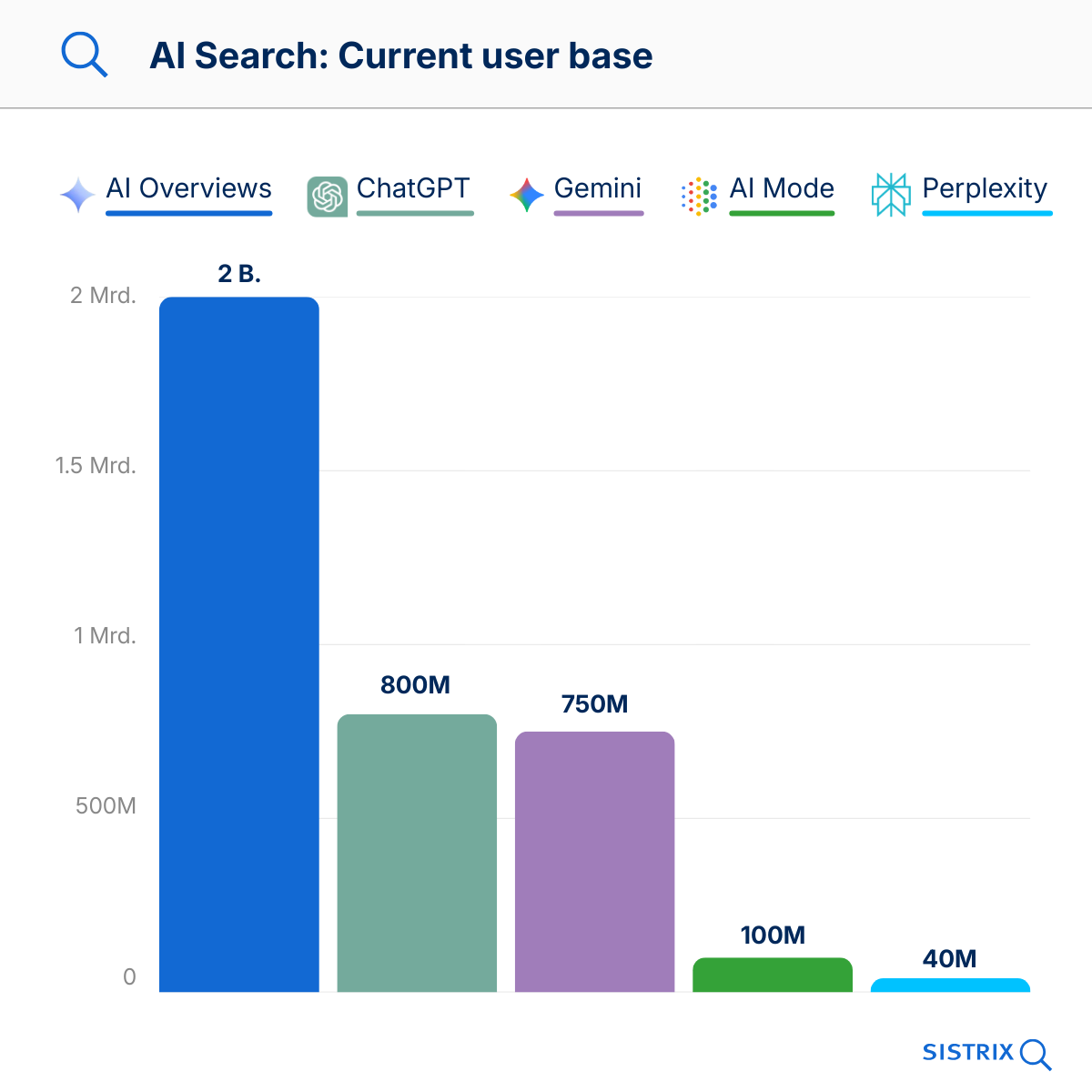
Economics: The massive cost advantage
Far more significant than the battle for access to various systems is the simple cost advantage. Google holds advantages in both technical infrastructure and data acquisition that currently appear insurmountable for OpenAI.
- Hardware advantage: OpenAI primarily uses NVIDIA GPUs in Microsoft Azure data centres, with NVIDIA achieving gross margins of 70% to 80%. These GPUs not only have to be purchased externally at a high cost, but also require ongoing operational expenditure.
- In-house infrastructure: Google relies on its own TPUs, which are operated at almost cost price and are significantly more energy-efficient.
External companies (Anthropic with Claude AI, Midjourney) are now also capitalising on this cost advantage and are increasingly relying on Google’s hardware. - Data acquisition: Whilst OpenAI has to enter into expensive contracts with publishers, Google, as a traffic provider, has always obtained data free of charge.
Overall, it is currently estimated that Google enjoys a cost advantage of between three and five times that of its competitors.
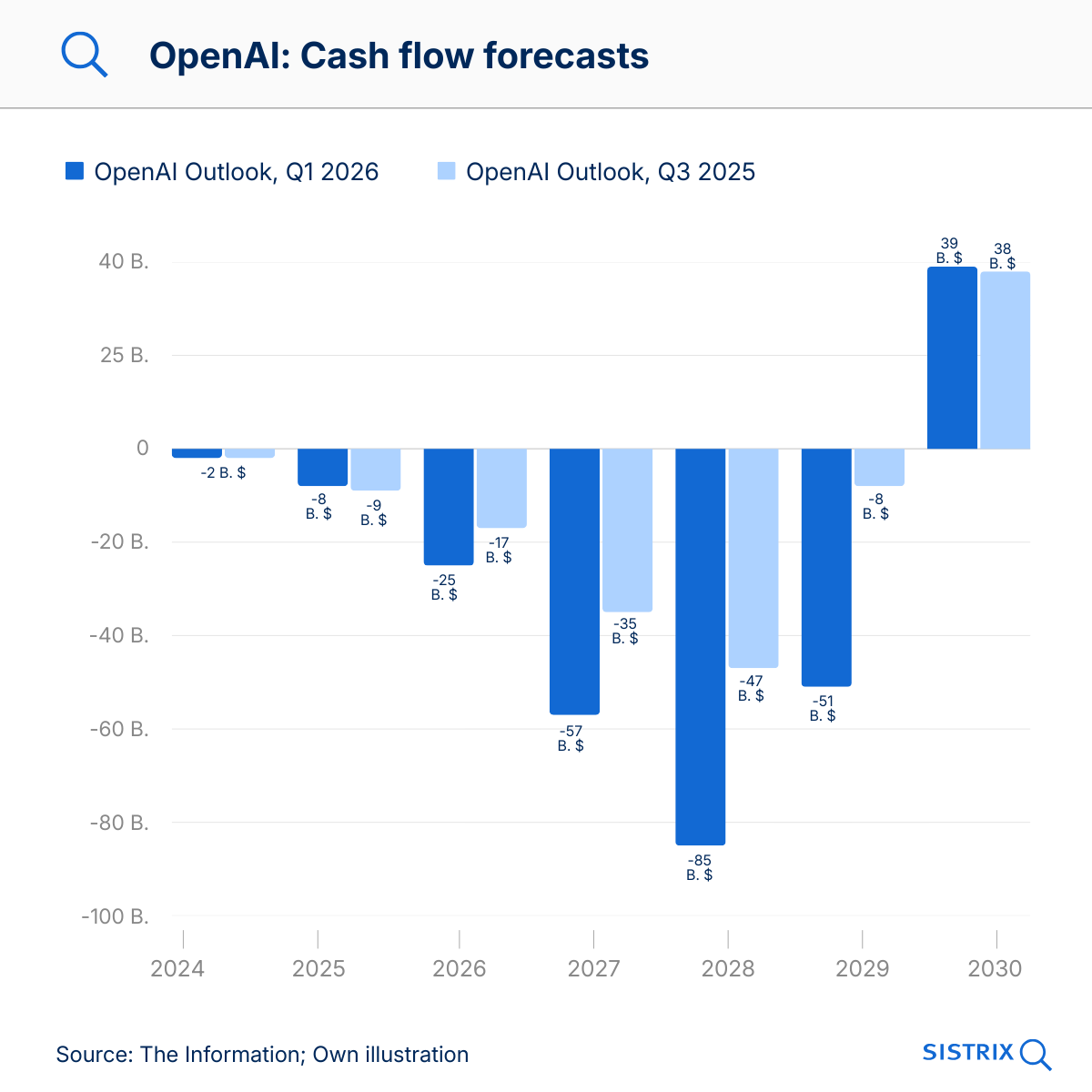
OpenAI faces massive financial challenges. According to the latest forecasts, OpenAI will require significantly more funding than previously estimated: a total of 111 billion US dollars by 2030. OpenAI has now even gone so far as to resort to what it describes as a “last resort” and integrate advertising into ChatGPT.
Integration: The Unbeatable Ecosystem Advantage
Alongside usability and cost-effectiveness, integration is the third, often overlooked dimension. This is where Google’s true structural advantage lies: Gemini is already natively integrated into virtually all Google products, from Gmail and Google Docs & Sheets to YouTube and Google Photos, right through to Calendar and Maps.
This deep integration into the daily lives of billions of users is practically impossible for OpenAI to replicate. Whilst Gemini is already ‘simply there’ where people work and communicate, connecting ChatGPT to the Google ecosystem is an administrative feat (if one were to attempt it). The “Admin-Managed Setup” for Google Workspace alone requires over 30 manual steps, the activation of various APIs (Drive, Activity, Admin SDK) and complex technical configurations in the Google Cloud Console. For the general public, this is not a realistic option.
Furthermore, this lead is cemented by the Apple deal: Apple is using Gemini as the technological foundation for future ‘Apple Intelligence’ features and a personalised Siri. This secures Google’s access to the next major hardware ecosystem, whilst OpenAI remains effectively excluded.
Google wins: What this platform victory means
Google’s superiority in terms of usage, cost-effectiveness and integration leads to a clear conclusion: Google is winning the battle for dominance as an AI platform. Google has access to users, the most efficient hardware and the deepest data integration.
But for website operators and SEOs, this victory is a double-edged sword. The fact that Google is winning does not mean that everything will remain the same for publishers. On the contrary: the victory of the Google platform comes at the expense of the traditional click.
For despite Google’s victory over the ‘new’ search systems, almost everything is changing for organic search. The proliferation of AI Overviews is having a massive impact on click-through rates (CTR).
- Prevalence: In German-language search results (SERPs), AI Overviews appear for just over 20% of all keywords.
- Click loss at position 1: Whilst on average over 27% of searchers click on the first organic result, this figure drops to just 11% for searches featuring an AI Overview. This equates to a click loss of almost 60% for the top position.
- Overall market: An average search results in a click in 57% of cases; for searches featuring an AI overview, this figure drops to 33%.
- Cumulative effect: For the German market, this represents a loss of around 265 million organic clicks per month.
Although, according to Google, AI summaries generate around 10% more search queries overall, the number of organic clicks per search is decreasing.
Strategic implications for SEO
Search is becoming more diverse, and to remain successful in this environment, it is important to adapt your strategy. Anyone wishing to attract organic clicks will need to offer more in future:
- Uniqueness: Content must stand out in all formats (text, images, video, audio).
- Depth: It is essential to offer depth of content that cannot be captured in a brief AI response.
- Authority: Expertise, editorial review and credibility are becoming decisive ranking factors.
The goal of SEO remains organic visibility in search engines. However, as platforms diversify, the key performance indicators are shifting. The priority is moving away from traditional rankings and clicks towards mentions and citations.