
Google AI Mode replaces ten blue links with a singular summarised response. The new currency of this system is citations – clickable sources that are at the core of the AI’s response. What do the top 100 most-cited websites tell us about how to achieve that success?
- Mention vs. Citation: an important distinction
- Why citations should be your goal
- Our method: the data behind this analysis
- What do the most cited websites have in common? The three pillars of success
- Pillar 1: Answer-centric content design
- Pillar 2: explicit authority and recency
- Pillar 3: strict machine readability
- Conclusion: This is how you Optimise your Content for AI Citations
With this change in search responses the playing field for content creators and SEOs has fundamentally shifted. The goal is no longer to be on page 1. Now, it’s all about being present in the response. The objective is to be a source that the AI will choose as an authority for its answer.
We analysed the 100 websites that are cited the most in Google AI Mode. Our investigation included health giants like Cleveland Clinic and the NHS, tech support from Microsoft and Google, as well as data-centric portals like Check24 and CNET.
The outcome is surprisingly clear: what counts is not the topic or budget; the common ground is the structure.
Web pages that are cited by AIs are not linear texts, they are databases of responses. They use a clear structure to signal to the AI: “I am a trustworthy, up-to-date source and this is your answer, already perfectly segmented.“
In this article, we will decipher this structure. We will show you the three pillars that make up the base for AI-friendly content and at the end, we’ll give you a concrete checklist that you can use to optimise your own content to become the next cited source.
Mention vs. Citation: an important distinction
Before we dive into the analysis, we have to clarify two central terms for the AI Mode: citation and mention.
A citation is the small link symbol that the AI Mode places at the end of a sentence or paragraph. It works similarly to a footnote and indicates which website was used as a source for the previously given information.
A mention (brand reference), on the other hand, is the referencing by name of your brand, product or website directly in the text of the AI response (e.g. “we recommend experts such as CNET…“)
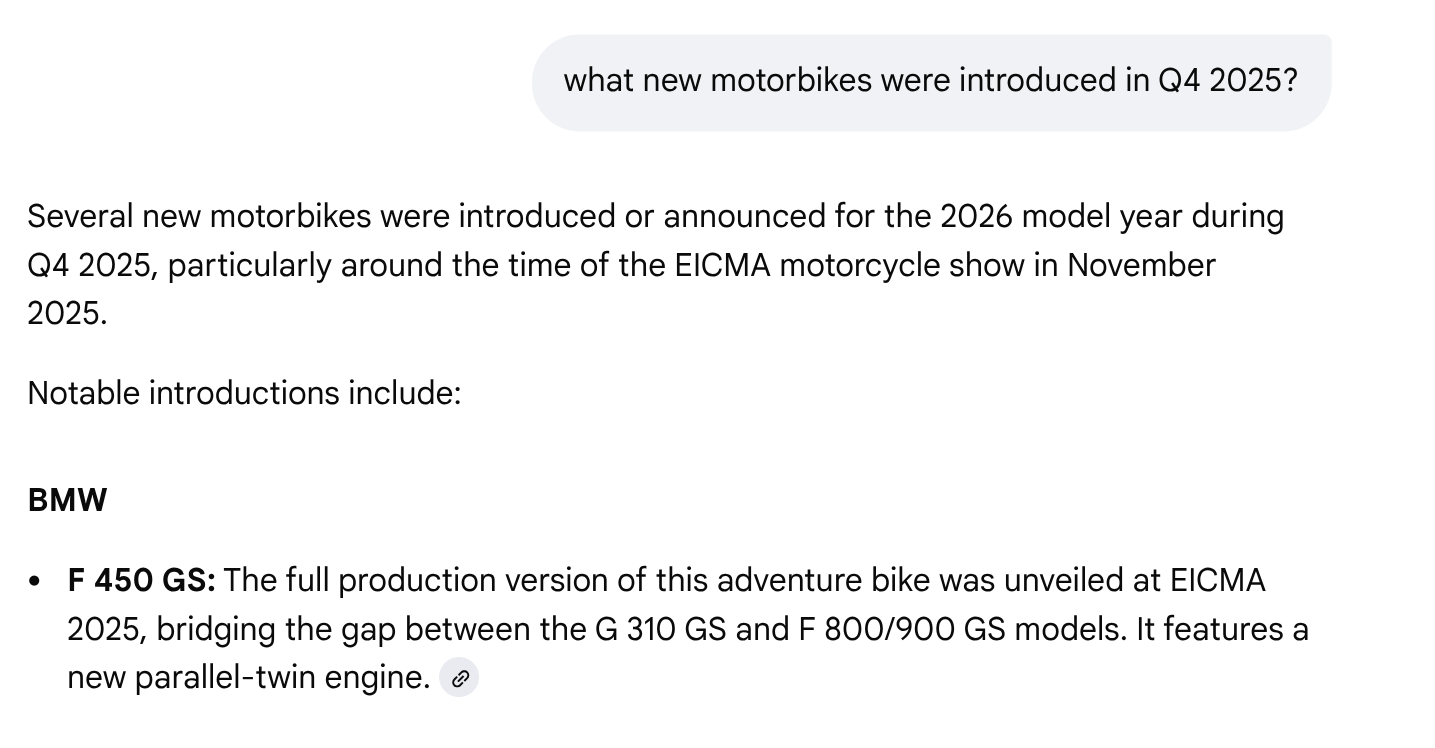
While a mention oftentimes presumes an existing high brand authority, the citation is the fundamental, technically optimised way to be recognised as a trustworthy source. In this article we will thus concentrate fully on how to achieve these citations.
Why citations should be your goal
Being part of a citation is more than a nice-to-have, it is essential due to these two strategic reasons:
- You are actively taking part in forming the AI response: This is the most important point. If you are being cited, your facts, your data and your tutorials are becoming the basis for a text that the AI is generating. This way, you are directly influencing the content that the user sees first. If your page, for example, delivers the best tips for losing weight, the chances are high that the chatbot will reflect exactly those tips.
- They generate highly qualified traffic: A user who clicks on a source is already highly qualified. They are searching for a more in-depth view or evidence for the given information and consider your page in this moment to be a trustworthy source that was already validated by the AI. This click is one of the most qualified leads that you can get from a search engine.
Our method: the data behind this analysis
For this report we made no assumptions. The results are based on data from the new version of SISTRIX for AI. For current SISTRIX users, access to this tool is free during the beta phase.
We analysed millions of real user prompts and the resulting AI Mode responses based on a wide international database. From this giant data set, we distilled the 100 websites that were cited the most across all topics and countries.
These 100 URLs, that you can view in a full list, make up the basis of the three pillars and the checklist that we are presenting in this article.
What do the most cited websites have in common? The three pillars of success
Our analysis showed that the most cited websites were not chosen by coincidence. They all share the same DNA that can be divided into three core areas (pillars). It isn’t about what they say but primarily how they structure their content for an AI.
Pillar 1: Answer-centric content design
Content that is citable for AI consists of clearly segmented, small response blocks that the AI can extract directly and replicate without having to put in effort for interpretation.
This is the most obvious commonality: successful sites do not include walls of texts. They are devised as a collection of response blocks. The content is separated into the smallest possible logical units that the AI can directly extract and use as a response.
These building blocks usually take on one of four main formats:
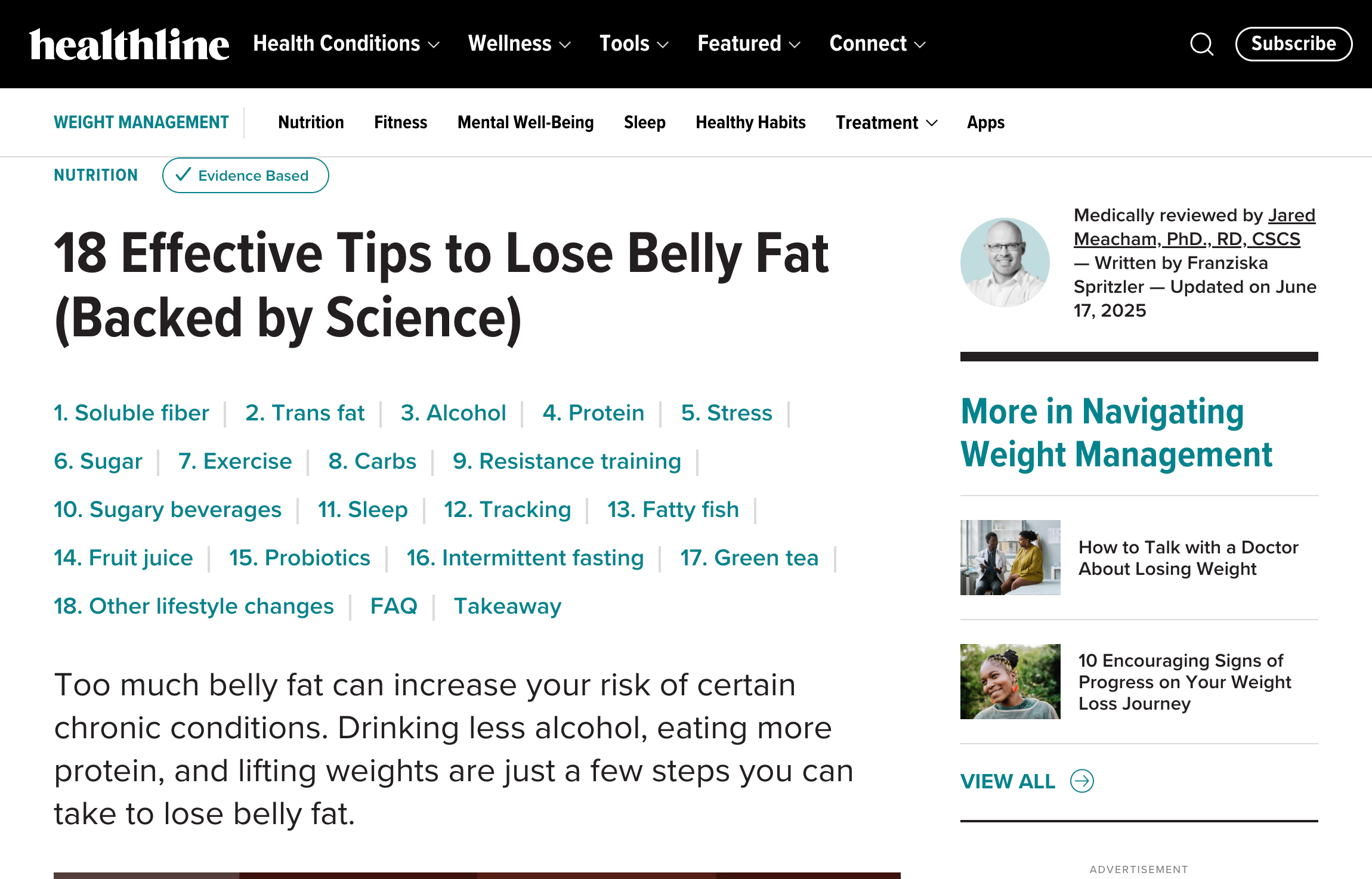
- The Listicle: The most common format in our analysis. The article is built up as a ranking or collection of tips (for example, “The 10 best...”, “6 ways, to…“). This structure is defined by numbered headlines, which makes the extraction for an AI easier.
- Example: The guidebook by healthline.com (“18 Tips to Lose Belly Fat”) or cnet.com (“Best Free Antivirus”) use
<h2>-tags for each tip or product on the list.
- Example: The guidebook by healthline.com (“18 Tips to Lose Belly Fat”) or cnet.com (“Best Free Antivirus”) use
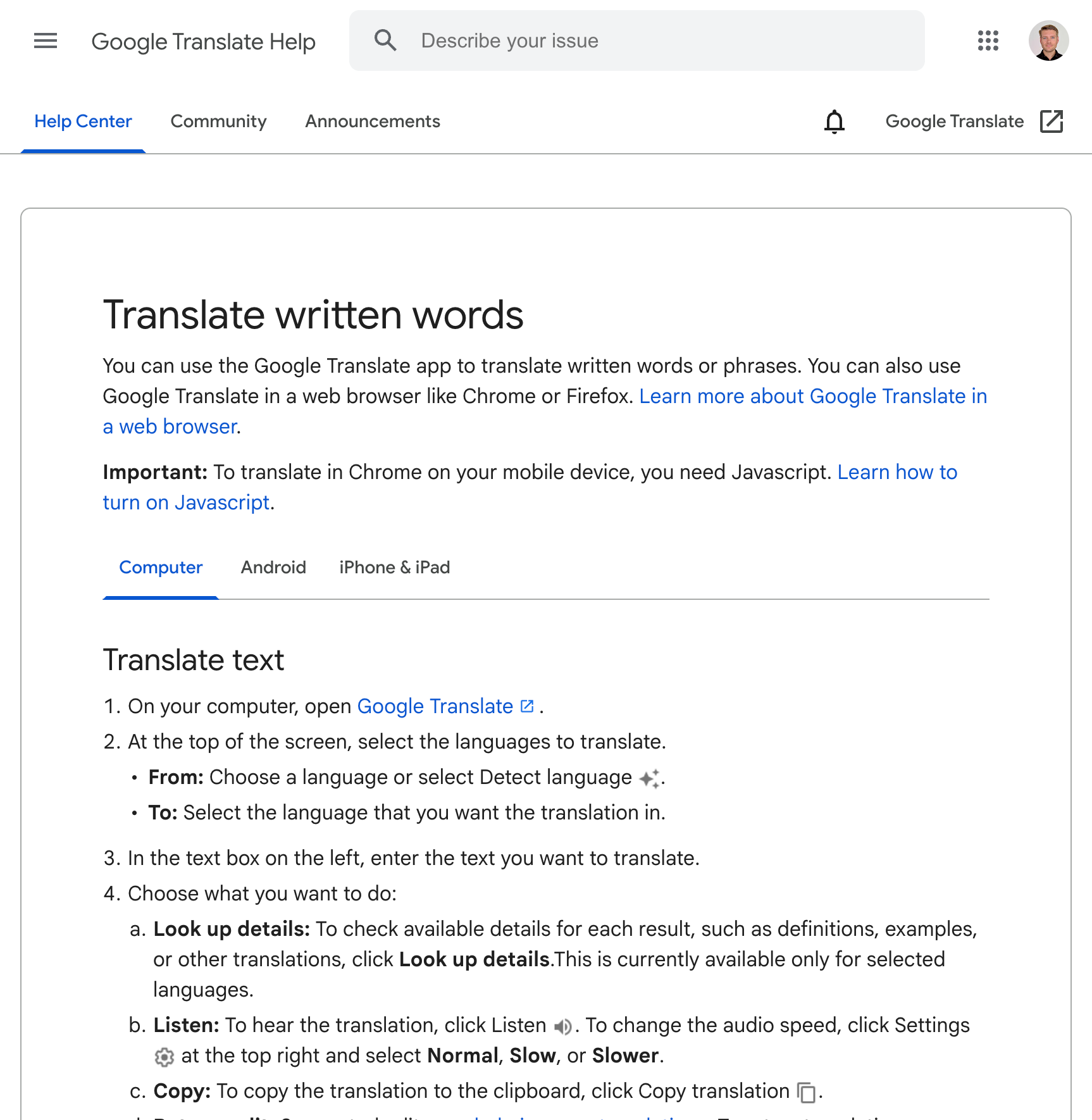
- The Step-By-Step Tutorial: This format focusses on the solution of a specific problem. It is highly structured and oftentimes written in numbered lists.
- Example: support.microsoft.com and support.google.com additionally segment their tutorials into platforms (
Computer,Android,iOS), so that the AI can find the correct matching answer for a user question.
- Example: support.microsoft.com and support.google.com additionally segment their tutorials into platforms (
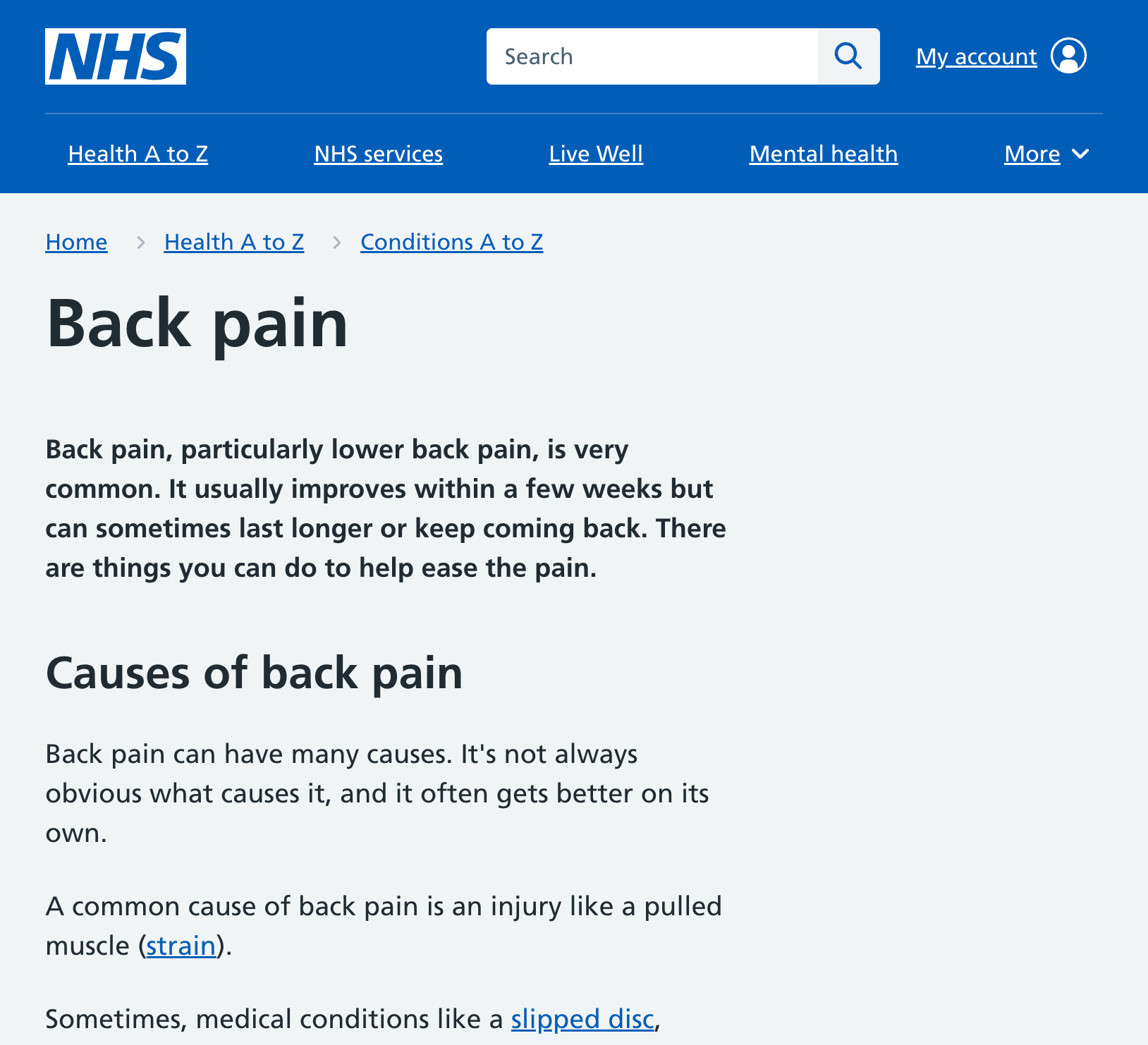
- The Rigid Template (medical content): In the your money your life sector (YMYL), especially concerning health, all top pages follow an identical, encyclopaedic template.
- Example: Pages from my.clevelandclinic.org and nhs.uk are almost always structured the same: 1. Overview, 2. Symptoms and Causes, 3. Diagnosis and Tests, 4. Management and Treatment. This makes them absolutely predictable for an AI.
- Data Collection (comparison tools and table): These sites are basically data bank frontends. Their purpose is the display of raw data, which makes them perfectly comprehensible for an AI.
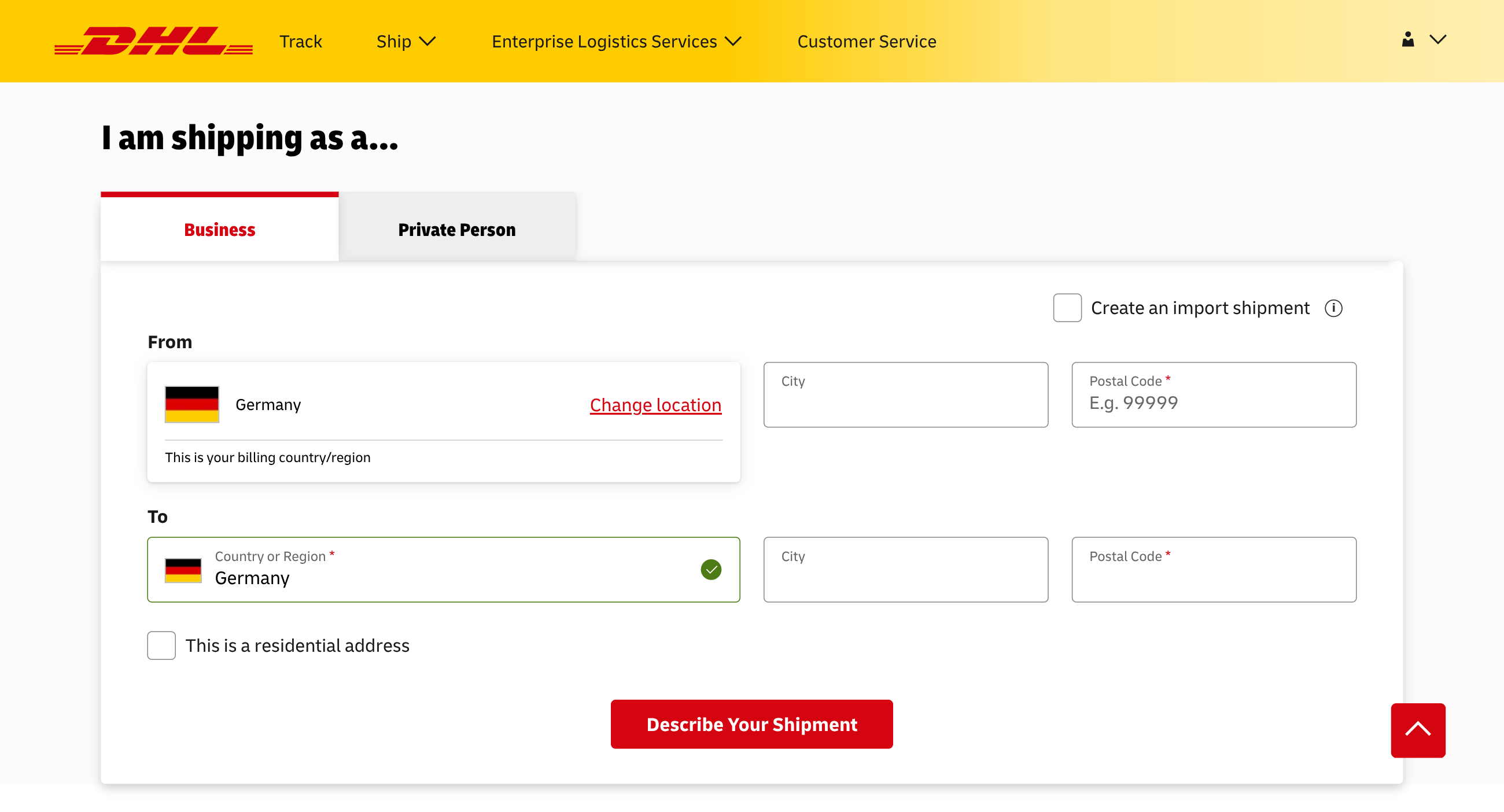
- Example: dhl.de uses clean
<table>elements for prices and measurements. handytarife.check24.de goes one step further and marks every tariff cell with granulardata-qaattributes.
- Example: dhl.de uses clean
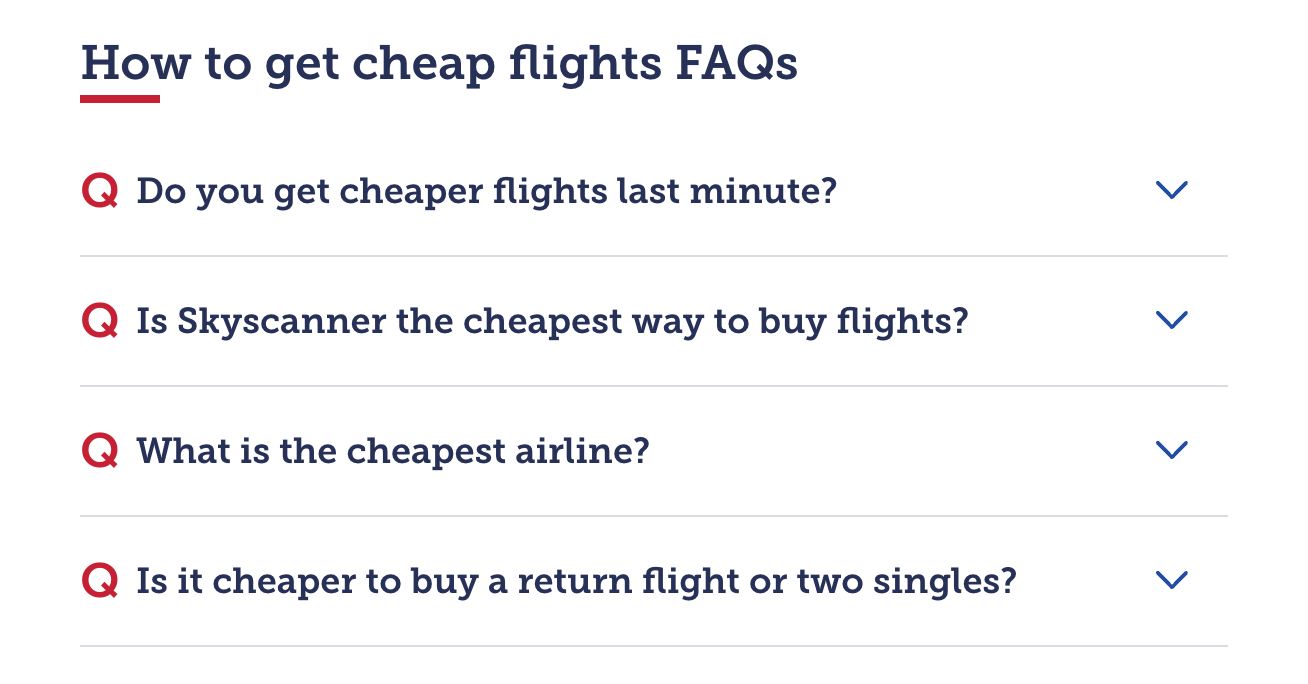
- The universal element, the FAQ block: almost every site we analysed, from adobe.com to vodafone.de, ends with a dedicated FAQ area (oftentimes as an accordion) to immediately intercept related search requests on the same page in a clear question-answer-format.
Pillar 2: explicit authority and recency
An AI system only cites sources, whose topical trustworthiness and freshness has been proven both technically and visibly.
An AI must be able to trust its answers. For important topics, especially in the area of health of finances (YMYL), a good structure alone isn’t enough. The AI has to be able to see at a glance, who is providing the information and when it was validated last.
The top pages prove their authority (E-A-T) and currentness (“freshness”) on two levels simultaneously:
- The Trustworthiness Stamp (authority): You have to clearly signal why your content is trustworthy.
- For machines: Almost all analysed pages use JSON-LD (
<script type="application/ld+json">), to prove their identity. The AI doesn’t have to guess the authority of a page, it simply draws it from the given information.
Example:support.microsoft.comclearly defines:"author": {"@type": "Organization", "name": "Microsoft"}.check24.denames"publisher": {"@type": "Organization", "name": "Check24"}. The AI immediately knows that the source is the producer itself or a large comparison site. - For humans: Simultaneously, the authority is made visible for the user, which the AI can perceive as well.
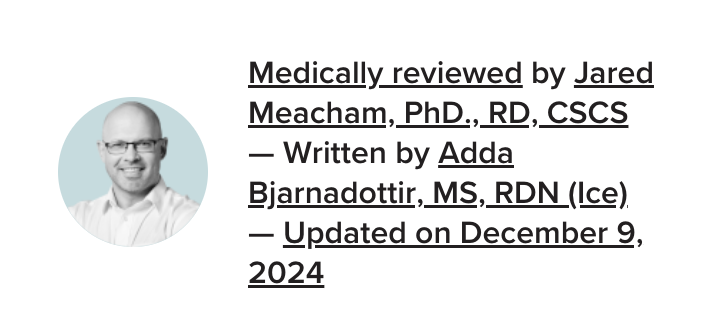
Example: All health websites likemy.clevelandclinic.orgorhealthline.comuse phrases such as “Medically Reviewed by…” directly under the title.profil.bayernintroduces their “Knigge-Expert” and signals that the content is originating from a professional.
- For machines: Almost all analysed pages use JSON-LD (
- The Freshness Signal: Outdated information is poison for an AI response. The top pages thus aggressively signal that their content is up-to-date. An AI will almost always prefer an article written in 2021 that was updated in 2025 over one that is from 2024 that has never been updated. These explicit signals for authority and currentness are a non-negotiable standard for top placements.
- For machines: The
dateModifiedfield in the JSON-LD script is the deciding signal for the AI.
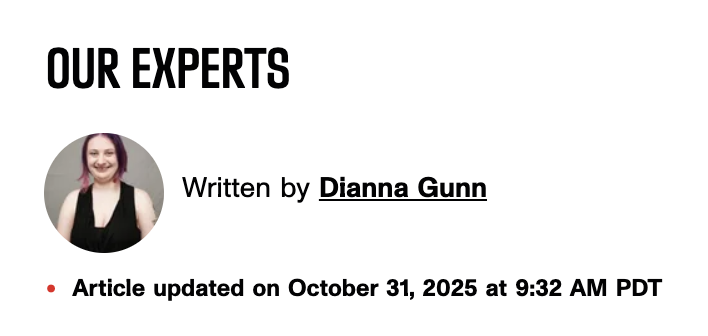
Example: The article bymystipendium.dewas published in 2019 (datePublished) but updated in February 2025 (dateModified). For an AI, this is a brand-new article. The Cleveland Clinic also updated an article from 2023 in July 2025 - For humans: Almost all guidebooks and news pages (e.g. CNET, Moneysavingexpert) show a clear “last updated…” date in their article.
- For machines: The
Pillar 3: strict machine readability
For an AI to reliably understand one’s content, the pages have to be structured in a way that marks all content unambiguous, stable and legible for a machine.
This pillar is the technical base that keeps everything coherent. The best content (Pillar 1) and the strongest authority signals (Pillar 2) are of little use if an AI cannot reliably decipher it in the correct context.
The most cited sites are not for humans, but distinctly comprehensible for machines. They use three levels of structuring:
- The Digital Identification (meta data): Every page has to tell an AI immediately what exactly it is. The top pages use two methods to achieve this:
- JSON-LD: Almost all analysed pages (from
my.clevelandclinic.organdcheck24.detocnet.com) embed a<script type="application/ld+json">tag. This labels the content as anArticle,MedicalWebPageorReviewNewsArticleand delivers the AI direct context. - Stable attributes: Pages like
check24.deandvodafone.deusedata-qaordata-testidattributes for every element. This way, the page is as precisely legible for an AI as a data bank.
- JSON-LD: Almost all analysed pages (from
- The Roadmap (table of contents): No AI should get lost in a long article. The top pages offer an explicit roadmap at the beginning of their content.
- Example: The support pages from
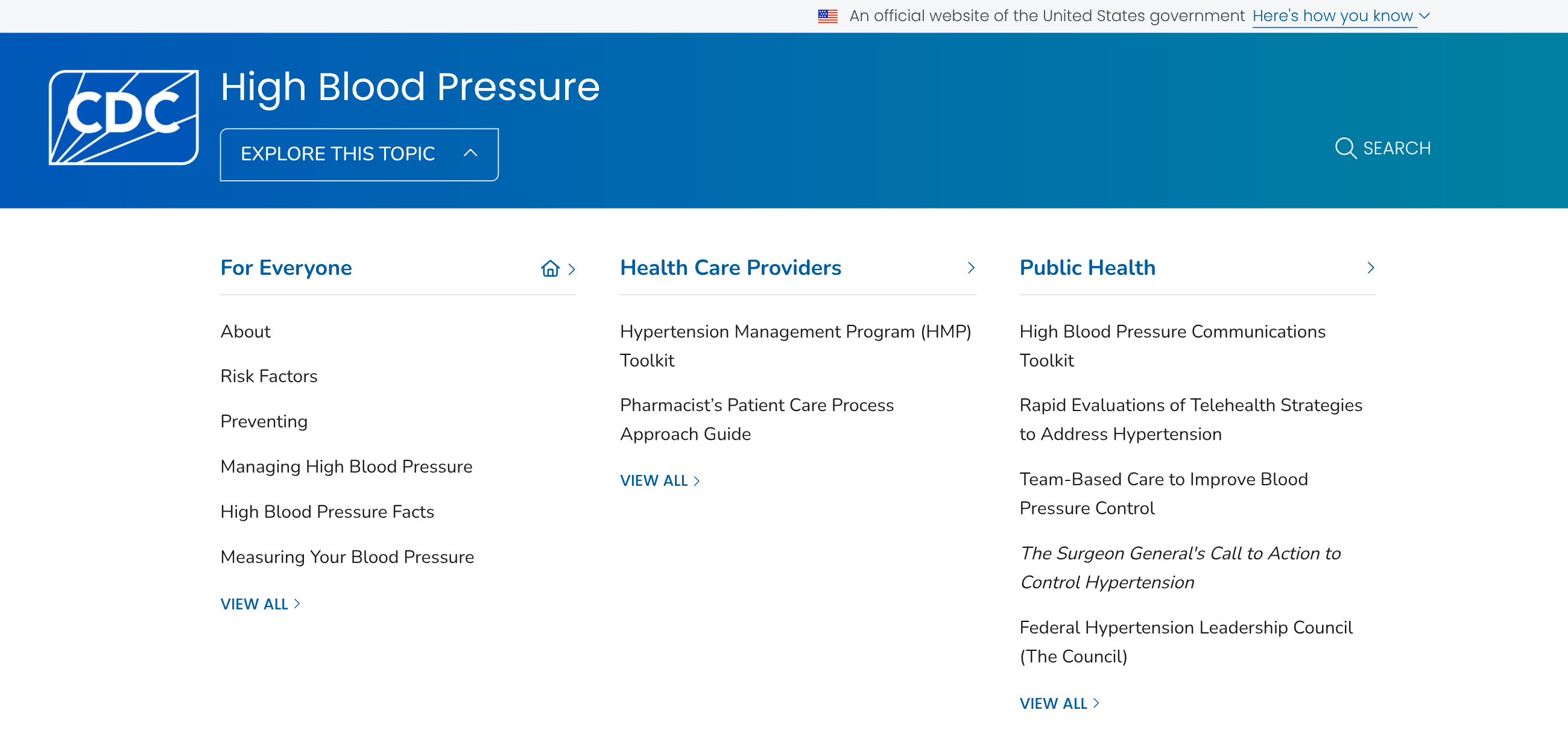
support.microsoft.comandcdc.govuse a “In this article” / “On this page” menu. Advisors such asklarmobil.deorphonearena.comuse a clear “table of contents”.
- Example: The support pages from
- The Chapters (logical division): The table of contents is never just decoration, it is always functional and connected to the body of text.
- Example: In all cases that included a roadmap (point 2), the anchor links (e.g.
<a href="#guide">) refer to the exactidattributes of the corresponding<h2>– or<section>tags in the text (e.g.<h2 id="guide">). This 1:1 referral allows the AI to divide the article accurately into its logical components and immediately find the relevant section for the user request.
- Example: In all cases that included a roadmap (point 2), the anchor links (e.g.
Conclusion: This is how you Optimise your Content for AI Citations
Our analysis for the top 100 most cited websites show a clear pattern: success in the AI Mode is no coincidence but the result of a deliberate architecture. The AI doesn’t simply pick good articles, it chooses structured responses.
To position your content as a base for AI answers and secure valuable citations, your pages have to signal to the AI an all three levels: I am a current, trustworthy source (Pillar 2), I have the exact response to this question (Pillar 1) and you can flawlessly extract this response (Pillar 3).
Here is the ultimate checklist, based on the common characteristics of the top sites:
- Think in response blocks, not texts
- What? Divide your content into the smallest possible logical building blocks. Use the format that best displays your answer.
- How?
- Tips & rankings: Use the listicle format with clear, numbered
<h2>headlines for each point. - Guides: Use numbered lists (
<ol>) and break them down based on platform (e.g.Android,iOS). - Data & facts: Use HTML tables (
<table>) for prices or measurements. - Questions: Use FAQ blocks or accordions that clearly divides questions (
<button>) and answers (<div>).
- Tips & rankings: Use the listicle format with clear, numbered
- Prove your authority and currentness (E-A-T)
- What? Signal the AI and the user who you are and how current your information is.
- How?
- Name visible authors, experts (“Medically Reviewed by“, “Knigge-Expert“) and a clear “Last updated…” date.
- Implement JSON-LD and fill out at least the fields
publisher(your brand) anddateModified(last update).
- Build a roadmap (table of contents)
- What? For longer articles, give the AI a table of contents so that it immediately understands the structure.
- How?
- At the beginning of the article, add a clear table of contents (e.g. “On this page“, “In this article“).
- Make sure, that these links exactly match the
idattributes of your<h2>– or<section>tags in the text (z. B.<a href="#guide">links to<h2 id="guide">).
- Make it (extremely) machine-legible
- What? Encapsulate your content into clean, semantic containers.
- How?
- Use semantic HTML (
<article>,<main>), to divide the main content from the navigation and footers. - For the advanced: If you have comparative data or product lists, use stable attributes like
data-qaordata-testid(likecheck24.deorcnet.com), to clearly label each point of data unmistakably for the AI.
- Use semantic HTML (