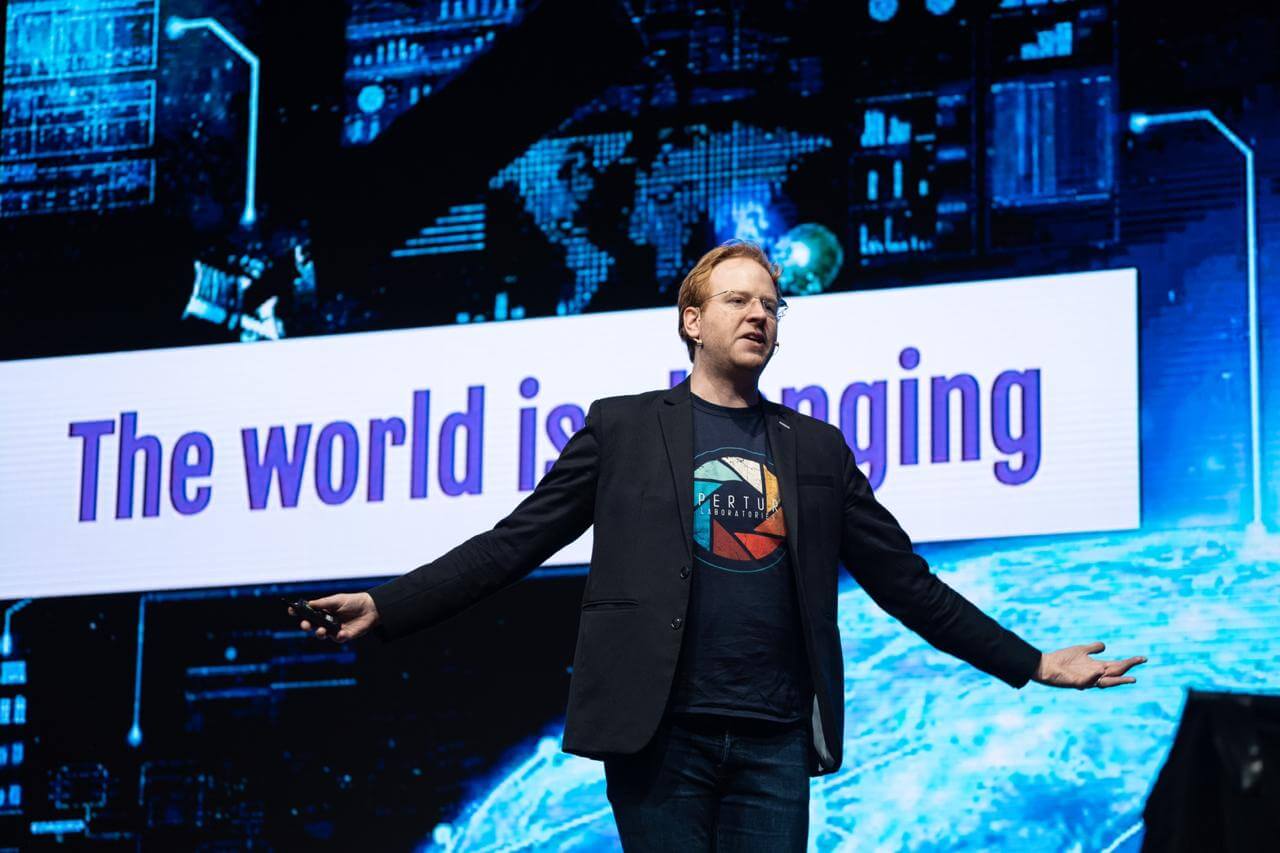
The SISTRIX monthly newsletter is written by digital marketing expert, Jono Alderson. With original commentary he helps us to make important digital marketing strategy decisions. “What Jono Said” is the summary of the year’s insights and a must-read for anyone involved with planning a digital marketing strategy for 2026.
Sign up for the monthly newsletter here.
- The Myth of the Fresh Start
- The Recommendation Mindset
- Differentiate or disappear
- From Meta Tags to Meta Discipline
- LLMs aren't playing by Google's rules
- What happens when your buyer is a bot?
- Adrift in a sea of sameness
- Localisation Without Borders
- The importance of design
- On brand maintenance
- Beyond the app rush
- The death of the homepage
NEW for 2026: Steve Paine, the marketing manager for the UK, will be adding an additional monthly report focusing on the data stories from the SISTRIX data journalism team. But now, it’s over to Jono…
The Myth of the Fresh Start
January whispers promises of reinvention. The calendars reset, the gym fills up, and we collectively buy into the seductive idea of a clean slate. It’s appealing, isn’t it? The belief that the simple passage of time offers us permission to begin anew.
But for websites, there are no clean slates; no moment where you can wipe away a decade of technical debt, strategic compromises, and the slow creep of entropy. Every choice your team has made—every plugin installed, every workaround approved—is baked into its DNA. And as much as we’d like to imagine a “New Year’s Resolution” for our sites will fix everything, the truth is, it probably won’t.
Your website isn’t misbehaving because it lacks a checklist for January. It’s struggling because it’s built on years of decisions that seemed smart in the moment, but created consequences you didn’t anticipate. That third-party script you added for a campaign in 2018? It’s still there. Those bloated landing page templates you hacked together to power your content strategy? That future came and went, and now they’re a liability.
This isn’t a call to abandon iteration—far from it. Iteration is essential, but only when anchored to a clear vision of where you’re heading. Incremental improvement works best when the foundation is sound, not when it’s layered over years of unchecked growth. Too often, we mistake “progress” for merely tinkering at the edges, without addressing the structural issues underneath.
The idea of gradual improvement—“we’ll optimise a little here, clean up a bit there”—feels safe. Manageable. But it’s also how we got here: one small compromise after another, until your site became a sprawling mess of patches and bandaids. True progress doesn’t come from stacking small wins on top of a flawed foundation. It comes from pausing, stepping back, and asking, “What is this actually for?” Are you solving the problems of 2025 with a platform designed for 2015? Are you chasing “best practices” that no longer reflect the reality of how users search, browse, and decide?
If your website isn’t evolving, it’s decaying. And evolution isn’t about new year optimism; it’s about confronting hard truths. It’s about making decisions that will feel painful in the short term—sunsetting that legacy CMS, killing off underperforming pages, and stripping back features you once championed. But on the other side of that discomfort is clarity. A site that isn’t burdened by its past. A platform built not for convenience or nostalgia, but for purpose.
The real transformation happens not when you add something new but when you have the courage to remove what’s holding you back. Iteration, reinvention, and intentional growth all have their place—but only if you first confront the baggage you’ve been carrying. That’s not a resolution. That’s a reckoning.
This isn’t a call to action for January 1st. It’s a challenge for the rest of the year. Will your website limp into 2025, weighed down by another year of surface-level fixes? Or will you finally give it the intervention it’s been needing all along?
(From January 2025. Subscribe here.)
The Recommendation Mindset
We talk about ‘organic’ search like it’s a force of nature—something that just happens if we just optimize hard enough. But what if that mindset is holding us back? The term “organic” suggests something natural, effortless—free. Yet, we know that earning traffic from search engines is anything but. We pay for it, not in cash, but in content creation, outreach, technical refinements, and endless strategic adjustments. So why do we still call it ‘organic’?
What if we stopped thinking of it as something we just “get” and started calling it what it really is—referral traffic? More specifically, what if we thought of it as part of a citation economy?
We understand referral traffic in traditional terms: a link from another website directs users to ours. We recognize these as earned; often the result of relationships, authority, or trust. Yet, when Google effectively ‘links’ to us in search results, we don’t treat it as a link at all. We act as if ranking is an entitlement, not an earned citation. But when Google lists our page, it’s not just displaying results—it’s recommending us.
In academia, citations are currency. The more you’re cited by credible sources, the more authority you command. Google works the same way. It rewards content that earns citations in the form of links, mentions, and user engagement. If we embraced this perspective, would we approach SEO differently? Might we obsess less over rankings and more over earning trust? Would we focus less on optimizing for algorithms and more on creating content that’s worth citing?
Consider this: when we pursue link-building, we don’t just beg for links—we craft narratives, build relationships, and establish credibility. But with search traffic, we often take a passive approach. We optimize and hope that Google sends visitors our way.
What if we treated Google the same way we treat journalists, industry blogs, or academic peers? What if we thought of search visibility as something we have to pitch, earn, and deserve?
If Google is a referrer, then the real goal isn’t ranking—it’s being recommended. This shift in mindset changes how we think about content strategy. Would we produce different content if our goal was to “earn a citation” rather than just “rank”? Are we positioning ourselves as the most citable source on a topic? How are we demonstrating expertise, reliability, and influence?
In academia, the most cited works become foundational. In SEO, the most cited sources often dominate the rankings. If we thought about search as a citation economy, we wouldn’t just optimize for keywords—we’d optimize for credibility.
As search evolves—shaped by AI, zero-click searches, and changing algorithms—traditional SEO tactics won’t be enough. Those who succeed will be those who earn their place in Google’s recommendations. Maybe it’s time we stopped calling it “organic” search and started recognizing it for what it really is: the currency of citations in a competitive, trust-based economy.
Are you earning your place in the citation economy, or are you just hoping for handouts?
(From February 2025. Subscribe here.)
Differentiate or disappear
Most businesses believe that they’re competing against other brands. They aren’t; they’re competing against indifference, against an audience drowning in noise, against algorithms that decide whether they deserve attention at all. And in an era where AI curates, compresses, and commodifies everything it touches, the biggest risk isn’t losing customers to a competitor; it’s becoming invisible altogether.
Differentiation isn’t a marketing tactic. It’s a survival strategy. Yet most brands fail at it, clinging to industry norms, best practices, and incremental improvements that make them indistinguishable from their competitors. In an age where AI-driven curation distills content down to the most predictable common denominators, failing to stand out means fading into irrelevance.
The problem is that most businesses mistake decoration for differentiation. A new logo, a quirky tone of voice, or even a slightly better product won’t make you meaningfully different. Real differentiation means owning a space so completely that competitors can’t encroach without looking like imitators. That requires clarity: What do you do that nobody else can? What would be lost if your brand disappeared tomorrow? If you can’t answer that, neither can your audience or the algorithms that decide whether you deserve visibility
This isn’t just about content strategy or SEO tactics. Differentiation isn’t about a better blog or a new spin on listicles. It’s about building a brand so distinct and valuable that it can’t be summarized by an AI or replicated by a competitor. It’s about storytelling and ideas that demand attention.
Some brands get this right. Tesla doesn’t sell cars; it sells a movement, a cult of innovation that makes every other EV manufacturer look like a follower. Red Bull isn’t just an energy drink; it’s an adrenaline-fueled media empire. These brands don’t just stand out – they create gravitational pull. Meanwhile, those that failed to differentiate paid the price. Nokia lost its market dominance not because its phones were bad, but because it failed to stand for anything compelling. Yahoo, once the king of search, became a generic portal for everything and nothing, collapsing under its lack of focus.
Search engines and AI models aren’t looking for another generic “ultimate guide” or yet another “customer-centric” brand. They’re pattern-matching, summarizing, and curating. If you blend into the noise, you’ll be reduced to a footnote in someone else’s AI-generated answer. The brands that win are those that refuse to be generic. They’re the ones which take positions, challenge assumptions, and create value that’s impossible to paraphrase.
Yet differentiation is uncomfortable. It forces businesses to lean into an identity and be polarizing when necessary. But playing it safe is the fastest way to disappear. AI won’t reward you for being slightly better; it will reward you for being unmistakably different.
So stop chasing best practices and start creating next practices. The brands that will thrive aren’t the ones following the rules of the game. They’re the ones rewriting them.
(From March 2025. Subscribe here.)
From Meta Tags to Meta Discipline
Good SEO isn’t about rankings. It’s about influence. It requires expertise in areas traditionally considered separate disciplines, such as product positioning, conversion optimization, and policy-making. The best SEOs don’t just optimize websites. They shape how businesses operate in a search-driven world.
And that’s a problem. SEO has expanded to the point where we either take on responsibilities we shouldn’t, like fixing development issues and analytics tracking, or struggle to influence areas we should, like branding and PR. Instead of focusing on insights and opportunities, we’re stuck firefighting, fixing, and justifying why we’re even in the room.
Now, it’s going to get even harder. SEO means different things to different people. One SEO might focus on technical audits, another on digital PR, another on analytics. The skill sets, approaches, and even definitions of SEO vary wildly. How is the market supposed to make sense of that? How can hiring managers compare one SEO to another when their expertise barely overlaps?
To address this, we need to recognize that SEO is a meta-discipline, which must weave throughout an organization. It connects search behavior, business strategy, and technical execution. It’s about spotting opportunities based on data, competition, and market trends, and helping businesses make better decisions.
Because the best, most impactful SEOs don’t just write content or tweak websites. They facilitate, educate, and influence. They ensure developers build performant, crawlable sites. They help marketers understand search intent. They guide leadership on what search trends reveal about demand.
So if we want SEO to be taken more seriously, we need to stop begging for buy-in. Stop bribing teams to implement best practices. Stop fighting for scraps of influence. We belong in the conversations that shape businesses, not just the ones that fix them.
We can make that happen by changing how we present and position ourselves. The market’s understanding of SEO exists because we defined it. We taught businesses what SEO is, and we can choose to reshape that narrative. Instead of allowing SEO to be seen as a narrow, tactical function, we should actively position it as an essential strategic role that operates across an entire organization.
This is no longer about rankings or technical tweaks. It’s about understanding how search, business, and technology intersect and using that knowledge to drive meaningful change. That’s what SEO should be. That’s what we should own. We must position ourselves as strategists and consultants, not just executors. If we want SEO to evolve, we need to take control of that narrative – because if we don’t, someone else will.
(From April 2025. Subscribe here.)
LLMs aren’t playing by Google’s rules
For decades, search engines like Google and Bing have been evolving their capabilities. Their crawlers simulate page layouts, render JavaScript, cache intelligently, and handle errors gracefully, all to extract and understand as much information as possible from the web.
This sophistication has, in some circles, bred complacency around technical SEO. If Google can work around your slow scripts or broken HTML, why fix them? (Though I’d argue technical SEO is still far more important than most realise.)
However, as new generations of AI models and LLMs, like ChatGPT, Claude, and others, begin to play a bigger role in how content is discovered and recommended, we find ourselves at a turning point.
These systems do not crawl the web like Google. They are not rendering your pages or executing your scripts. In most cases, they are simply fetching the raw HTML from your server and moving on.
That has profound implications.
If an AI agent finds only an empty page, a URL returning the wrong HTTP status, or a tangled mess of markup, it will not see or understand your content. It may misinterpret you, ignore you, or recommend a competitor instead. If your site relies heavily on client-side rendering, the agent may find nothing at all.
It is not just about visibility either. Poor caching and inefficient delivery can cause heavy agent traffic to overload or slow down your servers. Sending huge HTML documents, multi-megabyte images, or bloated JavaScript bundles makes your site expensive, brittle, and a nightmare for lightweight systems to crawl.
And most LLM-connected systems are not close to solving these problems. They will not render your JavaScript. They will not wait for your lazy-loading images. They will not fight through your megabyte of tracking scripts just to find a paragraph of useful content. If they cannot extract what they need quickly and cleanly, they will simply move on.
So it’s time to go back to basics.
Semantic, valid HTML. Server-side rendering. Correct HTTP headers. Efficient caching. Security best practices. These are no longer just nice-to-haves for SEO. They are critical foundations for your discoverability, your reputation, and your future.
The web is no longer just a place for people to browse and explore. Increasingly, it is a feedstock for AI systems that summarise, recommend, and decide what information gets seen. The future of discoverability is not just about being indexed. It is about being understood, accurately and efficiently, by non-human agents that do not have the patience to wrestle with bad code or bloated sites.
It’s time to stop building websites that are merely ‘good enough’ for Google, and start building ones that are good enough for the next generation of machines
(From May 2025. Subscribe here.)
What happens when your buyer is a bot?
Imagine this: you don’t Google hotels in Lisbon. You don’t browse reviews or comparison sites. You just say, “Book me somewhere quiet, near vegan food, not too Instagrammy.” And it’s done.
No tabs. No research. No real decision-making.
That’s not a hypothetical – it’s where we’re headed. We’re moving toward a world where your digital assistant has access to everything about your life – your travel history, inbox, diet, social plans, behaviours. All of it. And it doesn’t just help you choose. It decides what you see. Or don’t.
These agents aren’t just smart interfaces. They’re becoming you, in software. They’ll build and reduce consideration sets based on a model of who you are and what you want – even when you don’t know it yourself. You used to browse the web. Now, the web browses you.
Traditionally, search was about showing up, being clicked, and persuading. But agents compress that. They evaluate, filter, and shortlist. Your site might never even be consulted—not because it isn’t good enough, but because it didn’t make the cut. You’re not losing to a competitor. You’re losing to a filter you can’t see. And you won’t know why.
When agents know everything about you, who defines what “best” means? What if you want something unexpected? What if your past behaviour paints the wrong picture? The line between your preferences and the model’s predictions gets blurry, and that becomes the new battleground for influence.
You’re no longer convincing a user. You’re convincing their proxy.
Websites aren’t going away, but their purpose is changing. Agents still need content, but they’ll engage with it differently. They’ll extract meaning, assess structure, and cross-reference claims. Ranking will still matter – but it’ll be personalised, contextual, situational. Being #1 might mean something different to each user, every time.
So, optimization shifts. From clicks to comprehension. From design to data. From content for people to content that machines can parse, trust, and act on. Agents don’t care about your design or clever copy. They care about whether they can understand you, verify you, and trust you.
So, is your content structured? Are your claims consistent and clear? Can a model assess your relevance without ever “visiting” your site?
This is SEO at its most foundational. Not about traffic. About inclusion. About qualifying for consideration in a world where the decision-maker might never be human.
Websites become sources, not destinations. And your real audience isn’t a person with a browser. It’s a model with a mission.
We’re heading toward a future where every user has a digital twin – a proxy trained on their life, preferences, and behaviours. That twin will do the browsing, evaluating, and deciding.
So if you’re still optimising for a human who reads, scrolls, and clicks… You might already be invisible.
(From June 2025. Subscribe here.)
Adrift in a sea of sameness
There’s somebody that looks just like you, working for each of your competitors.
They’re doing the same keyword research. Spotting the same low-hanging fruit. Following the same influencers. Reading the same blogs. Building the same slides. Ticking the same SEO checklists. Fighting for the same technical fixes. Arguing with the same developers. Making the same business case, in the same way, to the same stakeholders.
Your product is just like theirs. Same problem, same solution. Same positioning, same pricing, same promise. Swap the logos on your homepages and nobody would notice.
Your website is like a clone of your competitors. Same structure. Same language. Same design patterns. Same stock photos. Same author bios. Same thin “values”. Same thinking. Same mistakes.
And when someone in your team finally suggests doing something different – something bold, something opinionated, something genuinely useful or original – someone in your leadership will inevitably say, “but competitor X doesn’t do that”. And so the spiral begins.
We don’t do it because they don’t do it. They don’t do it because we don’t do it. Everybody looks to everybody else for permission to be interesting. Nobody acts. Nobody leads. Nobody dares. Just a whole ecosystem of well-meaning people in nice offices running perfectly average businesses, trying not to get fired.
We call it market alignment. Brand protection. Consistency. But really, it’s just fear. Fear of being first. Fear of attention. Fear of being wrong. So we compromise. We polish. We go back to safe. Safe headlines. Safe CTAs. Safe content.
And now the kicker. This whole mess is exactly what AI is trained on.
When the web is beige, the machine learns to serve beige. Every echoed article trains the model to repeat the average. When sameness becomes a survival strategy, we don’t just lose market differentiation. We become fuel for our own redundancy.
If your content looks just like everything else, there’s no reason for a human to choose it – or for a machine to prioritise it. It might as well have been written by an AI, summarised by an AI, and quietly discarded by an AI.
This is your competition now. Not just the business next door with the same three pricing tiers and the same integration with HubSpot, but the agent reading both your sites and deciding which one their user never needs to visit again.
And if you’re serious about showing up in search, that means asking harder questions. Not just “what keywords do we want to rank for?” but “what do we believe that nobody else does?”, “what are we brave enough to say?”, and “where can we be the answer, not just an option?”.
That’s not about chasing volume or clustering content by topic. It’s about clarity. Depth. Quality. It’s about knowing your market better than anyone else. Saying what others won’t. Building what others don’t. And tracking your impact like it matters.
The tools are here. The data is here. But what you do with them – that’s where you stop being average.
(From July 2025. Subscribe here.)
Localisation Without Borders
Everyone thinks they understand localisation.
Translate your content. Add hreflang. Target some regional keywords. Job done.
But that isn’t localisation. That’s sales enablement, with a dash of technical SEO.
Meanwhile, the algorithms, LLMs, citations, and links that are shaping your visibility are being invisibly influenced by content, conversations, and behaviours happening far outside your commercial footprint. And most brands have no idea.
The old model of localisation assumes neat boundaries. You sell in a country, so you translate your site. You want to rank there, so you create localised content and build a few links. It’s tidy. Transactional. And completely disconnected from how modern discovery actually works.
Because the internet leaks. People share. Machines consume everything. A forum post in Korean might link to your product and boost your rankings in the UK. A blog in Spanish might feed into the corpus that shapes how Google or ChatGPT describes your brand. You don’t need to operate in those markets – or even know it’s happening – for it to affect you.
Search isn’t local. It’s global. And machines don’t care about your sales strategy.
This gets even weirder when you add language models to the mix. LLMs are trained on multilingual content. They don’t just learn from English – they learn from everything. But the training data is patchy, uneven, and increasingly polluted by spam, scraped content, and low-quality translations.
That mess doesn’t stay isolated. It leaks into the summaries, answers, snippets and search experiences that now dominate user journeys. A clumsy machine translation today could echo through a model’s response tomorrow. Not because it was accurate, but because it was available. And if it mentions you – even in passing – it might shape how you’re represented, understood, and judged.
Your brand is being interpreted by machines that’ve read things you’ll never see, in languages you don’t understand, written by people you don’t serve.
So what do you do?
You stop thinking of localisation as presence, and start thinking of it as influence.
That might mean publishing selective content in non-commercial languages – not to convert, but to anchor relevance. It might mean building links or citations in places you don’t operate, purely to shape authority in the places you do. It might mean curating your multilingual footprint – not because you’re selling globally, but because you’re visible globally, whether you like it or not.
You don’t need to dominate every market. But if you ignore the ones shaping your visibility, don’t be surprised when you start ranking for the wrong thing – or stop ranking at all.
It’s time to localise your strategy. Not just your content.
(From August 2025. Subscribe here.)
The importance of design
When somebody lands on your site, they experience more than just words on a page. They see the layout, feel the rhythm of the typography, sense the colour palette. They notice whether things align, whether the journey makes sense, whether it feels cared for. Consciously or not, they take in everything.
SEO, on the other hand, has always preferred narrower inputs. We talk about links, speed, structured data, content. If it can be tracked, scored, or tested, it makes the conversation.
Which is why one thing has always been missing from that list: design. Not because it doesn’t matter, but because it’s impossible to isolate, quantify, or benchmark.
And yet… design does move the needle. People notice when things feel cared for. They linger, they share, they trust. None of that looks like “design” in an algorithm, but it does show up as links, mentions, conversions, and brand searches. The awkward truth for SEOs is that we can’t measure design cleanly or A/B test our way to a universal best practice. But ignoring it is a mistake – because design shapes the very outcomes that search engines reward.
And if that’s true for Google, it’s only going to get more important in the next era. Search engines mostly work from markup, links, and metadata. But LLMs and AI agents are trained on how humans respond to design – in reviews, descriptions, screenshots, ratings, and behaviour. Even without “understanding” design, they learn that well-designed things get better outcomes.
Which means that – knowingly or not – AI systems will start to privilege design, too. Not because they’re literally analysing every pixel, but because the traces of design show up everywhere in the data they consume. A clumsy, ugly site leaves different fingerprints than a thoughtful, elegant one.
So maybe design has always mattered more than we gave it credit for. Not just as decoration for humans, but as a language we’ve been speaking to machines all along – teaching them what to reward, what to recommend, and who to trust.
Which means that the next time you think about SEO, don’t just look at your link profile or your Core Web Vitals dashboard. Look at your design. Because if humans respond to it, machines will learn from it. And if machines learn from it, your future visibility depends on it.
(From September 2025. Subscribe here.)
On brand maintenance
It feels like every SEO conference talk this year has been about brands. And rightly so: if clicks are drying up, if rankings are personalised, if AI is hoovering up the middle of the funnel, then the one thing you can still own is your reputation.
But “building a brand” is not just writing a manifesto or launching a new logo. It’s an enormous surface area of strategy and activity. We’re shifting from “optimise my website” to “manage my perception across the ecosystem” (and through time).
That has hidden costs. We already struggle to keep our about us page accurate, or to stop outdated versions of our logo appearing in random PDFs. Now we have to think bigger: the dormant Crunchbase entry, the neglected YouTube channel, the forgotten press release on PR Newswire, the CMO’s three-year-old podcast bio, the job listing that still lives in some recruiter’s database. Even partner microsites, app store listings, or old decks uploaded to SlideShare are all quietly shaping how the world perceives us.
Every one of these is a brand asset, a narrative touchpoint, and a potential liability.
And that’s the uncomfortable truth: brand-building isn’t just about bold campaigns and clever storytelling. It’s about tedious, relentless brand maintenance. Checking that your story is consistent, your assets are up to date, your messaging hasn’t drifted, your name hasn’t been mangled, and your logo isn’t still Comic Sans on page three of somebody else’s investor deck.
In SEO we’ve spent years policing canonical tags and hreflang. Now we have to canonicalize ourselves. Because in a fragmented, AI-mediated, reputation-driven ecosystem, it’s not the loudest story that wins. It’s the one that survives intact, everywhere it shows up.
(From October 2025. Subscribe here.)
Beyond the app rush
LLMs are learning to act. OpenAI, Anthropic, Google and others are rolling out app integrations – a new layer on top of the web where agents connect directly to the services behind the pages. Soon, users will book, buy, and manage everything through chat, without ever opening a browser.
So everyone’s racing to build an integration. Nobody wants to miss the moment when agents become the new gatekeepers of discovery. Get in early, claim your category, and own the channel.
But this isn’t a race to have an app. It’s a race to have utility. Most organisations don’t need a chat integration. They need something worth integrating with. The problem isn’t a missing interface – it’s a missing infrastructure. Most websites still behave like brochures, not platforms.
For years, SEO rewarded publication: the dentist explaining root canals, the baker posting recipes, the insurer comparing policies. That content still matters – it’s how machines learn what you do. But when agents act instead of browse, that context is already baked into the corpus. They don’t discover you; they know you. They might reference your content for grounding or proof, but they’re not casually scrolling your blog on the way to a decision.
That’s the shift. Visibility no longer stops at being found. It extends to being usable.
Imagine what that means. Dentists whose systems let agents book and confirm appointments directly. Bakers whose stock, delivery zones, and timings are exposed as structured data. Insurers whose pricing and policy logic can be queried via API.
This is still SEO – just evolved. Crawlable pages, structured data, and clear language still matter. But those pages now serve as the source code of your service, not the destination.
Agents don’t “visit.” They transact. They connect, compute, and complete. The winners of this next phase of visibility won’t be the loudest publishers – they’ll be the most integrable platforms. Because when someone says, “Book me a check-up,” or “Find a bakery that delivers before noon,” the agent won’t be choosing a page. It’ll be choosing a partner.
(From November 2025. Subscribe here.)
The death of the homepage
Almost nobody starts at your homepage. They haven’t for a decade. Search, social, and now AI intermediaries drop people straight into the specific answer, product, or price they wanted. The homepage isn’t the front door any more; it’s the lobby nobody visits.
It survives mostly because senior stakeholders like to see their messaging “above the fold.” It’s where branding, politics and compromise collide. A place that tries to say everything and ends up saying nothing: a CEO quote, a value statement, a carousel, a call-to-action. Every department gets a slice, and everyone leaves hungry.
Search already killed the homepage once. Organic traffic has long been dominated by deep links – category pages, blog posts, product details. Users jump in sideways and back out through Google again. Nobody is “navigating the site” in a tidy, linear way. They’re hopping between fragments of context, powered by search intent and impatience.
Now, AI finishes the job. Agents and overviews don’t visit your homepage. They extract what’s relevant, summarise it, and move on. To them, the homepage is fluff: ornamental HTML with no nutritional value.
Your real homepage is wherever people actually meet your brand – the snippet that appears in search, the product mention in someone’s inbox, the comparison table on a third-party site, or the short paragraph that an AI quotes back to a user. That’s where first impressions happen.
So if you’re still redesigning your homepage for “user journeys,” stop. Nobody’s journey begins there, and very few end there either. Instead, invest in what actually gets seen and experienced: useful entry points, clarity of purpose, and content that holds up when stripped of design.
The homepage isn’t dead because of AI. It’s been dead for years. We just kept polishing the headstone.
(From December 2025. Subscribe here.)
For more Jono insights, read what Jono said in 2024.