
Since 2025, Google has been making it progressively harder to collect search results. We believe Google’s main aim is to make it harder for new competitors such as ChatGPT to access its search index and to prevent search results from being used to train open-weight AI models, for example from China. Analysis tools like ours aren’t the target, but they are caught up in it.
For SEO data, this means that the familiar idea of a stable list of 100 results increasingly fails to reflect what actually appears in the search results. We are therefore focusing on the data that remains reliable and that determines actual visibility, above all the first page of results. The key point first: top 10 rankings and the Visibility Index remain reliable. The changes mainly affect how often data is updated and rankings on the later results pages.
Below, we’ve summarised what has changed, what it means for you and how we’re dealing with it.
Google is serving divergent search results in some cases
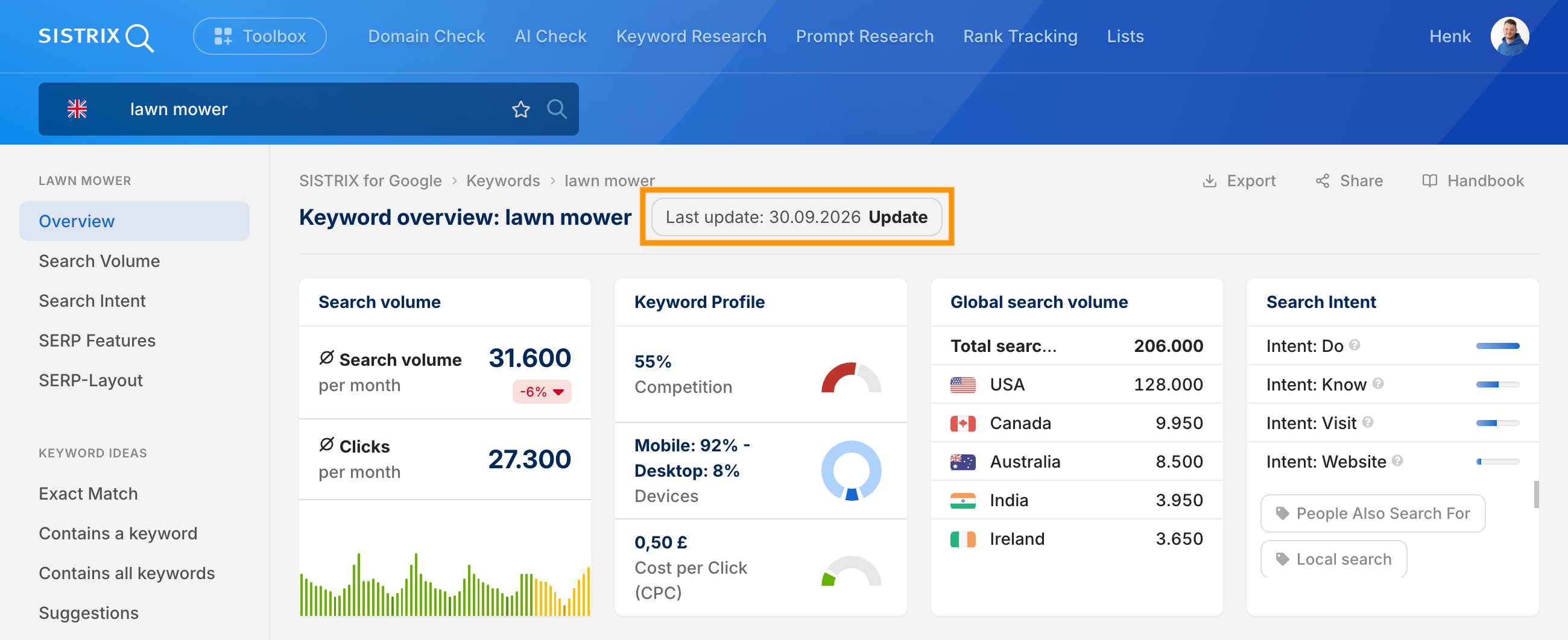
What Google changed: Since September 2026, we have observed that for some queries, Google returns results that differ significantly from the regular search results. They look like genuine search results but contain different websites. This is an industry-wide problem: tool providers and data suppliers around the world are receiving these divergent results.
What we’re doing: Our quality checks detected the divergent results early on. Since then, we have only published results that have additionally passed multiple checks. If a new result fails the check, we collect the keyword again until a verified result is available. This takes time, which is why some keywords are currently updated less frequently.
What this means for you: For some keywords, the last update is further back than usual. In these cases, you’ll see the most recent verified data, which you can identify by the update date. As a result, we can’t always stick to the update frequency set in your project settings. On-demand updates have been switched off since September 2026, as they would bypass the additional checks.
Redirects via /goto URLs
What Google changed: Since June 2026, Google has been routing clicks on search results through an internal /goto URL. The destination can’t be read from the URL itself, only by following it. This now affects virtually every link in the search results.
What we’re doing: Before the data feeds into your analyses, we resolve these URLs to their actual destinations for all organic results and the most important other elements. This means extra work for every single URL.
What this means for you: For less important elements, such as individual links in carousels or modules, the exact destination URL may be missing. Your rankings and the organic results are not affected.
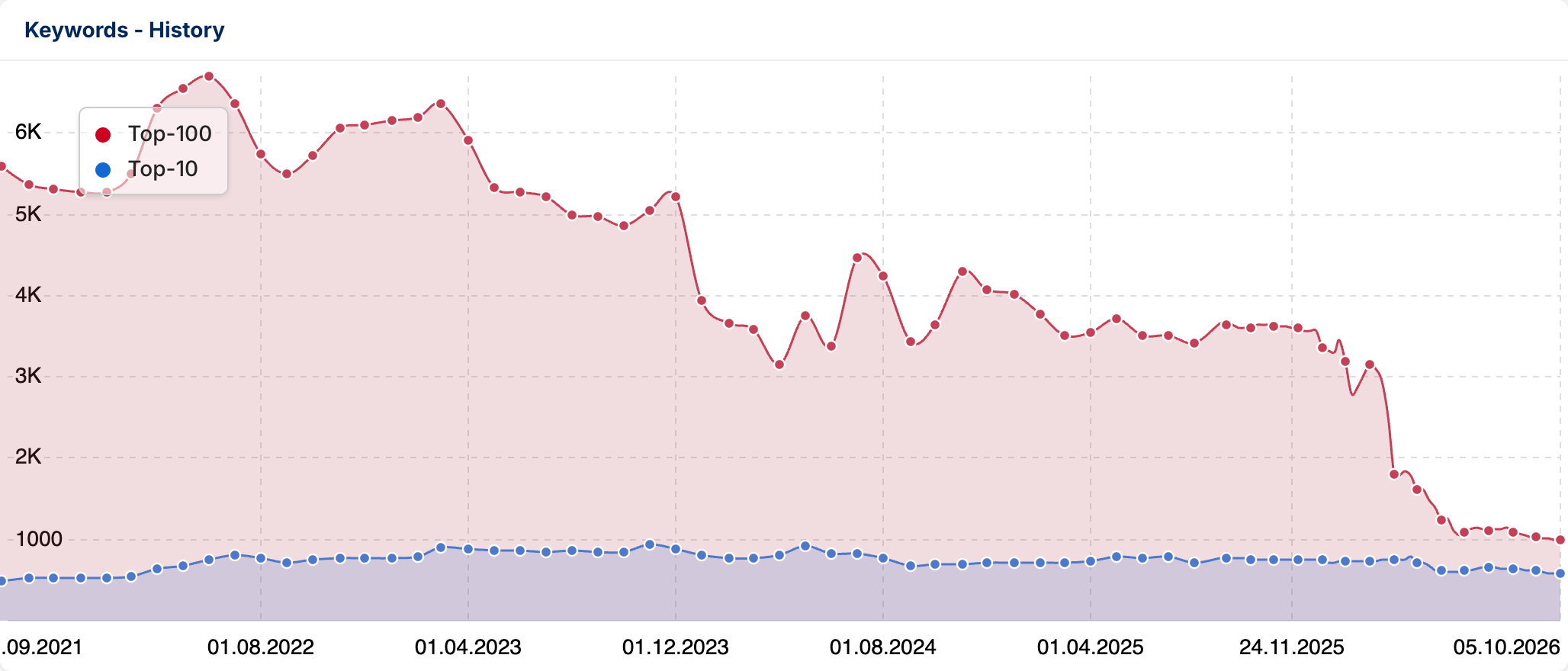
Search results end before position 100
What Google changed: Google stopped showing 100 organic results for every search a long time ago. For many keywords, the results list ends earlier, and after that there is simply nothing more.
What we’re doing: Going forward, our analyses will focus on keywords on the first page of results, i.e. the top 10. Anything beyond that can no longer be reliably compared over time.
What this means for you: If a domain drops out of the top 100 for a keyword, this may simply be because the results list has become shorter. Metrics such as the number of keywords in the top 100 or the distribution of rankings across positions are affected by this, without any change to your visibility. For the Visibility Index, this makes virtually no difference: because of their much higher click probability, rankings on the first page account for the vast majority of its value, while the lower positions in question here contribute very little. For comparisons over longer periods, the number of keywords in the top 10 is the reliable metric.
Only 10 results per query
What Google changed: Since September 2025, Google has returned a maximum of 10 results per query. Previously, the first 100 organic results for a search could be retrieved with a single query. Now it takes ten. The change came without warning and affected everyone who measures rankings.
What we’re doing: We’ve adapted our data collection accordingly. We collect the first page of results for every keyword and the further pages wherever they matter for the analyses. Because the first page determines visibility and clicks, it will also be the focus of our analyses going forward.
What this means for you: Nothing changes for the top 10. Rankings on later pages are updated less frequently than the first page, so metrics such as the number of keywords in the top 100 fluctuate more. The change was also visible in Google Search Console: from mid-September 2025, many websites saw fewer impressions and a better average position. This was a result of Google’s change, not a loss of rankings.
AI answers instead of search results
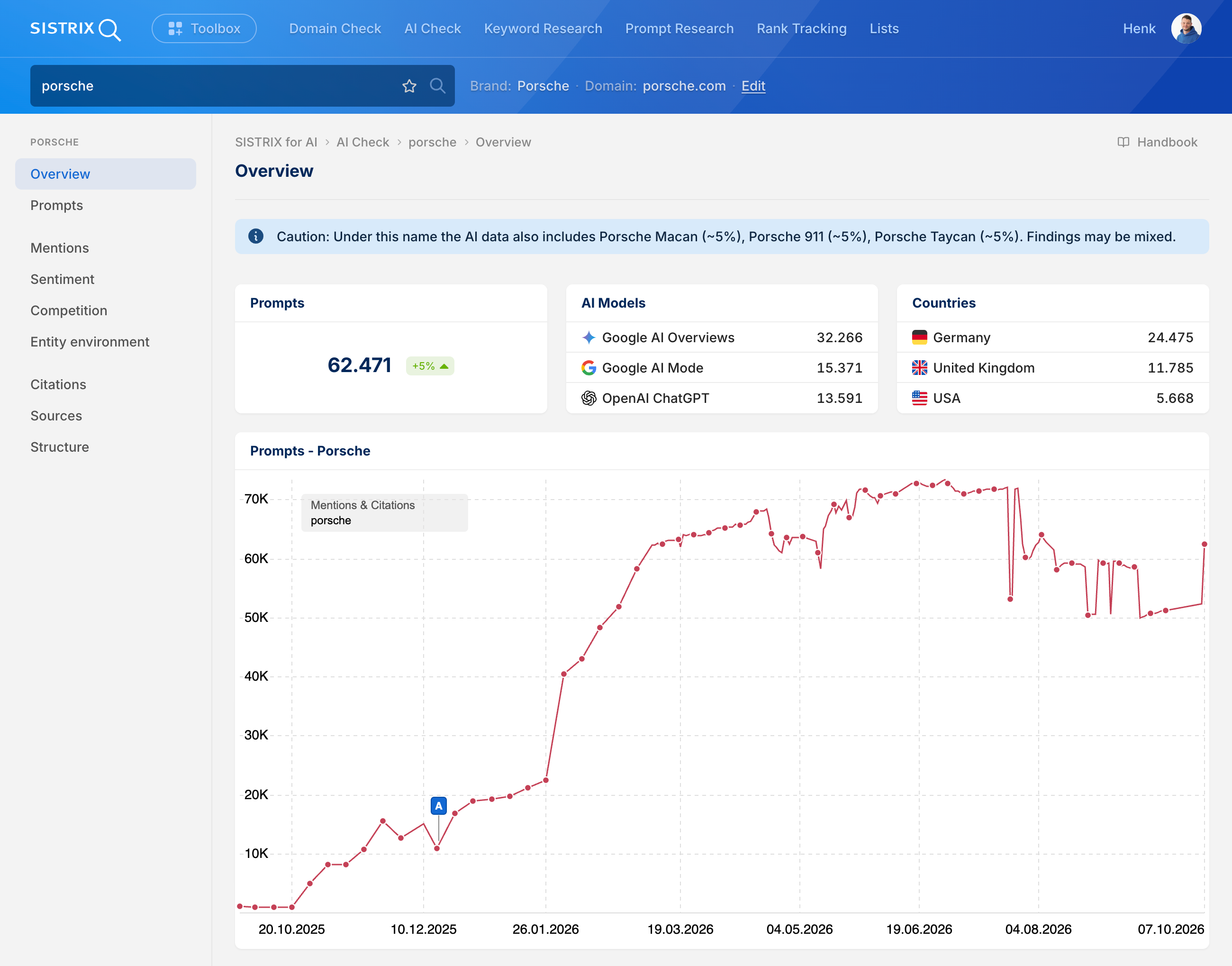
What Google changed: At the same time, it’s not just the technical collection of search results that is changing, but the search results themselves. Google is answering more and more searches with generated answers, in AI Overviews above the results and in AI Mode. The traditional list of results is pushed further down or disappears altogether.
What we’re doing: That’s why, in addition to rankings, we measure how websites appear in generated answers, both on Google and in other AI assistants.
What this means for you: Whether a website gets found increasingly depends on whether it is mentioned or cited as a source in these answers. A stable ranking therefore no longer automatically means the same number of visitors. You can see how often your website appears in AI answers in AI Check.
Test SISTRIX for Free
- Free 14-day test account
- Non-binding. No termination necessary
- Personalised on-boarding with experts