
If you work in digital marketing your inbox is likely to be littered with news on the latest AI visibility trackers. With so many solutions on the market it can leave you with a difficult decision, especially in the highly dynamic market we find ourselves in today. Maybe I can help take away that decision paralysis by showing you how we use SISTRIX for our work at Screaming Frog.
A guest blog post by Tom Jeffrey, Screaming Frog.
- Why AI Visibility Data Can Be a Goldmine
- Sources
- Mentions
- Brand sentiment
- AI responses
- Tags
- How We’re Using SISTRIX Features for Audits
- Use the Sources panel as a content gap analysis tool
- Identify high-weight listicle and ‘best of’ pages
- Turn brand sentiment data into content and PR strategy
- Showcase brand terms inaccuracies, hallucinations, across mentions on citations
- How We’re Prompting Claude Through SISTRIX’s MCP Connection
- Conclusion: SISTRIX AI Visibility Is One of the Most Capable Platforms in the Market
The SISTRIX AI Visibility tools and data have emerged as one of the most capable in this space. The tool has been very important in shaping our AI search offering and this guide shows you why, and how we’re using it at Screaming Frog.
Why AI Visibility Data Can Be a Goldmine
One of the most common objections to AI visibility tracking is the randomness problem: LLM responses are non-deterministic, personalised, and context-dependent. If the same prompt returns different results each time, how can you trust the data?
The answer is that you don’t need perfect consistency at the individual response level, you just need pattern signals for:
- Brand mentions and citations across topics
- Competitor market comparisons
- Brand sentiment
If that can be achieved with daily or weekly tracking across AI Mode, Perplexity and ChatGPT – you have enough to conduct audits (additional access to log files and GA4/Adobe referral tracking makes them even better!).
The SISTRIX platform gives digital marketing teams access to the following data outputs:
Sources
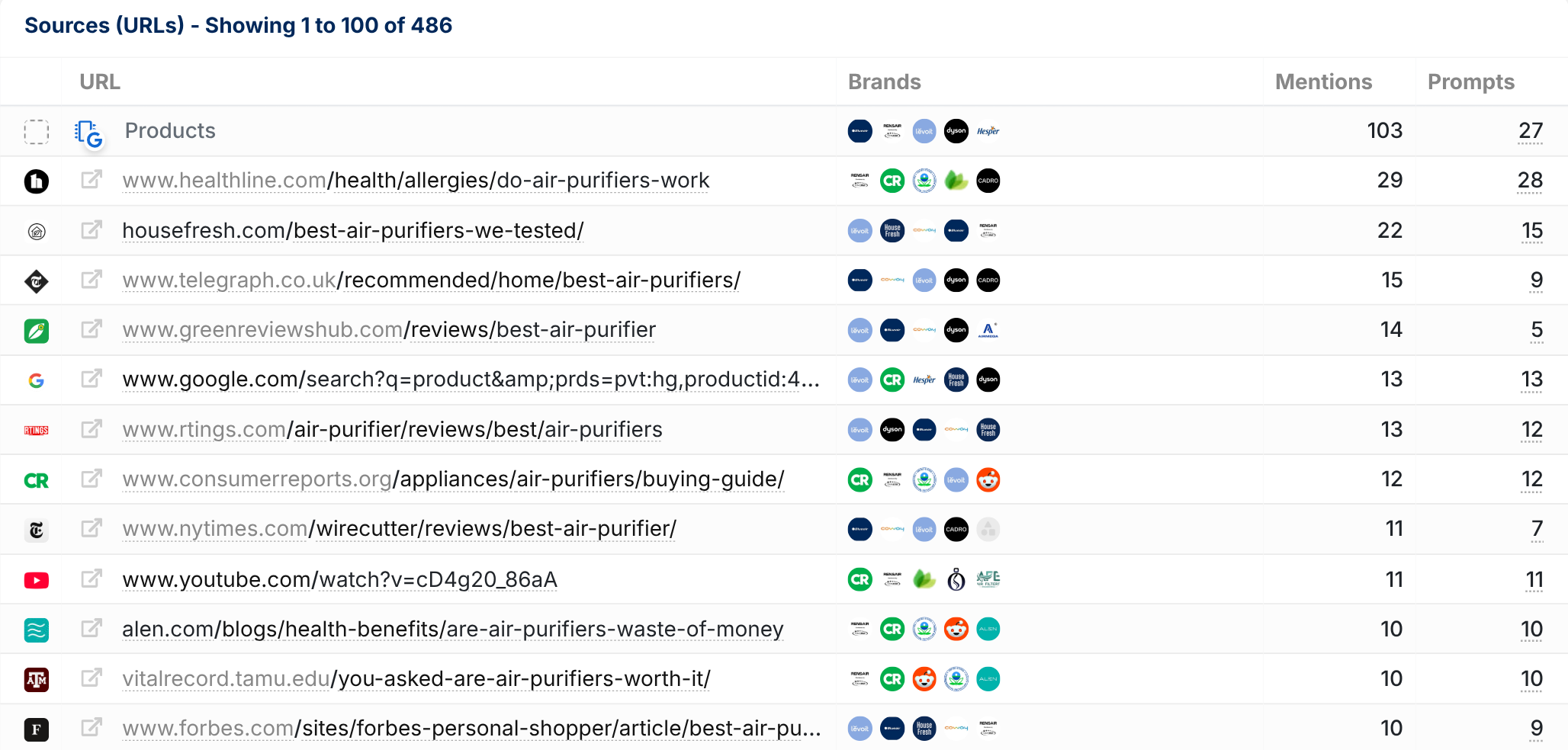
The ‘Sources’ view shows exactly which of your client’s pages LLMs are referencing and for which responses, alongside all competitor or other citations.
Mentions
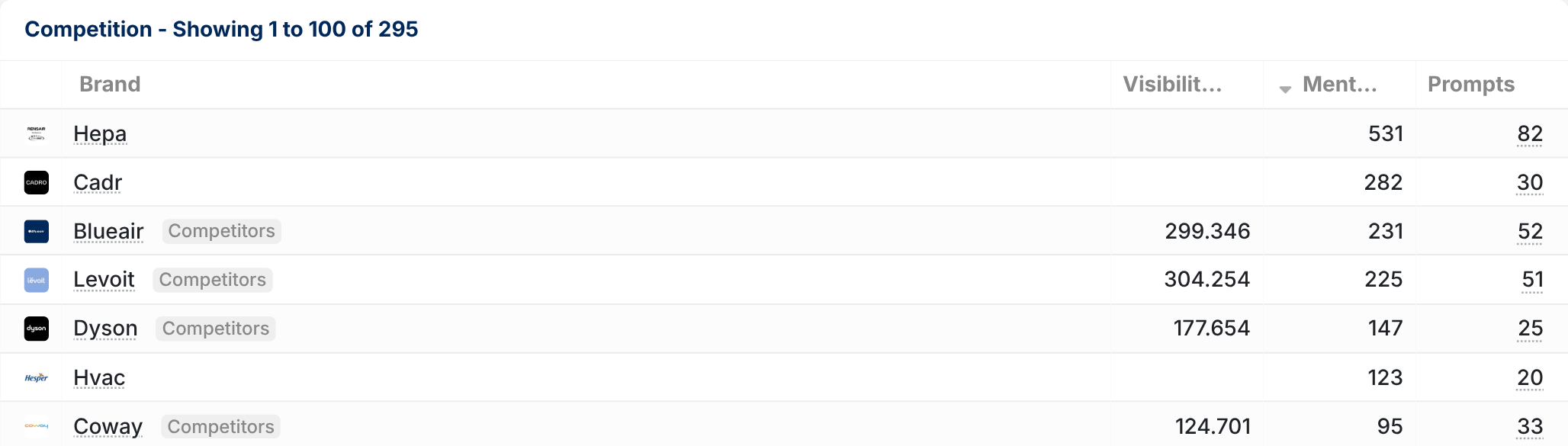
Through the ‘Competition’ feature we can easily see the number of times your brand is recommended by AI platforms.
Competitor market share
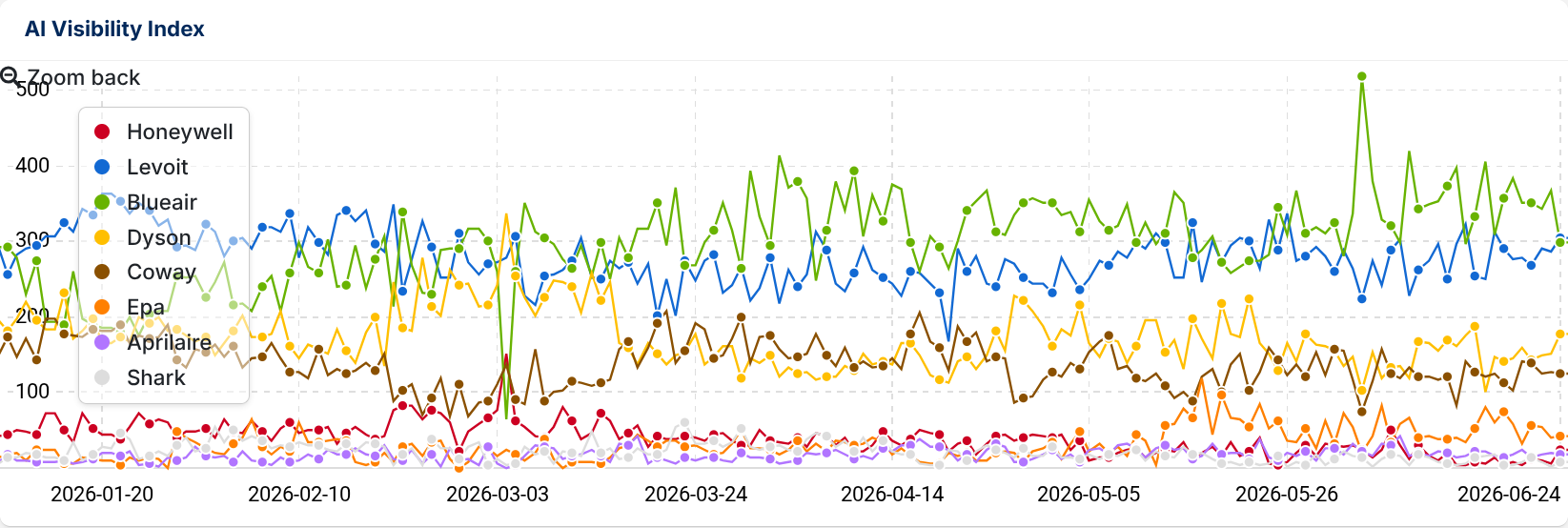
No-nonsense visualisations across visibility, mentions and citations through Visibility Index graphics and tables.
Brand sentiment
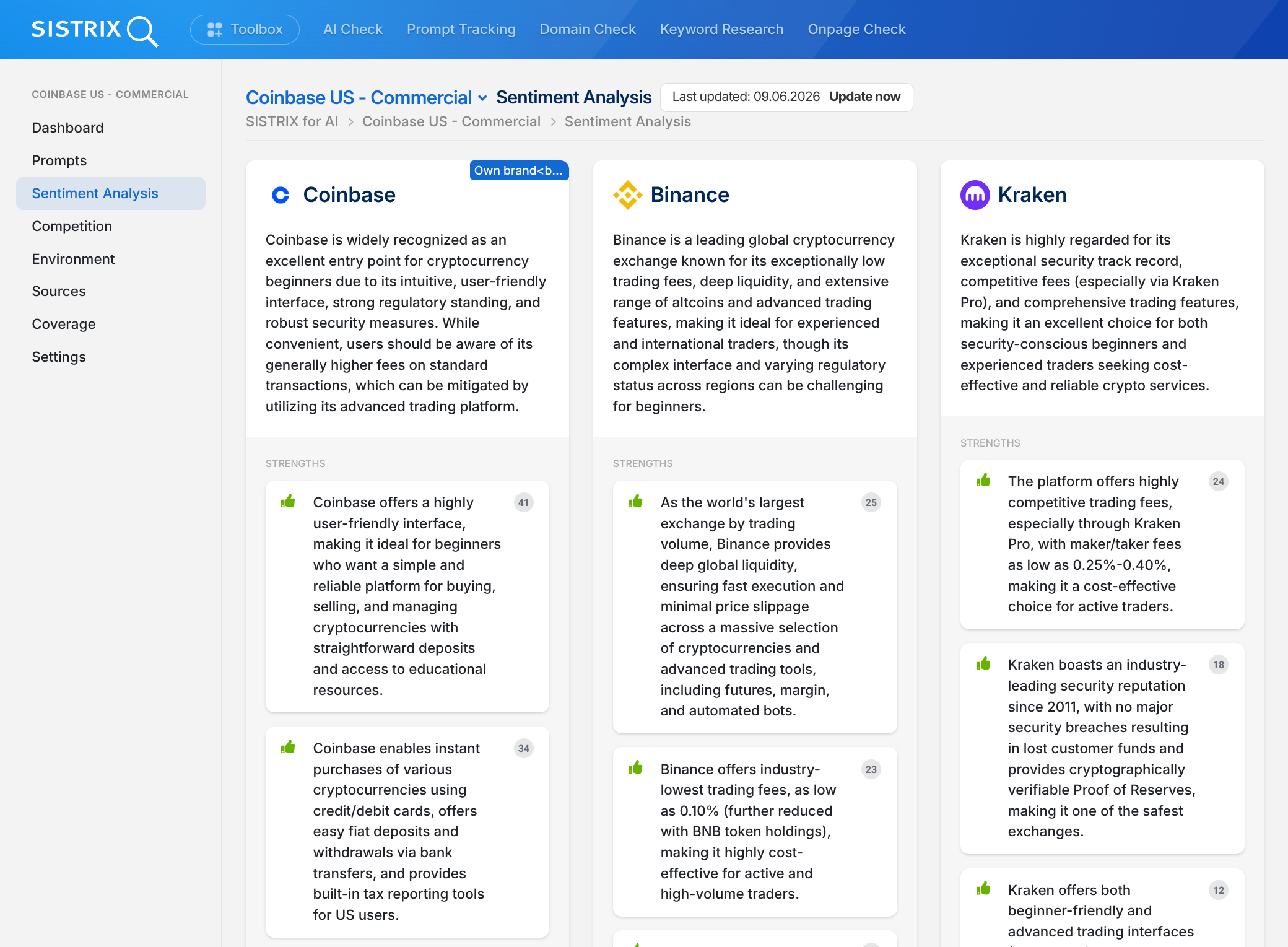
One-click analysis shows the weaknesses and strengths of your brand and selected competitors. Sentiments can be traced back to specific prompts & citations.
AI responses
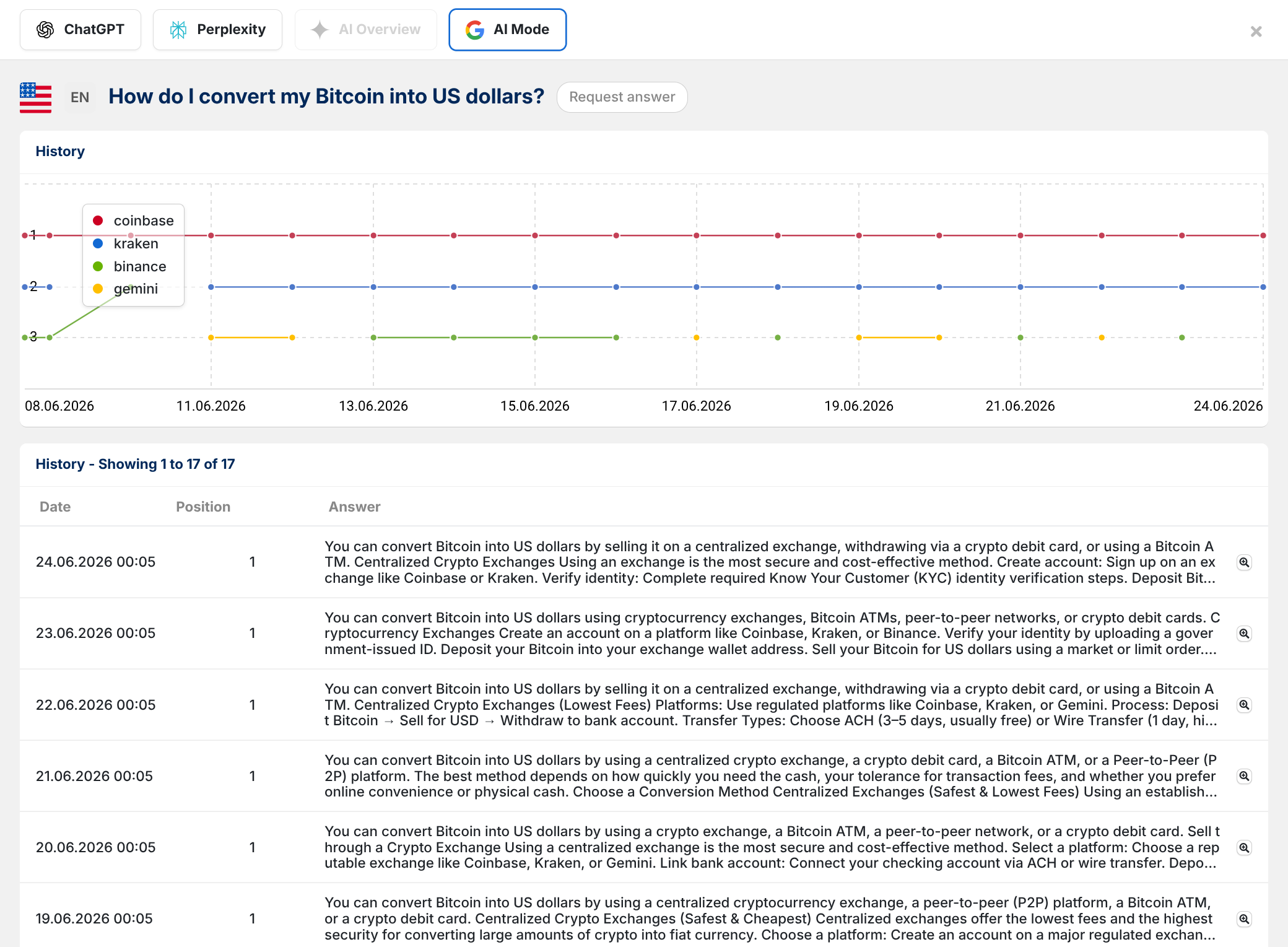
AI responses from the selected Chatbots are archived and available as part of the prompt monitoring data, although I’d encourage to not get bogged down comparing to what you’re seeing based on inherent personalisation and randomness.
Tags
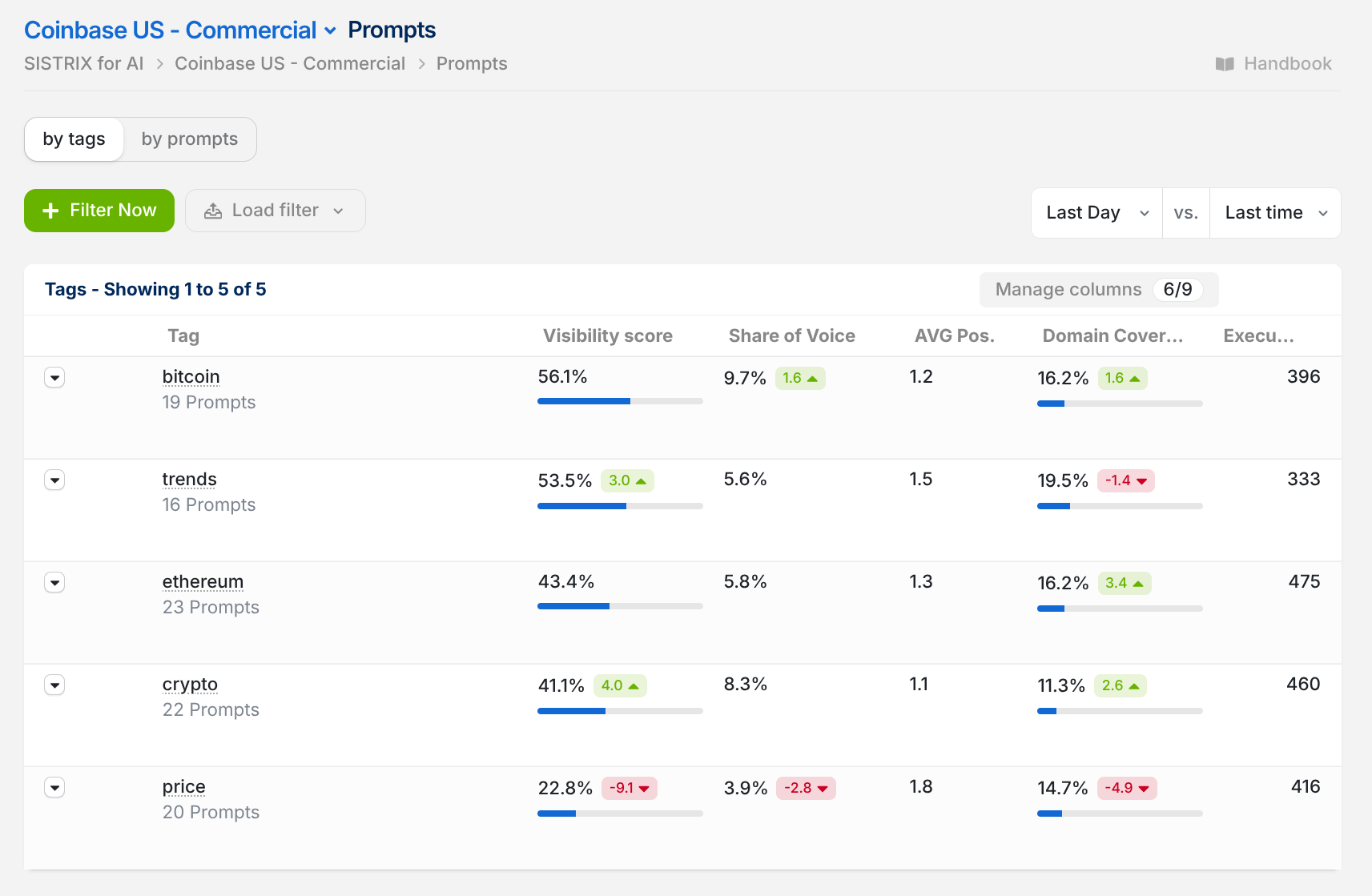
Categorising individual prompts into tags allows you to avoid the trap of obsessing over response-to-response prompt checking, and core visibility metrics for tags can direct your strategy (viewable under ‘Prompts’).
All of this data forms a perfect basis of auditing your clients’ performance and producing recommendations on how to improve across new content production, outreach and affiliates/partnerships – which I’ll get onto next.
How We’re Using SISTRIX Features for Audits
Here are our top ways to extract immediate strategic value from the platform.
Use the Sources panel as a content gap analysis tool
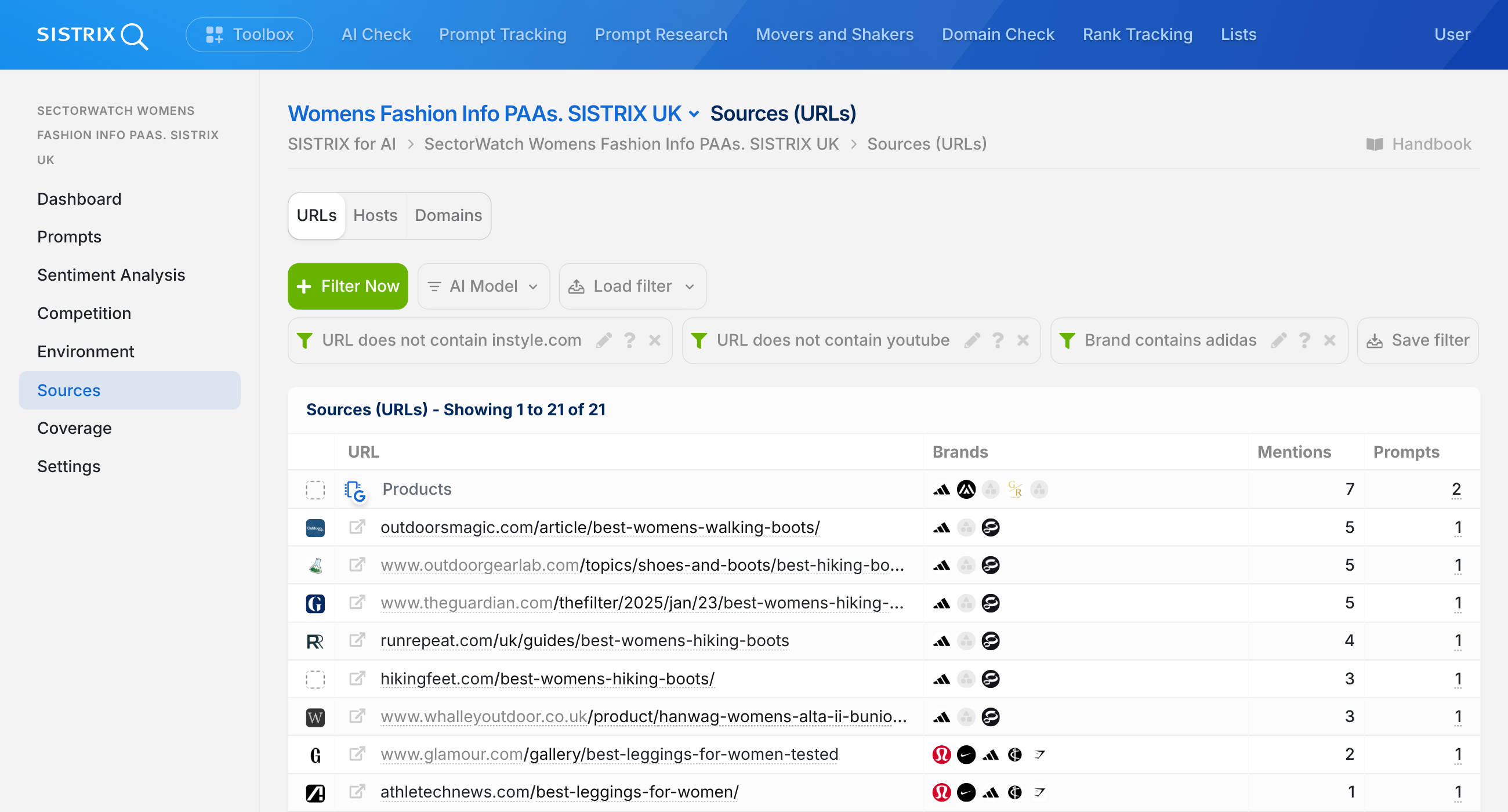
Filter the Sources view by your site’s competitor domains. The pages that appear are the ones LLMs consider authoritative enough to cite, which tells you what’s working for them. Add brand filters to refine this further. Cross-reference that against what you already have on your site and you’ve got a host of content gaps to work on:
Identify high-weight listicle and ‘best of’ pages
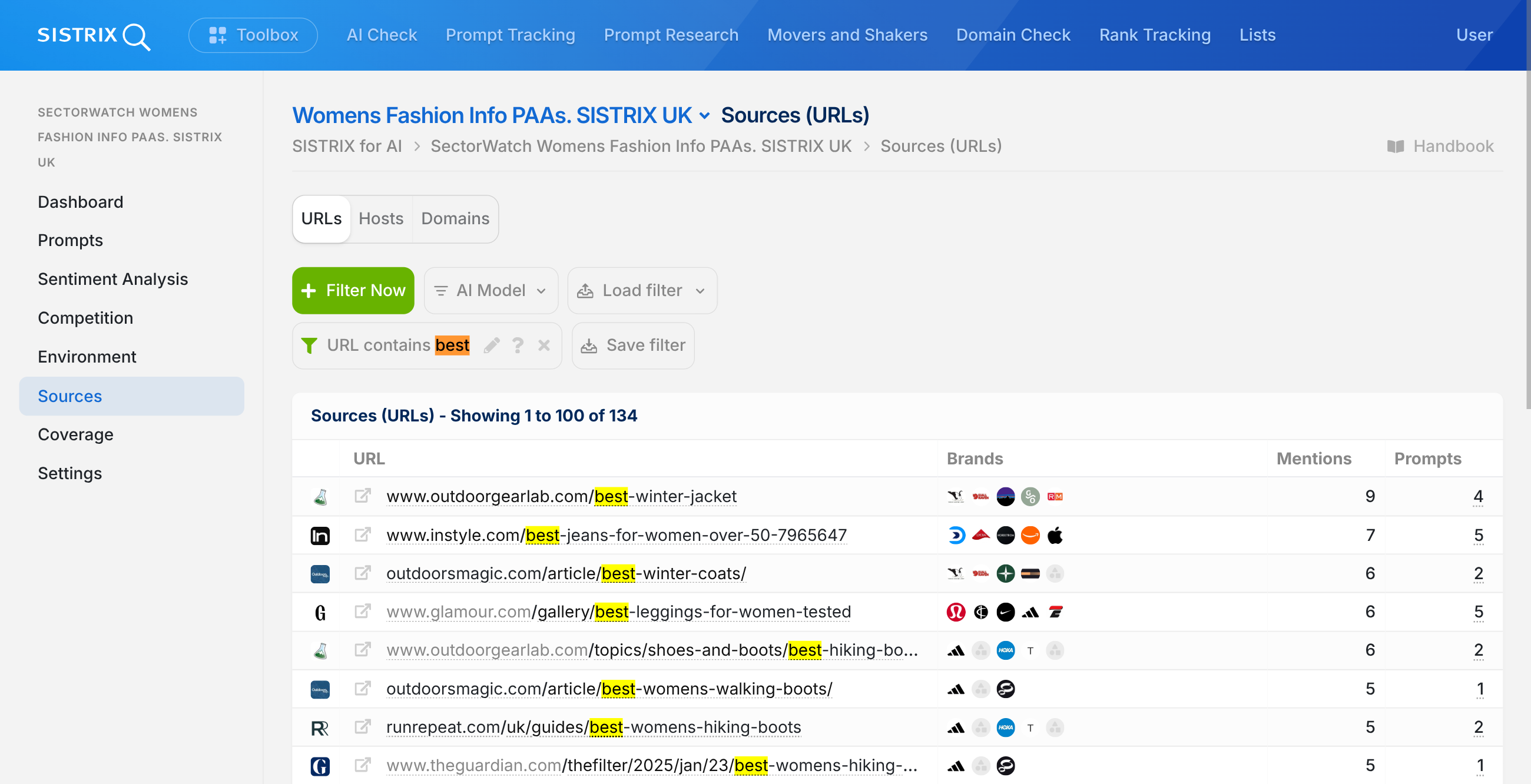
Filter Sources to find third-party ‘best of’ and comparison pages that carry heavy citation weight. These are the pages responsible for a disproportionate share of brand mentions in AI responses. Research from the University of Toronto found that AI engines cite third-party, authoritative sources roughly five times more often than a brand’s own pages.
Getting your site featured on these pages is often the highest-leverage GEO activity available to improve the quantity and quality of brand mentions:
Turn brand sentiment data into content and PR strategy
If sentiment is mixed or negative, that becomes a PR conversation. You can identify whether reviews or publications are being attributed to those AI responses and outreach to improve relationship or reply to dated comments.
From a content perspective, you may be able to fudge out negativity by controlling your own narrative about your brand. Seer Interactive did this perfectly, knocking out one negative employee review citing high-turnover with their own research on employee retention.
Showcase brand terms inaccuracies, hallucinations, across mentions on citations
If AI platforms show that AI citations describe your client inaccurately, that’s another outreach opportunity. Brands change their offering, pricing and USPs all the time – that doesn’t mean those changes are reflected immediately from others. That means the internet is rife with outdated information that LLMs are using for your brand’s narrative.
How We’re Prompting Claude Through SISTRIX’s MCP Connection
This one quite rightly deserves its own section. Like any good SaaS business, SISTRIX has worked hard on MCP features to allow you to connect, mine, analyse, and visualise performance data within Claude and ChatGPT.
Screaming Frog’s preference is Claude, and we’ve been experimenting using it with SISTRIX’s AI tracking connected since its recent launch via the MCP.
For more details on setting up, read here.
Once configured, you can query it conversationally, ask follow-up questions, and request formatted outputs without touching the SISTRIX UI. Things get even more powerful if you have the Screaming Frog MCP also connected – comparing valuable technical and performance data.
Some examples of the kinds of Claude prompts that become possible:
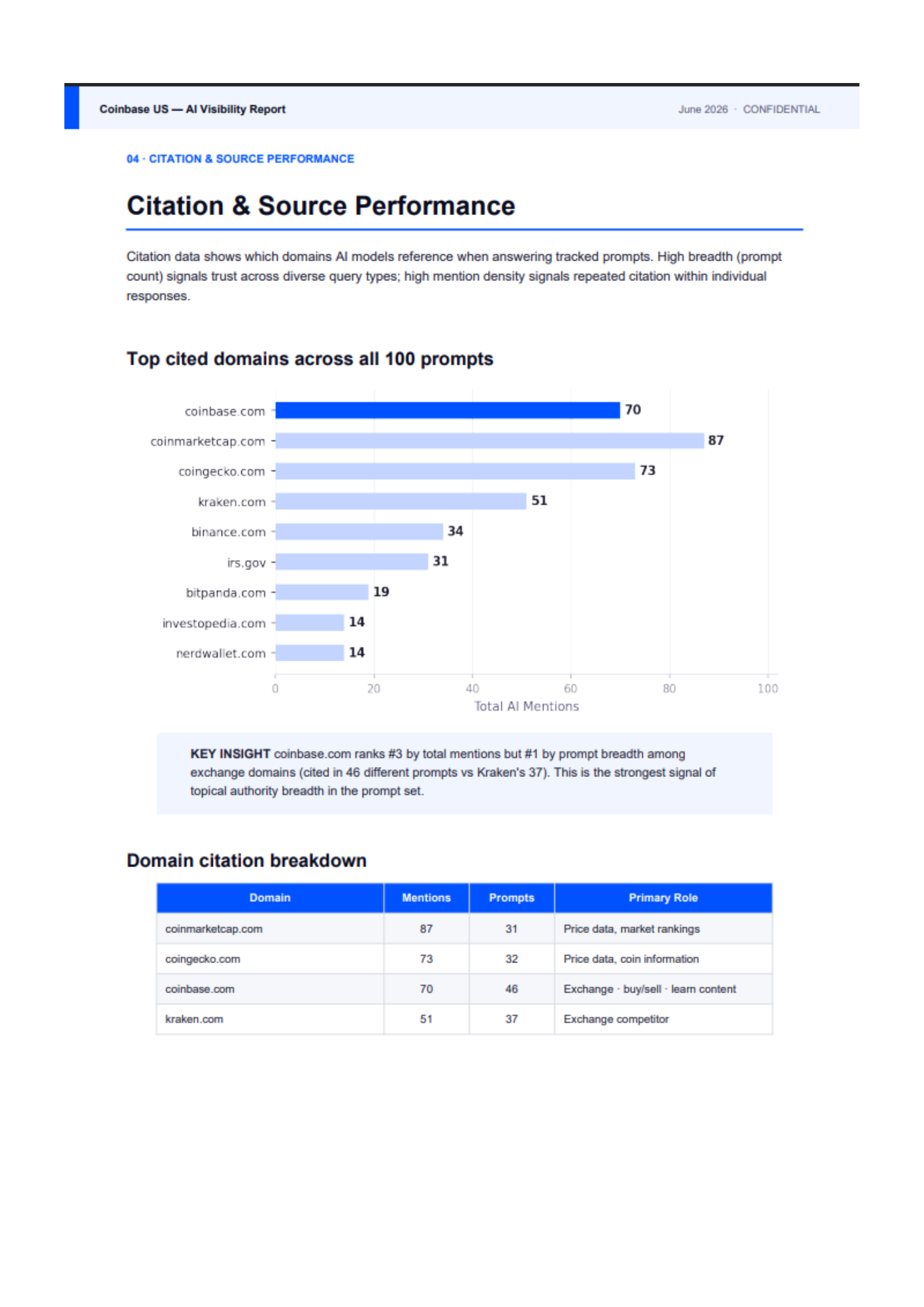
Visualise an overview report for [project] across AI visibility, mentions, and citations against core competition.
Claude assembles the data, writes narrative commentary, and produces a structured summary that can feed directly into stakeholder meetings:
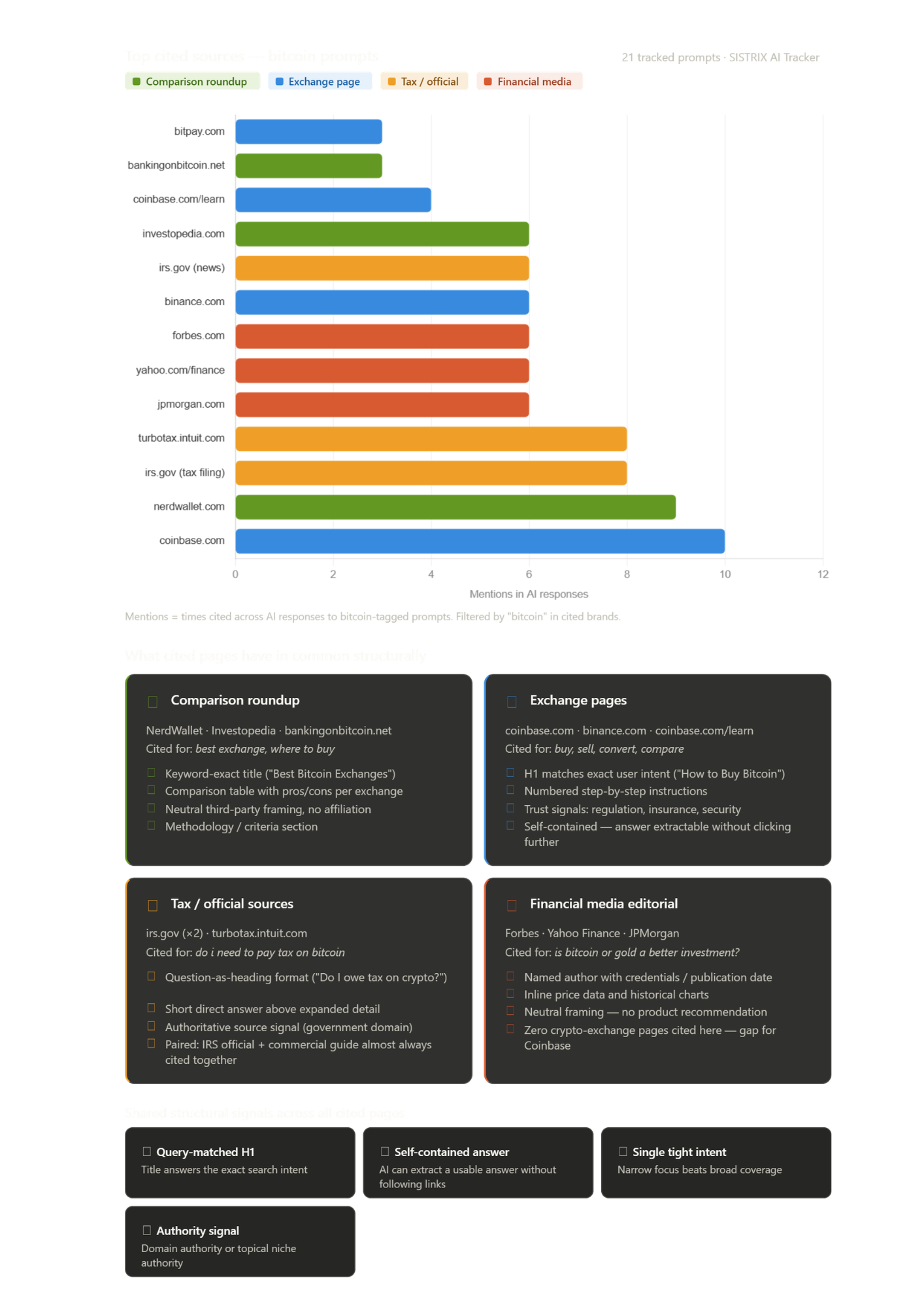
Visualise which sources are being cited most frequently in [tag] prompts for [project], and what do they have in common structurally?
Claude fetches Sources data filtered by your conversion prompt tags, runs a content pattern analysis, and returns observations about content format, depth, and structure that correlate with citation frequency.
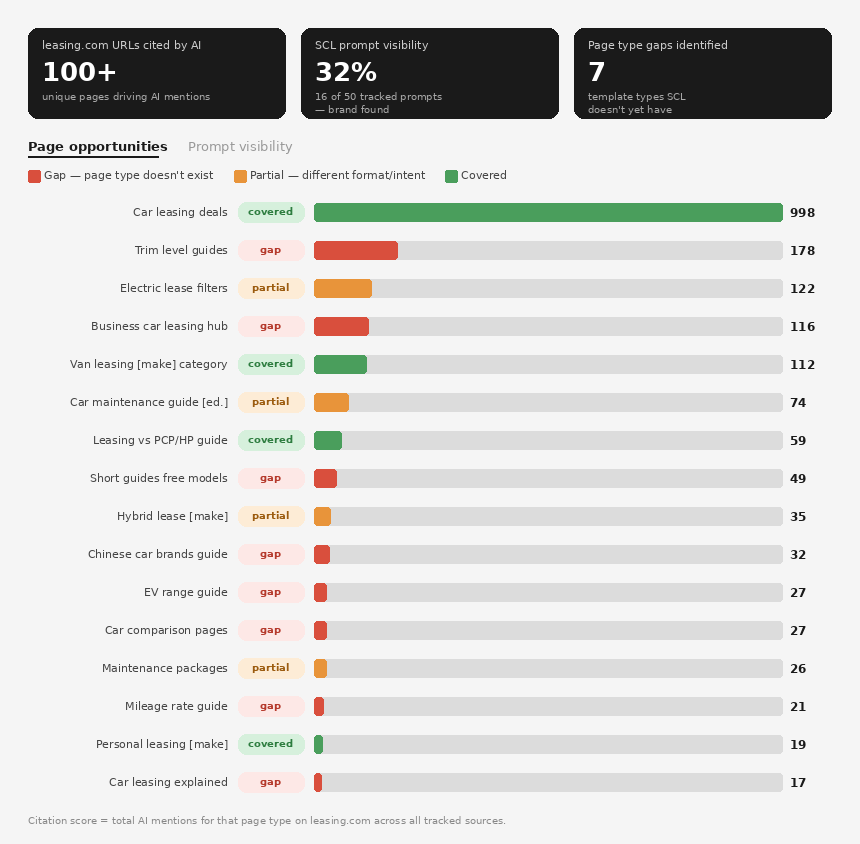
Generate a prompt gap analysis by querying SISTRIX to identify all sources for [competitor] in [project], cross-reference with Screaming Frog to identify if [your site] has similar page types.
Claude assembles the data and produces a structured summary of new page opportunities. You could even take this one step further by building Claude’s knowledge on how you template briefs, asking it to build out briefs for those opportunities for you.
I’ve found listing SISTRIX project IDs the easiest way to ensure consistency in calls via the MCP.
Of course, it goes without saying this work should never replace an experienced SEO professional.
Conclusion: SISTRIX AI Visibility Is One of the Most Capable Platforms in the Market
Teams getting the most out of AI Visibility trackers are not the ones with the most prompts, the most credits or the newest feature gimmick. They’re the ones who have thought carefully about what they’re measuring and why.
That means building a prompt strategy that reflects real AI query behaviour, not repurposed keyword lists. It means allocating credits toward the prompts and clients where AI visibility is actually a commercial lever. It means using a real-time Prompt Tracker to showcase historical patterns across brand mentions, citations and sentiment. Then using all those outputs to inform strategically on new content, PR and outreach.
GEO is still early but tools like SISTRIX allow teams to experiment, report and audit in a professionally responsible way.
SISTRIX gives you the raw materials. It’s then up to SEOs to use it well.