
With the AI Chatbot Action Plan, we offer a roadmap for the systematic analysis and optimization of your brand presence in generative AI systems such as ChatGPT , Google Gemini , or Claude, as well as in emerging AI search engines like Perplexity. The goal is to ensure and improve brand visibility in the responses of these chatbots.
- Why are AI chatbots and AI search engines relevant for SEO?
- Understanding Visibility in Chatbots and AI Search Engines
- The AI Chatbot Action Plan
- Step I: Inventory – How visible is your brand in chatbots and AI search engines?
- Step II: Reality vs. Ideal Image – Comparison and Need for Correction
- Step III: Optimization concept – strategically expanding visibility
- Clarity in the AI buzzword jungle
- AI Action Plan – Optimizing for the Future
Discover how SISTRIX can be used to improve your search marketing. Use a no-commitment trial with all data and tools: Test SISTRIX for free
Why are AI chatbots and AI search engines relevant for SEO?
Since the introduction of generative AI systems, search behavior has fundamentally changed. More and more users are directing their information requests to chatbots or AI search engines with web connectivity and receiving direct answers instead of a selection of websites. For brands, this means that visibility in these answers is increasingly replacing clicks from traditional search results.
Brands that are not mentioned or are misrepresented lose potential customers and relevance to competitors. Search engine optimization must therefore be expanded to include the analysis and manipulation of AI-generated responses.
Many uncertainties remain. How the market will develop and what role regulation will play is difficult to predict with any certainty today. One thing is clear, however: change is coming, probably faster and more quietly than many expect. It is therefore worthwhile to examine what we already know in order to be prepared and secure an advantage over competitors.
At the same time, traditional Google SEO remains indispensable. Many ranking factors are also relevant for AI systems, and despite all the discussions in the SEO industry, most search queries still go through Google. That won’t change anytime soon.
Traditional Google SEO remains the number one channel and should not be neglected.
Johannes Beus, founder of SISTRIX at Campixx 2025
Understanding Visibility in Chatbots and AI Search Engines
Chatbots like ChatGPT, Gemini, or Deepseek, as well as AI search engines like Perplexity , combine traditional search indexes with language models, formulate their own answers, and thus partially displace the familiar SERPs. Sources are rarely cited, answers vary considerably, and are often based on outdated data – reliable analysis has been virtually impossible until now.
The new SISTRIX tool for AI and chatbots makes this measurable for the first time. Based on 10 million representative prompts per language, we analyze the responses from the most important systems and identify which brands, entities, and sources are mentioned. This results in a unique visibility index that shows how present a brand is in chatbots and AI search engines and how it compares to competitors.
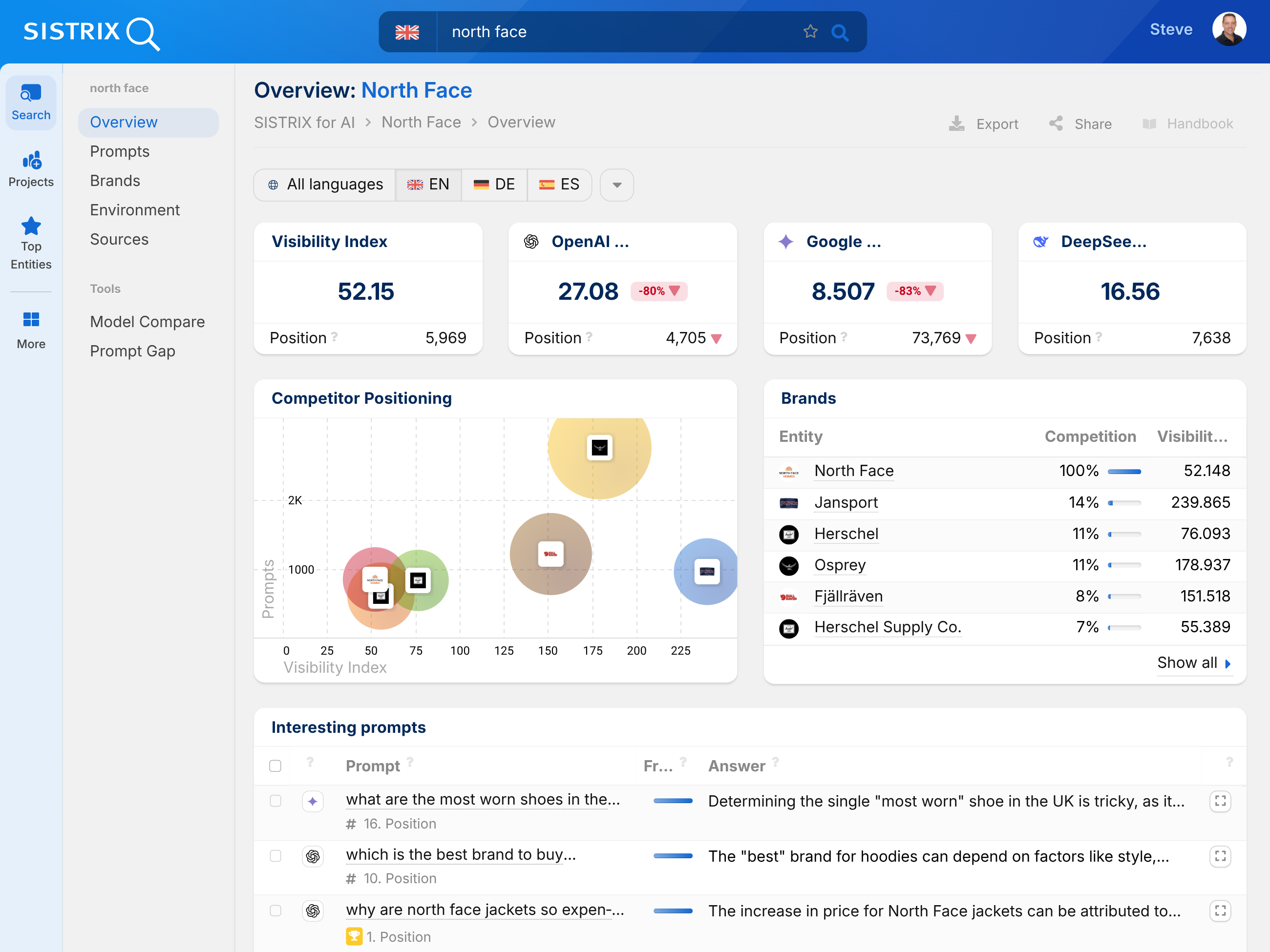
For SEO practice, this means that visibility is no longer solely generated in traditional search engines, but also in generative search results. SISTRIX allows you to track where your brand appears, which content is being cited, and where there is potential for optimization.
The AI Chatbot Action Plan
The truth is: there is no one-size-fits-all roadmap. We, too, cannot provide a 10-point plan that can simply be implemented and thus maintain visibility. The field is currently developing so dynamically that recommendations and the relevance of individual measures change regularly.
Voices claiming to know exactly what to do and to have the recipe for visibility in AI search should also be viewed critically.
However, what we can say is that there are areas that are currently working well, factors that appear particularly relevant, and starting points where it’s worthwhile to take early action. To increase the chances of visibility in the new search systems, we have created the Action Plan.
Step I: Inventory – How visible is your brand in chatbots and AI search engines?
Before optimizations are possible, a thorough analysis of the current situation is needed. The goal is to understand how and whether your brand appears in the responses of chatbots or AI search engines.
1. Brand visibility
- Is your brand mentioned in relevant inquiries?
- Is the spelling correct?
- In what context does the brand appear?
These questions can be answered by testing your brand in various prompt scenarios. Important: The tests should include not only your brand name, but also relevant topics and generic search terms.
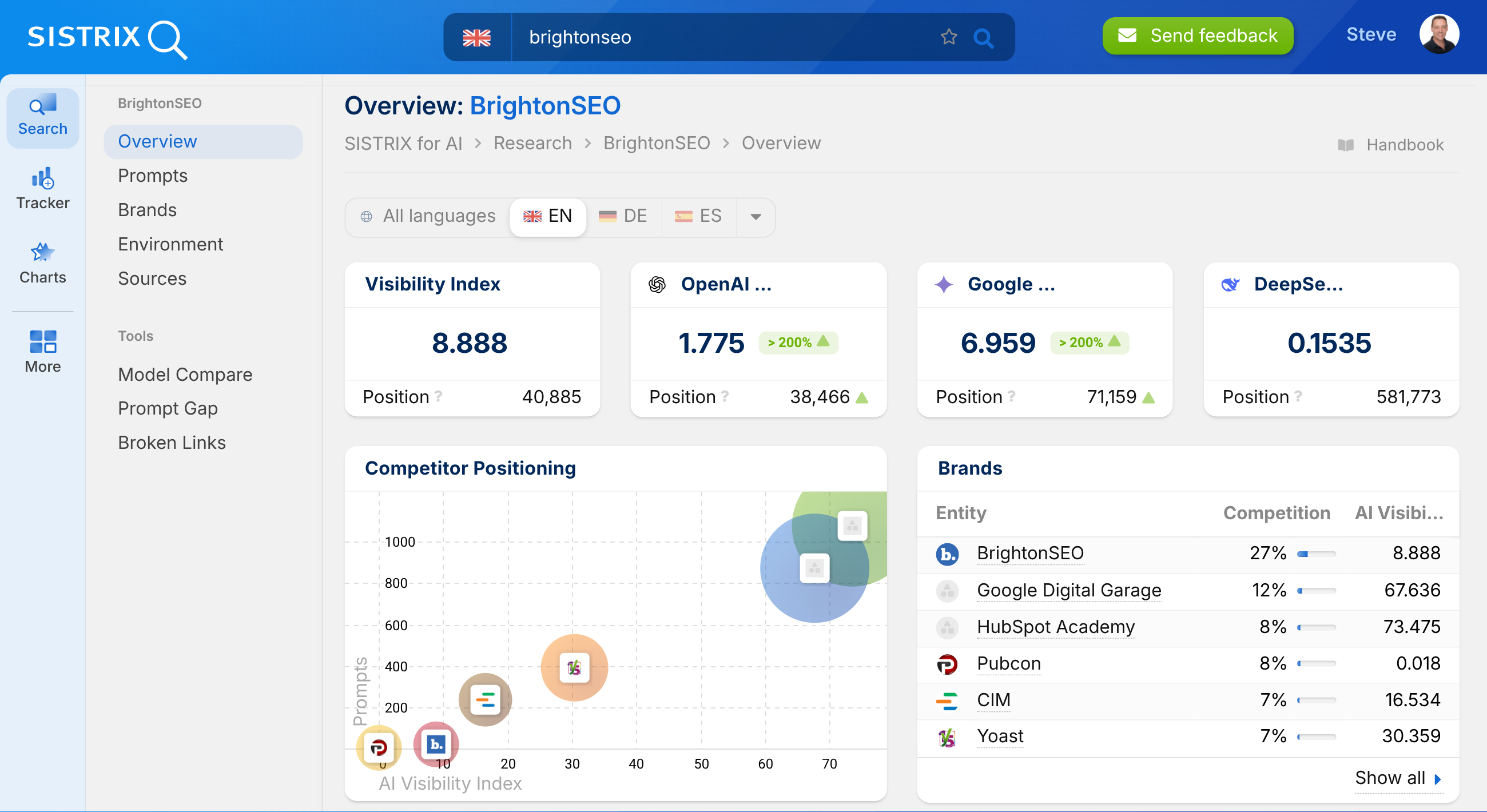
2. Model comparisons
- How different is the display in ChatGPT, Gemini, Claude, or Perplexity?
- Which models mention your brand – and which ignore it?
Since each provider works with different training data and mechanisms, a comparison is necessary. Only in this way can it be determined whether optimization measures are effective across the board or model-dependent.
3. Competitive analysis
- Which brands appear in typical user queries where you would also like to be visible?
- Do the results match your own market analysis?
This analysis shows how chatbots and AI search engines assess the competitive situation and whether you are underrepresented.
Step II: Reality vs. Ideal Image – Comparison and Need for Correction
Following the analysis, a comparison is made between the current state and the target state. The aim is to identify specific deviations.
1. Prompt Relevance
- Do you appear in response to typical questions from your target audience?
- Are you mentioned in industry-relevant contexts?
The goal is to evaluate your brand’s position in transactional and informational prompts.
2. Information accuracy
- Is the information that chatbots or AI search engines provide about you correct?
- Are there any outdated or incorrect statements?
If errors occur, the cause is often faulty data sources, e.g., old press articles or poorly maintained profiles.
3. Generic Prompts
- How present are you when it comes to general prompts (“best SEO agencies in Germany”, “reputable software for visibility analysis”)?
- Are you being cited as a reference or benchmark?
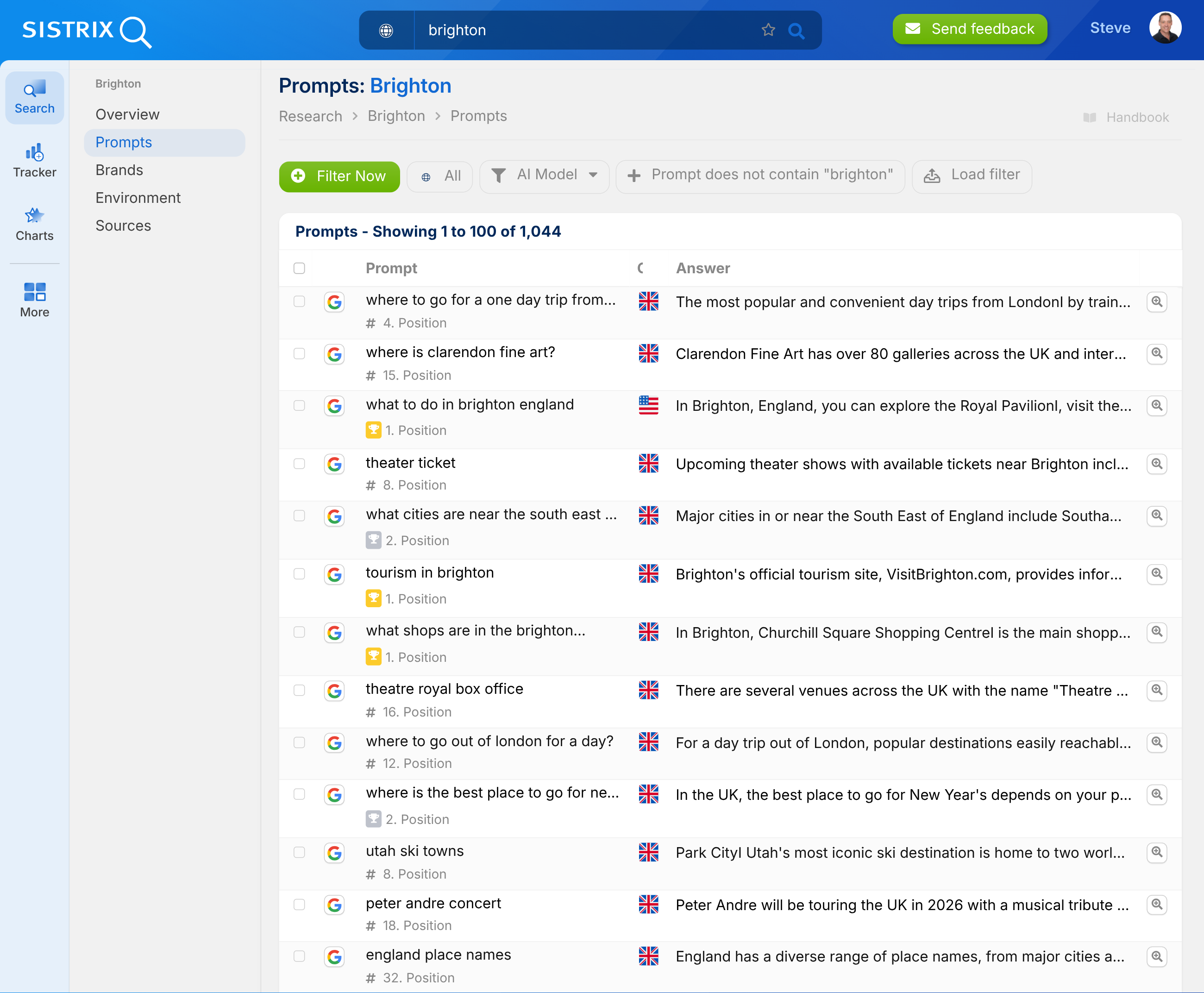
This analysis shows whether your brand is thematically established or only becomes visible in direct connection with your name.
Step III: Optimization concept – strategically expanding visibility
Once the gaps have been identified, a concrete optimization roadmap will be developed.
1. Technical Basics
- Make sure all content is accessible to crawlers and language models.
- Avoid JavaScript dependencies where they are not needed.
- Allow access by relevant bots (user agents such as GPTBot, ClaudeBot, PerplexityBot or Google-Extended should not be blocked).
2. Content quality according to EEAT
The relevance of EEAT criteria (Experience, Expertise, Authoritativeness, Trustworthiness) is also increasing in the context of AI responses. Like Google, LLMs prefer content based on expertise, genuine experience, and verifiable sources.
- Use real author profiles with subject-matter expertise.
- Demonstrate practical experience through studies, data, and case studies.
- Increase your chances of being cited by using well-structured content and clear wording.
3. Rethinking brand mention and link building
- Links are rarely displayed in chatbot responses and are hardly ever clicked. This makes brand mentions all the more important.
- Promote mentions in high-quality content on external sites, even without a direct link.
- Optimize for Named Entity Recognition so that your brand is recognized as a semantically relevant object.
Example: Named Entity Recognition
The goal of NER is to recognize these entities in the text and classify them correctly using machines, for example:
“SISTRIX was founded in Bonn in 2008.”
→ Result of the NER:
- SISTRIX → Organisation
- 2008 → Date
- Bonn → Location
Clarity in the AI buzzword jungle
With the advent of AI not only in the SEO scene but in many areas of the economy, some have made it their mission to create a jungle of buzzwords and label new, and sometimes already familiar, KPIs with an AI tag. This is not only opaque for those who don’t understand it, but also distracts from the real core issue: the questions that are truly crucial for visibility across different systems.
- When are brands actively mentioned in answers, and when do they remain invisible despite relevant content?
- What factors determine whether my content appears as a source or is only implicitly included in the answer?
- How can visibility in AI search engines and chatbots be reliably measured, and which KPIs are relevant for this?
Clarity emerges for those who focus precisely on these questions. Instead of chasing every new buzzword, it’s worthwhile to systematically examine one’s own visibility: Where is the brand mentioned, in what context does it appear, and how does this differ from the competition? New KPIs are only valuable if they provide answers to these core questions and make it measurable whether content actually has an impact on AI search engines and chatbots.
AI Action Plan – Optimizing for the Future
Optimizing for chatbots and AI search engines isn’t simply an add-on to traditional SEO, but a discipline in its own right with new requirements. Early analysis of brand search results allows you to correct mistakes, seize opportunities, and strategically expand your visibility. This ensures your brand remains present in a rapidly changing search landscape – securing a competitive edge while many rivals wait and see.
Test SISTRIX for Free
- Free 14-day test account
- Non-binding. No termination necessary
- Personalised on-boarding with experts