
This month, SectorWatch is taking to plugging in and taking electric cars for a spin. From Tesla’s magnetic hold on the public’s imagination to BYD’s extraordinary rise from near-zero to mainstream name, we’re examining two lanes of analysis: which electric car brands have the most search demand in the UK – and who’s actually winning when buyers search for them?
So whose SEO strategy has the range to go the distance? And who is running on empty, desperately hunting for a rapid charger?
- The top domains in the UK for electric car brands
- Top 20 domains for searches for electric car brands:
- The top brands by search demand for electric car brands
- What’s trending in the electric car search market?
- Sector search and click volume
- The top URLs for electric cars
- Content examples: What type of content is performing?
- High-performance content formats
- High-performance content directories
- Summary and takeaways
- Keyword research in the electric car brand sector
- Our SectorWatch process
The UK electric car market has gone from a curiosity to a mainstream force at remarkable speed.
According to the Society of Motor Manufacturers & Traders, almost half a million new battery electric vehicles were registered in the UK in 2025. That’s more than in the whole of 2021 and 2022 combined, and takes EVs to 23.4% of all new car sales.
The number of BEV models available in the UK grew from 130 to 160 in 2025, with at least 60 more expected in 2026.
At the top of the sales charts, Tesla’s grip remains firm. The Tesla Model Y was the UK’s best-selling battery-electric car for the fourth consecutive year in 2025. But the story reshaping the market is the extraordinary rise of Chinese manufacturers.
BYD registered 51,422 new cars in the UK in 2025 – a remarkable 485% year-on-year increase. BYD outsold Tesla, Citroën, Cupra, Mini and Honda, capturing a 2.54% share of the total market (Tesla had 2.25%).
With Tesla holding pole position in the public’s imagination, Chinese newcomers like BYD accelerating hard in the outside lane, and a pack of legacy manufacturers fighting for every inch of tarmac, the race for visibility – in showrooms and in search – has never been more charged.
The top domains in the UK for electric car brands
So, who is motoring ahead in organic search — and who needs to take their strategy back to the garage?
This SectorWatch has two angles. First, brand search demand: which electric car brands are generating the most search interest in the UK? Second, organic share of voice: when buyers search for those brands, which actually rank?
To explore both aspects of this story, we curated a single set of 1,490 commercial “do” (commercial) keywords covering the UK’s most searched-for electric car brands. From “tesla model y” and “byd seal” to “porsche macan electric” and “kia ev9 price”, these are the searches made by buyers who already have a brand or model in mind. This gives us a unique dual lens: search volume tells us which brands have captured the public’s attention (demand), while the ranking data tells us who’s actually waiting for them when they arrive in Google (visibility).
Do searches:
- autotrader.co.uk
- carwow.co.uk
- whatcar.com
For organic share of voice, the brands themselves are largely absent from the top of the results. Instead, car media, marketplaces and leasing platforms dominate, and by a significant margin.
Carwow appears in the top 10 (page 1) for 70.9% of our keyword set. AutoTrader for 57.8%. Tesla.com, by contrast, ranks in the top 10 for just 6.2% despite us including many popular generic “electric car” searches. The platforms, not the manufacturers, are winning the battle for buyer attention on Google.
Top 20 domains for searches for electric car brands:
| # | Domain | Project Visibility Index |
|---|---|---|
| 1 | autotrader.co.uk | 656.41 |
| 2 | carwow.co.uk | 643.92 |
| 3 | whatcar.com | 305.84 |
| 4 | topgear.com | 289.59 |
| 5 | selectcarleasing.co.uk | 203.72 |
| 6 | autoexpress.co.uk | 180.13 |
| 7 | businesscar.co.uk | 168.14 |
| 8 | nationwidevehiclecontracts.co.uk | 167.61 |
| 9 | autocar.co.uk | 133.83 |
| 10 | wikipedia.org | 126.18 |
| 11 | leasing.com | 122.01 |
| 12 | arnoldclark.com | 114.74 |
| 13 | tesla.com | 108.72 |
| 14 | byd.com | 106.77 |
| 15 | carbuyer.co.uk | 102.12 |
| 16 | volkswagen.co.uk | 91.57 |
| 17 | greencarguide.co.uk | 90.05 |
| 18 | carmagazine.co.uk | 86.90 |
| 19 | kia.com | 83.60 |
| 20 | audi.co.uk | 79.79 |
The top brands by search demand for electric car brands
For brand search demand, Tesla and BYD lead by some distance. “Tesla” alone generates 118,000 UK searches a month, while “BYD” generates 95,900. That’s ahead of Porsche, Kia, Polestar and Volkswagen’s entire ID range combined, remarkable for a brand barely known in the UK three years ago.
- The top 2 are both pure-EV brands. The first legacy manufacturer doesn’t appear until BMW at #3
- EV-only brands have an advantage, as searches for Tesla, BYD or Polestar, by default, are looking for electric cars. We haven’t included brand-only searches for manufacturers that also make ICE cars, as there’s no clear electric car intent. For example, we haven’t included searches for “BMW”, which has an average UK search volume of 209,000 or “Jaecoo” (37,000).
- Tesla’s lead is enormous, nearly 36% more searches than BYD in second place, and more than triple BMW in third
- BYD’s position is remarkable, ahead of BMW, Kia, Polestar and Porsche, despite only launching in the UK in 2023. This and Tesla’s place at the top is a striking illustration of just how much those two brands dominate the UK public’s mind-share
- Polestar at #5 is a striking result for a relatively small brand. Its search volume rivals Porsche, suggesting strong consumer curiosity
What’s trending in the electric car search market?
By analysing our keyword list alongside SISTRIX TrendWatch data, we can highlight the topics that have surged in interest over recent months. Unlike most sectors, where search demand ebbs and flows with seasons and news cycles, electric cars are in a category of their own: the entire sector is trending upward, driven by the ZEV mandate, expanding model ranges, and growing consumer awareness.
But within that broader surge, two forces are shaping the specific peaks. First, new model launches, such as from Škoda, Kia and Volkswagen, generate sharp spikes in search interest. Second, and most strikingly, Chinese brands are generating rapidly growing search demand almost from a standing start. BYD, Jaecoo, Omoda and Leapmotor are all seeing steep upward trajectories as UK consumers search for names they’ve started hearing about but may never have considered before.
Here are some of the trending search terms we identified in this sector:
- BYD terms, including “byd”, “byd uk”, “byd cars”, “byd offers”, “byd suv” and “byd lease”
- The BYD Seal, such as “byd seal”, “byd seal review” and “byd seal lease”
- The BYD Sealion (Sealion 7 released in Q1 2025), such as “byd sealion 7” and “sealion 7”
- The Polestar 4
- The Kia EV3
- The Renault 5, such as “renault 5 electric” and “renault 5 electric price“
- The Jaecoo E5
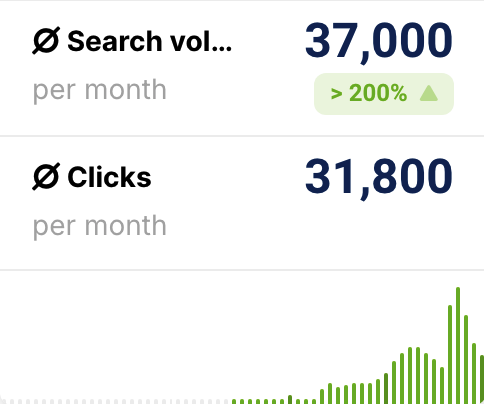
While they make a range of vehicle types, it is worth noting the growth in demand for the Jaecoo brand. This has gone from little demand 3 years ago to big interest today.
Sector search and click volume
To understand the electric car brand search landscape, we curated a single set of 1,490 commercial “do” keywords covering the UK’s most searched-for electric car brands. From “tesla model y” and “byd seal” to “porsche macan electric” and “kia ev9 price”, these are the searches made by buyers who already have a brand or model in mind. This gives us a unique dual lens: search volume tells us which brands have captured the public’s attention, while the ranking data tells us who’s actually waiting for them when they arrive in Google.
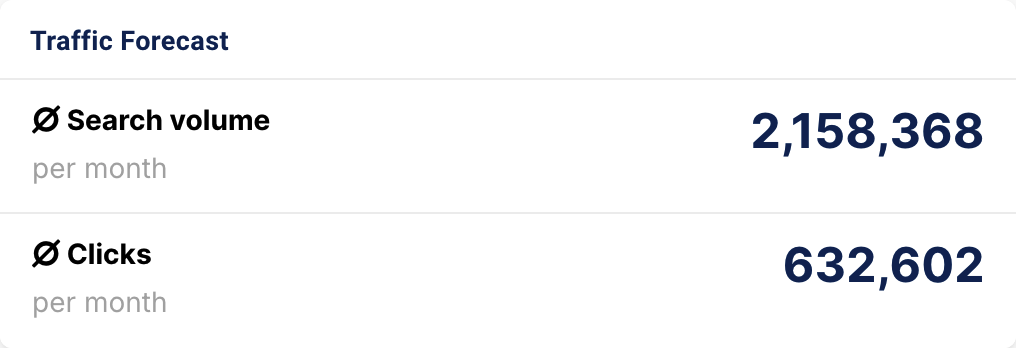
Combined, our keyword set accounts for over 2.1 million organic searches a month in the UK, a figure that underlines how much is at stake for the brands and platforms competing for visibility.
An important part of any keyword analysis in today’s Google search results is to account for AI Overviews. These summarise key information at the top of the page, often answering the query directly in the SERP (search engine results page). 51.1% of our ‘do’ keywords contain an AI overview, showing Google attempting to add extra insight even into commercial brand searches.
The top URLs for electric cars
SISTRIX keyword lists reveal which individual pages capture the most visibility across a keyword set. Here, the picture is notably different from most SectorWatch analyses. Because our keyword set is spread across hundreds of different brands and models, no single page dominates. Even the top URL, AutoTrader’s electric cars hub, ranks in the top 10 for just 112 of our 1,490 keywords.
| # | URL | Top Keyword |
|---|---|---|
| 1 | https://www.autotrader.co.uk/cars/electric | electric vehicle |
| 2 | https://www.carwow.co.uk/electric-cars | electric vehicle |
| 3 | https://octopusev.com/cars | electric cars |
| 4 | https://www.carmagazine.co.uk/electric/best-small-electric-cars/ | small electric car |
| 5 | https://www.audi.co.uk/en/electric/e-tron/ | audi e tron |
| 6 | https://www.bmw.co.uk/en/electric-cars.html | electric vehicle |
| 7 | https://www.volkswagen.co.uk/en/electric-and-hybrid/electric-cars.html | electric vehicle |
| 8 | https://www.businesscar.co.uk/analysis/best-large-electric-suvs-whole-life-cost-comparison/ | electric suv |
| 9 | https://www.autoexpress.co.uk/best/electric-cars | electric vehicle |
| 10 | https://www.arnoldclark.com/electric-cars | electric cars |
What the list does reveal is the type of page Google rewards.
Marketplace and aggregator hubs lead, as AutoTrader and Carwow’s electric car landing pages sit at the top, capturing broad cross-brand searches. Electric car hubs from the manufacturers themselves (Audi, Volkswagen, BMW, Mercedes, Kia) follow, performing well for their own model and brand queries.
We also see “Best of” editorial guides from publishers like Car Magazine and What Car bridge the gap, ranking across multiple generic queries. And intriguingly, Octopus EV’s car listing page ranks fourth overall; a striking result for the energy company, reflecting how far the EV ecosystem now extends beyond traditional automotive brands.
Content examples: What type of content is performing?
Looking across our winning domains, a clear picture emerges of who owns the electric car SERPs – and it isn’t the car brands themselves. Google’s results for electric car brand searches are dominated by a layer of intermediaries sitting firmly between manufacturer and buyer.
- Car marketplaces and comparison platforms own the top of the results: Carwow and AutoTrader sit first and second overall, and in a dominant position
- Carwow ranks in the top 10 for 71.32% of our entire keyword set, with AutoTrader on page one for 58.81%
- These car supermarket platforms win because they offer something no single brand can – The ability to shop across makes, models and prices in one place, which Google recognises as exactly what a buyer-intent search demands
- The car brands themselves are largely spectators in their own SERPs: Despite brands generating enormous search demand, manufacturer websites are a surprisingly muted presence
- Tesla.com ranks in the top 10 for just over 6% of our keyword set. BYD.com manages 6.5%. Even established names like Volkswagen, Audi and BMW rank in the top 10 for fewer than 6% of all of our keywords. The brands are being outranked, even sometimes for their own terms, by third parties
- Car media and review publishers are a constant presence throughout the results: What Car, Top Gear, Auto Express, Autocar and Car Magazine all feature strongly, collectively covering a huge breadth of model and brand queries
- Their buying guides, reviews and “best of” roundups give Google trusted, editorially credible content to serve for almost every search in our set, offering an alternative content type to serve searchers
- Rather than only showing buying pages, these guides let Google show content that serves a different search intent. While brand and model queries are mostly seen as commercial searches, they are somewhat generic, so Google shows some alternative content formats to serve those with a different goal
- Leasing platforms punch well above their weight: Select Car Leasing, Nationwide Vehicle Contracts, leasing.com and Drive Electric all feature in our top 25 domains. With leasing remaining the dominant route to EV ownership for UK buyers, these sites have built deep, model-specific landing pages that align tightly with commercial search intent
- Specialist EV sites and dealer groups add further depth: Green Car Guide, Electrifying.com and Driving Electric all feature in our top 30, demonstrating that dedicated EV publishers have carved out strong niches. Meanwhile, dealer groups such as Arnold Clark, Marshall and Lookers are quietly accumulating significant visibility, particularly for model-specific and “for sale” queries
High-performance content formats
Across the winning domains, a couple of themes stand out. The third-party sites with notable horsepower aren’t focused on a narrow range of topics. They use scalable templates deployed systematically to cover hundreds or thousands of variants by brand, by model, by location, and so on.
The electric car SERPs reward sites that have thought architecturally, not just editorially.
So what does it take to win in a sector where buyer intent spans everything from “what is the BYD Seal?” to “Tesla Model Y lease deals London”? We’re examining the high-performing content formats that repeatedly earn top positions across their target keywords.
Mortgage SERPs are unusually consistent in the types of pages Google rewards. Across both “know” and “do” intent groups, the top-ranking URLs fall into just a handful of formats — and each reflects a clear user need within the mortgage journey.
- Brand and model hub pages:
- Clean, consistently structured landing pages for each manufacturer and model are the backbone of the highest-performing sites. These pages work as entry points for brand-level searches while linking down to more specific model, deals and location pages beneath them
- Sites can then expand this structure at scale to cover every brand and model, adding to it as manufacturers release new cars
- Why they win:
- A single well-structured brand hub naturally captures dozens of related queries, such as brand name, model names, pricing and availability, without requiring a separate page for each one
- Scalable templates mean new brands and models (hello, Jaecoo; hello, Leapmotor) can be added quickly, keeping the site current as the market evolves
- Model hub pages (such as this one for the Audi Q4 E-tron) offer great internal linking opportunities, from in-depth reviews to leasing deals and especially to the main new and used car listings for that model, keeping searchers on the site, no matter what their next step might be
- “Best of” editorial roundups:
- Trusted publisher guides for popular consumer questions, such as “best electric SUVs” or “best small electric cars”, can rank across large numbers of generic and cross-brand queries
- These pages satisfy the significant share of buyers who are still deciding which brand or model to consider, and Google consistently rewards them with strong page-one positions
- Why they win:
- They serve users at the top of the funnel who haven’t yet committed to a brand, making them relevant across a wide range of queries with a single page
- Easy to target relevant searchers
- Strong internal linking to individual reviews and to buying pages where options/agreements exist
- Regular updates keep freshness signals strong, critical in a sector where new models arrive constantly
- Takes advantage of the excellent reputation (and E-E-A-T signals) of the publication
- Model-specific review and specification pages:
- Granular pages targeting individual models. They include reviews, specs, pricing, deals and even colour variants and allow sites to capture the long tail of model-specific searches that make up the bulk of our keyword set
- Why they win:
- The breadth of this coverage, rather than the depth of any single page, is what drives overall visibility. Highly specific pages match closely with the precise, long-tail queries buyers use when they’ve narrowed their shortlist
- Structured data for specs, pricing and ratings gives Google and AI systems rich, parseable content to surface in both traditional results and AI Overviews
- New and used car and leasing category pages:
- Pages that show actual cars for sale, usually with faceted navigation to filter down by specifications and location
- With leasing and used EVs representing a huge share of how UK buyers actually acquire electric cars, dedicated sections for used stock and lease deals capture significant commercial intent. Sites that mirror their new car structure within a used or leasing section can effectively double their coverage of the same brand and model
- Why they win:
- Live inventory and regularly refreshed pricing data provide constant freshness signals. This is the latest information on cars for sale, so search tools can have confidence in showing them
- Huge potential inventory
- Internal linking opportunities
High-performance content directories
We’ve found three standout directories in our analysis that couldn’t be more different in approach.
A marketplace giant with an almost incomprehensible breadth of coverage. A car-buying platform with a beautifully logical brand-model-location hierarchy. And a trusted publisher whose tightly curated “best of” section punches far above its page count.
Together, they offer a masterclass in three distinct routes to search dominance in the electric car sector.
It’s no surprise that AutoTrader sits at the top of our analysis. The UK’s largest automotive marketplace has built a /cars/ directory of fantastic scale, and it is the single most successful car-dedicated directory represented in our keyword set.
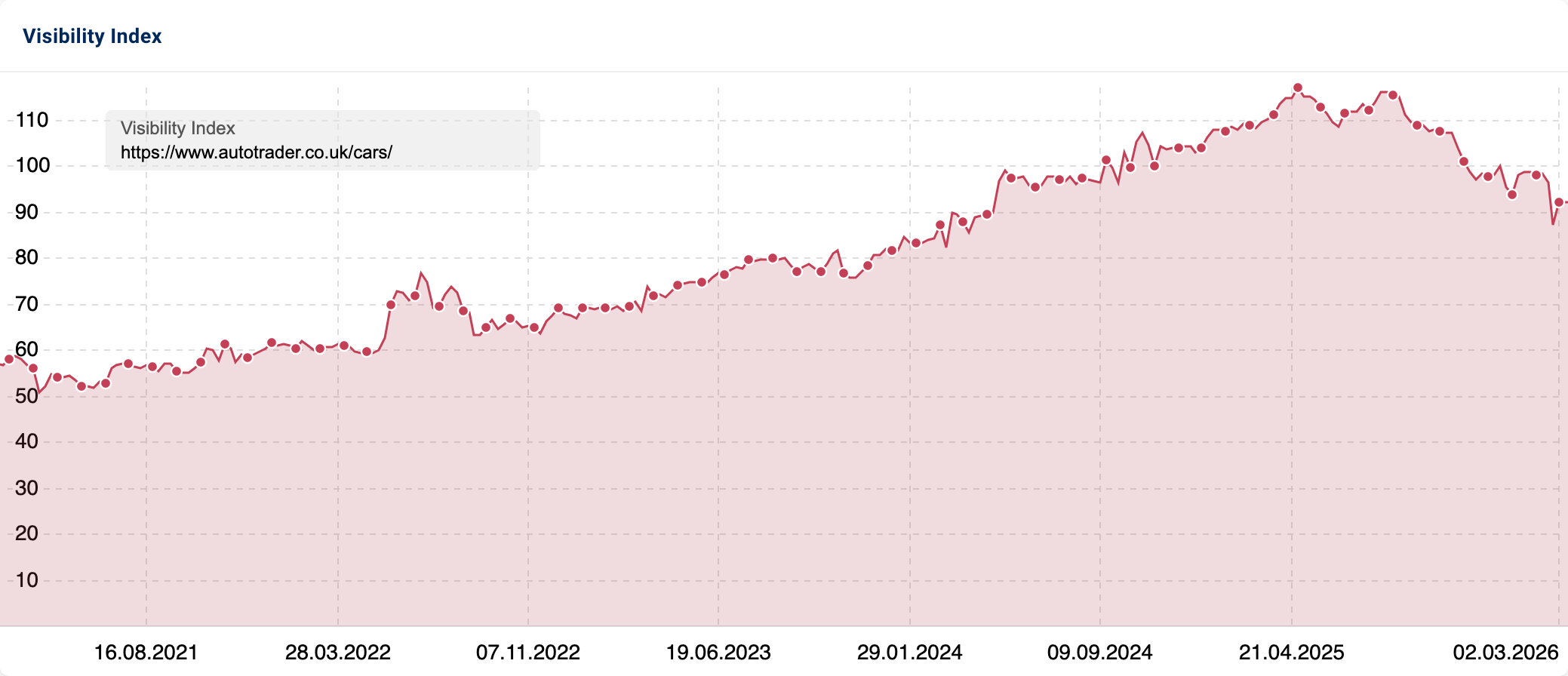
The numbers tell the story. The /cars/ directory has a Visibility Index of 90.8 — a score that, if it were a standalone website, would make it the 73rd most visible site in the entire UK. AutoTrader itself currently ranks 51st.
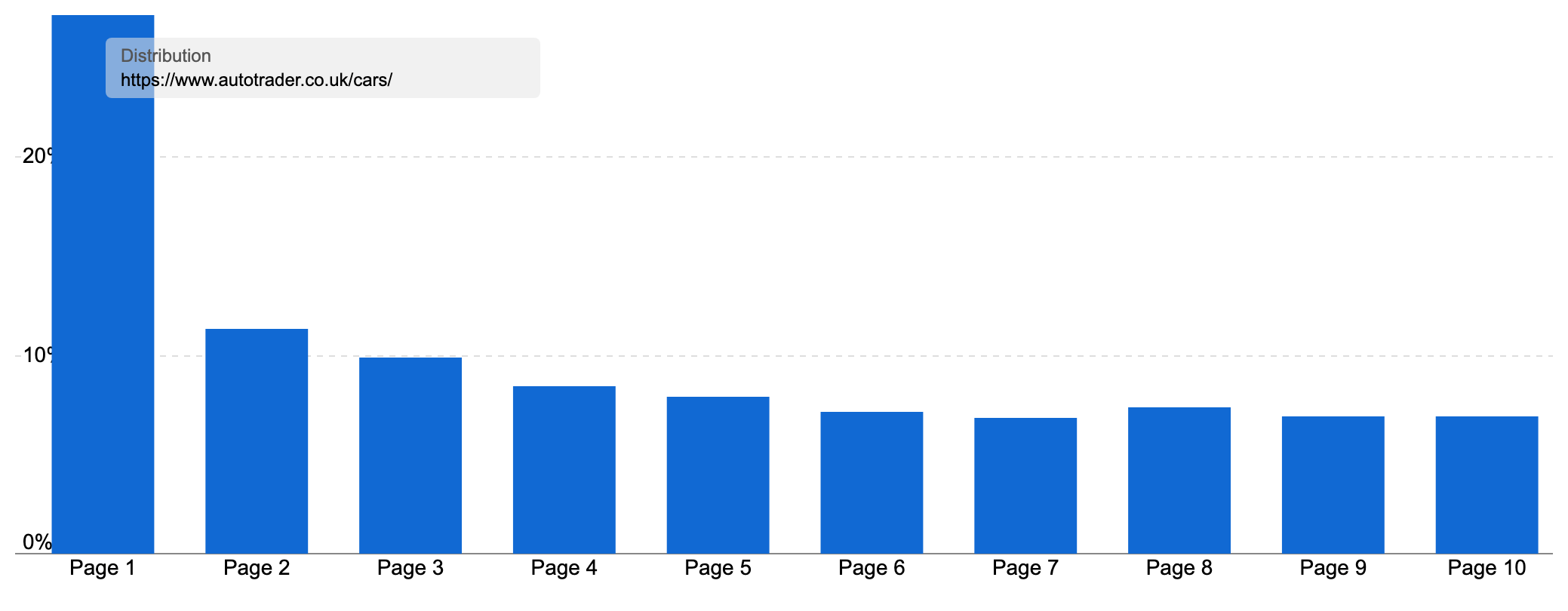
With 14,309 different pages ranking for at least one keyword in the UK at the time of writing, the directory ranks for 486,899 keywords in total. 27.16% of those rankings are on page one, generating an estimated 8,451,307 organic visits a month – traffic worth an extraordinary £5.67 million.
The architecture behind this performance is straightforward but executed at scale.
The /cars/ directory splits into dedicated subdirectories for every manufacturer, giving AutoTrader a brand-level hub for every brand name in our keyword set, from Tesla and BYD to Jaecoo and Leapmotor.
Within each brand directory sits pages for each model, giving a dedicated hub page.
But within the main /cars/ directory there are also directories by purchase type, such as /cars/used/, /cars/leasing/ and even /cars/cheap/!
And Autotrader’s /cars/ doesn’t stop there.
There are also directories for specific vehicles such as classic cars, 8-seaters and those with an automatic transmission. There’s a large directory for dealers, with 2,261 different pages ranking for at least one keyword. It has pages for each location, each brand (such as /cars/dealers/proton) and then each brand in each location, such as /cars/dealers/cornwall/volkswagen.
There are even directories by location, such as /cars/manchester/, which then repeat the manufacturer/model structure, though these are less successful for organic rankings.
The /used/ directory has the biggest footprint by far. And its structure reveals why:
- There are again pages for every brand, such as this one for used Teslas
- Then a directory for that brand with child pages. To start, there are pages for models (such as used Model 3s)
- Some brands even have child pages for models, such as /cars/used/ford/focus/rs
- Then we have pages by car ‘type’ or shape, such as used Tesla SUVs, hatchbacks or saloons
- And even by transmission, which in the case of electric cars means used automatic Teslas
This gives Autotrader a logical, granular structure that provides excellent coverage for both new and used cars. AutoTrader effectively has pages targeting brand, model and geography simultaneously. Add in a parallel structure for used cars, and the matrix becomes genuinely impressive in scale. A three-dimensional coverage model that no single manufacturer could hope to replicate, helping make it the most visited car website in the UK.
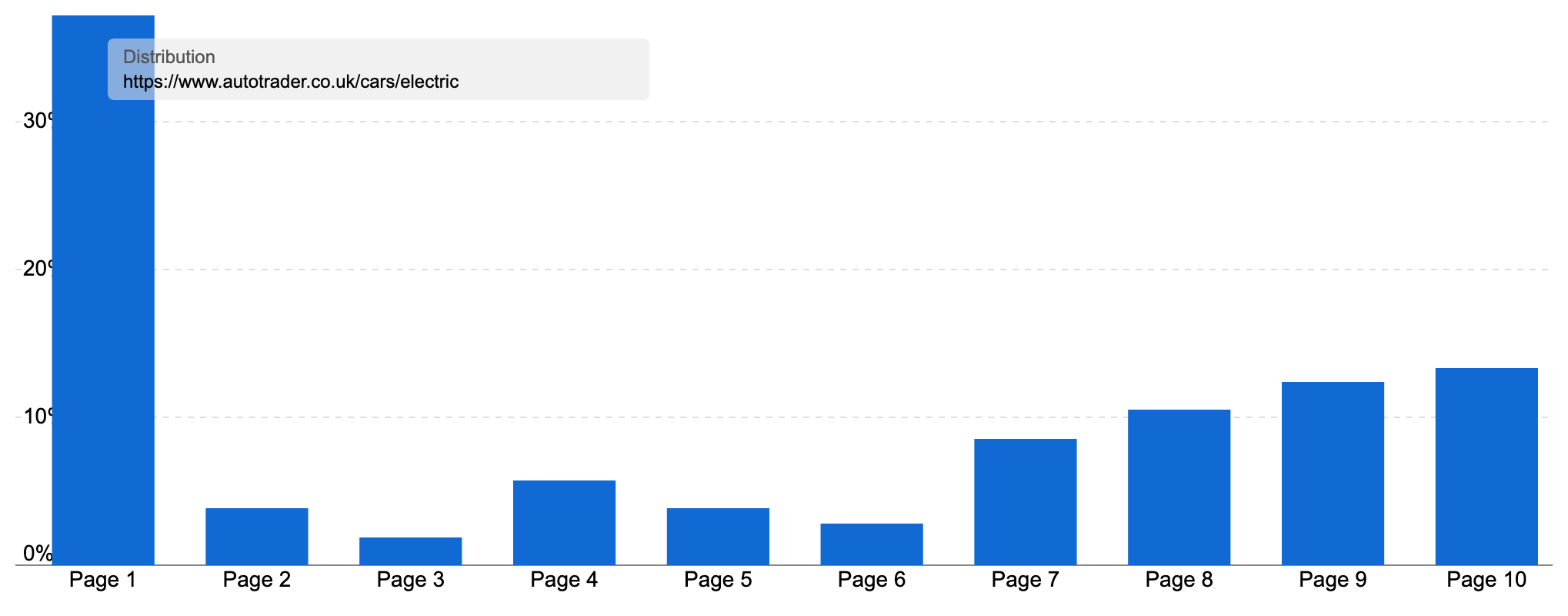
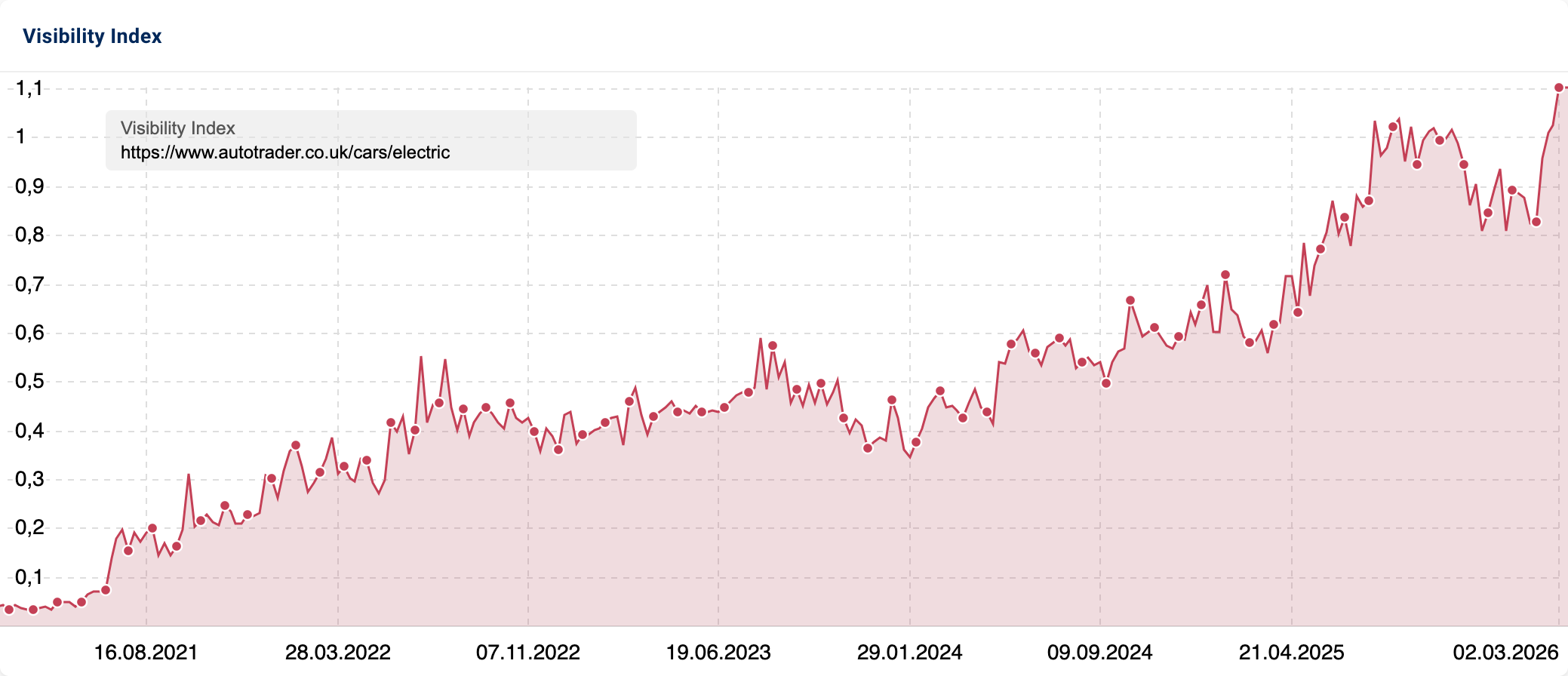
Within this ecosystem, the /cars/electric hub is the top-performing page for our keyword set. It ranks for 129 of our keyword set, and on page one for 112 of them (86.8%). Ranking for 2,333 keywords overall, with 35.24% of those on page one, it generates 62,959 organic visits a month, worth an estimated £132,000.
AutoTrader succeeds here because it offers:
- Unmatched inventory breadth, giving Google a genuine reason to rank it for virtually every brand and model search in the sector
- A clean, logical directory structure that maps precisely to how buyers search (by brand, by model, by location, by new or used)
- Constantly refreshed listing data providing strong freshness signals across tens of thousands of pages
- Deep brand authority built over decades as the UK’s go-to used car destination
Carwow takes a fundamentally different approach to AutoTrader — and yet achieves comparable dominance in our keyword set, ranking in the top 10 for over 70% of our 1,490 keywords.
Where AutoTrader wins through inventory scale, Carwow also wins through architectural precision.
Carwow’s structure has also taken the scale of car options into account. Carwow maintains a dedicated directory for every manufacturer – /bmw/, /tesla/, /kia/, /omoda/ and so on – each anchored by a brand-level hub page.
But what makes Carwow’s structure truly impressive is what sits beneath these starting levels.
Within each brand directory sits a page for every model, giving Carwow a clean brand-then-model hierarchy that mirrors exactly how buyers navigate their research. These model pages, such as for the Tesla Model 3, act as a hub, with a review, pricing information, alternatives, links to the latest relevant articles and of course easy options to see new and used cars for sale.
Within each model directory, Carwow has built a further layer of child pages targeting specific informational and commercial sub-queries; specifications, deals, used cars for sale, news, transmission types and even individual colour variants. Pages like https://www.carwow.co.uk/tesla/model-3/black exist not as vanity pages but as genuine ranking assets, capturing the precise long-tail searches that buyers make when they’ve narrowed their shortlist to a specific model and are close to a decision.
And within each brand hub, there are pages for used cars, deals, news, colours (such as ‘red Tesla cars’), plus a page for each location. For example, under BYD, there are pages for cars for sale by county (such as /byd/west-yorkshire) and city (/byd/west-yorkshire/leeds).
The used cars section varies this structure, with sections by location, colour, type (such as used estate cars, used electric cars or used small cars) and a /guides/ subdirectory answering common, and not so common, questions.
In our keyword set, Carwow pages appear 38 times in our top 300 most visible URLs, over 10% of all top-performing pages from this single domain. And when Carwow does rank, it ranks well: most of those top 300 pages carry a very high percentage of page-one rankings.
The most successful Carwow page for our keyword set is their electric cars hub.
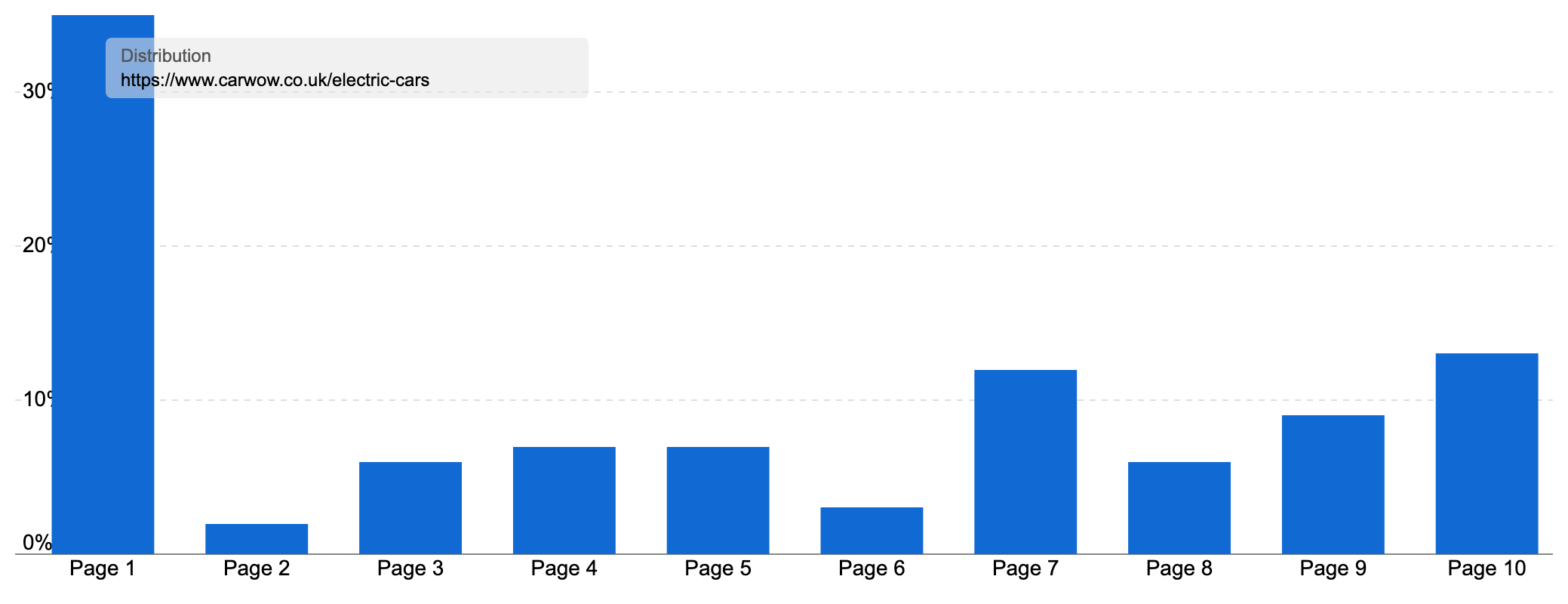
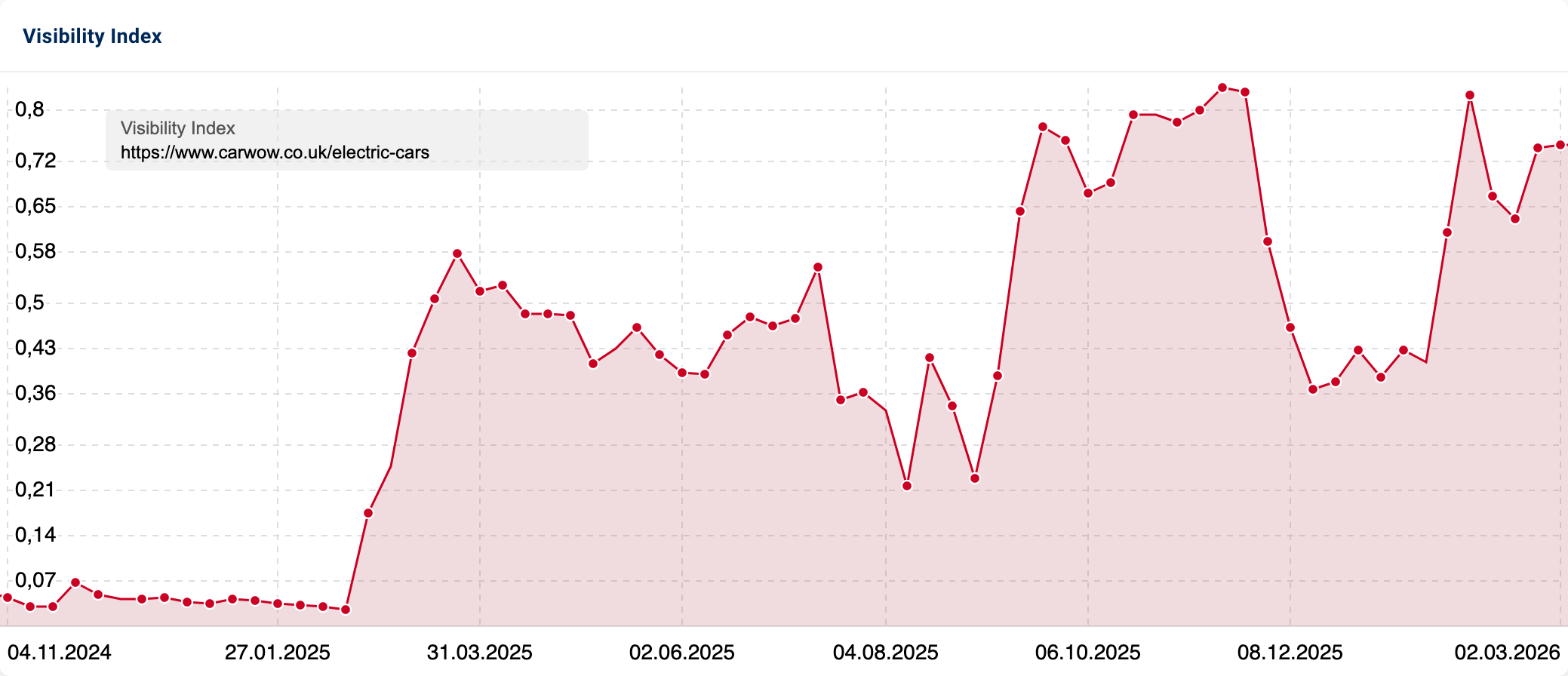
Overall, this hub page ranks for over 921 keywords in the UK, with 35% of these rankings on page one, bringing in 37,800 visits a month on average. Under this page sits a directory of articles covering commercial research topics such as the best small electric cars and a charging point map. Together, these articles rank for another 1,500 keywords that bring in almost 70,000 organic visits a month.
Carwow’s structure works because it offers:
- A scalable, replicable template that can absorb new brands and models instantly as the market evolves
- Multiple layers of specificity (brand, model, variant, colour, location), allowing it to compete across every stage of the buyer journey
- Strong editorial content within commercial pages, including reviews, specs and deal comparisons that satisfy both research and purchase intent
- A genuinely useful product for buyers, which drives strong engagement signals that reinforce its rankings
In third place for our keyword set, we don’t find a marketplace, but a long-established publisher.
While AutoTrader and Carwow dominate through scale and structure, What Car demonstrates that a tightly curated, editorially-led directory can hold its own against marketplace giants.
The /best/ directory is exactly what its name suggests: a collection of carefully researched “best of” roundups covering every major car category. With just 151 URLs ranking for at least one keyword in the UK, it is a fraction of the size of AutoTrader or Carwow’s offerings, but what it lacks in breadth it more than compensates for with quality, relevance and authority.
Those 151 pages rank for 17,092 keywords in the UK, generating 237,848 visits a month, worth an estimated £293,000. And crucially, 33.75% of all rankings in this directory sit on page one – a page-one ratio that reflects Google’s consistent trust in What Car’s usefulness.
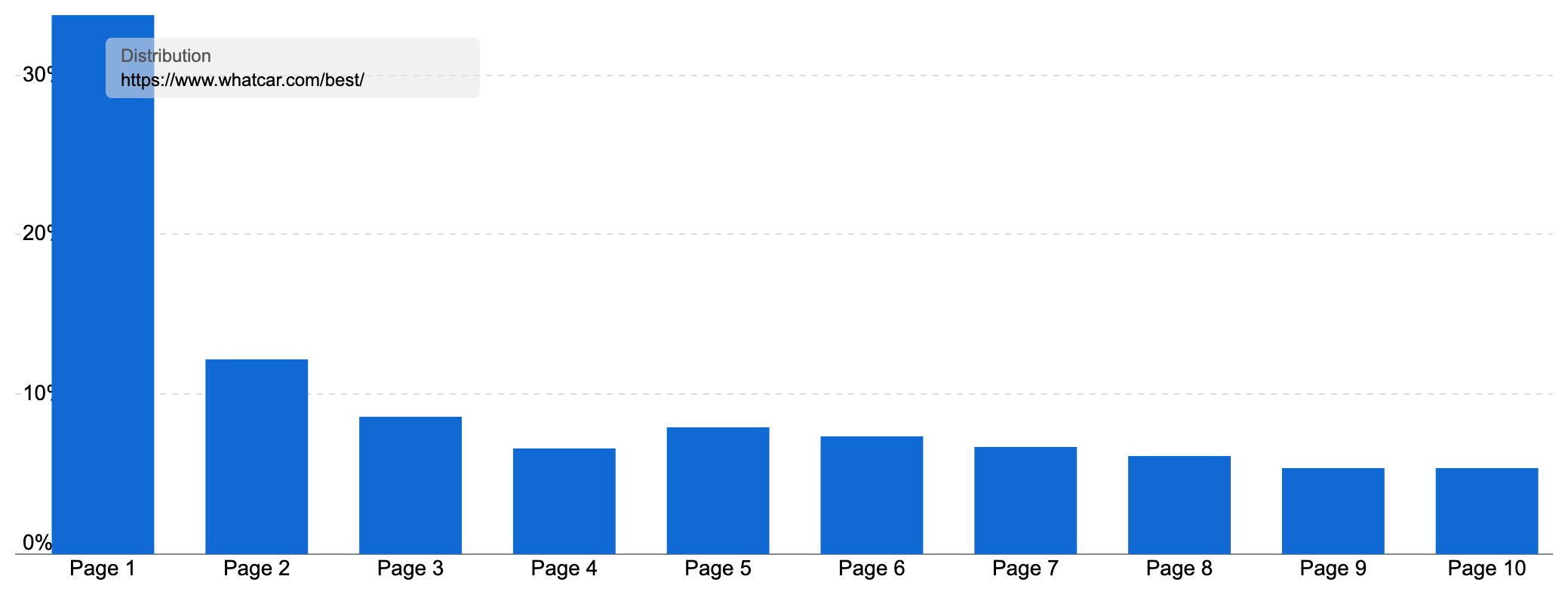
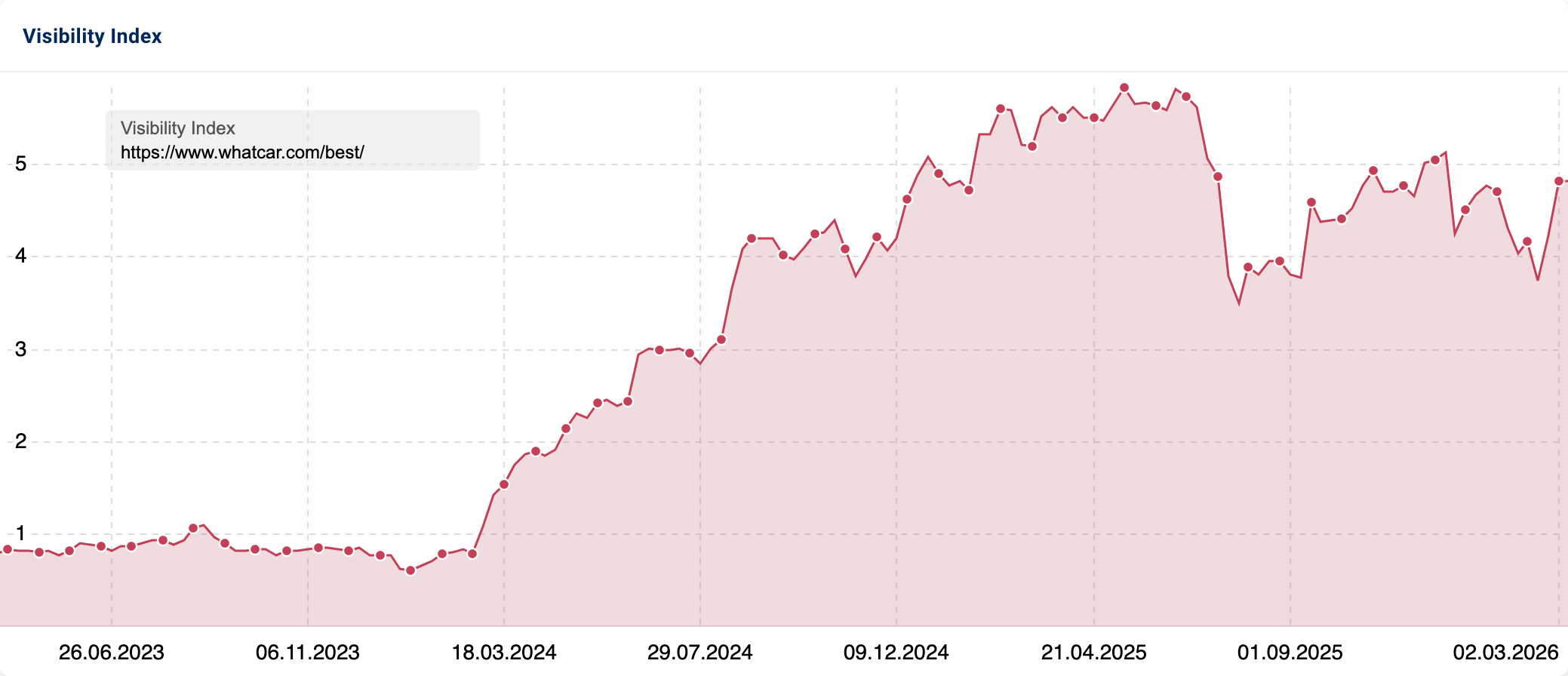
Within the electric car space specifically, What Car has built 15 dedicated electric car pages in the /best/ directory, covering everything from broad queries like “best electric cars” to more specific needs such as “best small electric cars” and “best electric SUVs“.
What Car succeeds here because it offers:
- Deep editorial credibility built over decades as one of the UK’s most trusted car buying guides, giving Google confidence to rank it for high-intent research queries (What Car? was first published as a magazine in 1973, and is aimed at car buyers rather than car enthusiasts, making it perfect for car chopping queries)
- A consistent, well-structured template for each roundup that covers category winners, detailed recommendations, expert reasoning and regularly refreshed picks; exactly the kind of content Google wants to serve buyers who are still deciding
- Let’s take the example of What Car’s guide to the best EV to buy:
- The roundup is based on What Car’s reviews, representing many hundreds of hours of hands-on experience. Unique photos & videos help show that What Car has extensive hands-on experience with all the models suggested
- There’s a summary of the best options at the start of the article
- High-quality video content
- Scores for each car on a variety of factors – driving, interior, practicality and buying and owning
- Strengths and weaknesses make key points easy to spot
- A comprehensive summary of why What Car recommends this model, with a link to the seriously in-depth full review
- And links to new car deals, leasing deals, and used car options for each model. These all live in model-specific pages in other dedicated directories (/new-car-deals/, /car-leasing-deals/ and /used-cars/). How good are these car listings? Well, they are powered by none other than AutoTrader, meaning they have access to arguably the biggest inventory
- A follow-up section on how to choose the best electric car with plenty of detail, plus an FAQ section to target People Also Ask opportunities
- And finally, a section on how they test electric cars, which links to the full page on their testing process
- Focused topical coverage rather than trying to be everything. The /best/ directory does one thing exceptionally well, and Google rewards that clarity
- Strong internal linking from broader car review content across the What Car site, funnelling authority into the /best/ directory and amplifying its page-one presence
Summary and takeaways
The electric car sector offers a fascinating window into how Google handles a market in rapid transition. New brands, new models, new buyers and an increasingly competitive set of intermediaries are all fighting for the same search real estate.
So, what can we learn from the domains generating the most organic voltage in Google’s results?
- Brands drive demand, but third parties take the traffic: Tesla generates nearly 400,000 branded searches a month in the UK. BYD over 290,000. Yet both rank in the top 10 for just 6% of our keyword set. Third-party platforms, publishers and leasing sites have stepped into the gap as they can cover a much greater breadth. This also allows them to dominate rankings for generic search queries in the sector. For any manufacturer serious about owning its own search narrative, the starting point is understanding exactly how much organic visibility it has already ceded, and how to dominate for brand searches when marketplaces offer car listings & publishers offer reviews
- Architecture beats content volume: The sites winning in this sector aren’t just prolific. They’re systematic. AutoTrader and Carwow dominate not because they have better content than anyone else (though having the biggest catalogues sure helps!), but because they’ve built scalable directory structures that map precisely to how buyers search: by brand, by model, by location, by new or used. Before asking “what should we write?”, the more important question is “how do we structure our build to serve our customers?”
- Editorial authority is a genuine competitive advantage: What Car’s /best/ directory has just 151 ranking pages. Yet What Car holds its own in our top domain rankings, placing 12th and 15th for two of our most visible individual URLs (and Top Gear also ranks fourth overall). Decades of editorial trust, a consistent content template and a relentless focus on doing one thing exceptionally well are enough to compete with inventory-scale giants
- The rise of Chinese brands is a search story as much as a sales story: BYD’s search demand is already second only to Tesla in our entire keyword set, despite launching in the UK just three years ago. Jaecoo, Omoda and Leapmotor are all generating rapidly growing search interest. The brands arriving fastest in UK showrooms are arriving fastest in UK search bars too, and the third-party platforms are already there
- AI Overviews are now a factor in over half of all electric car brand searches: With 50.5% of our keyword set returning an AI Overview, the days of simply ranking on page one are no longer enough for guaranteed visibility. Structured, parseable content, whether that’s clear specs and pricing or comparisons and expert recommendations, increasingly gets cited above the organic results
Keyword research in the electric car brand sector
To explore Google’s results for the best-performing content and sites, we curated an exclusive collection of sample keywords representing the commercial search landscape for electric car brands in the UK.
Rather than tracking generic electric car terms alone, we focused on the branded searches that reveal both public mindshare and organic competition — the queries made by buyers who already have a specific brand or model in mind.
We began by identifying the most-searched electric car brands in the UK and building a keyword list around their models, variants and commercial-intent queries. This included brand searches, specific model terms, and purchase-related queries covering pricing, leasing, deals, reviews and availability. A small selection of broader generic electric car terms was included to test whether brand sites cross over into non-branded territory.
The final keyword set of 1,490 keywords was analysed using SISTRIX, which provided search volume data, ranking distribution, top domains and top URLs across the set. Domain-level visibility was measured using SISTRIX’s Visibility Index, and directory-level data was drawn from SISTRIX’s path analysis tool.
Brand search demand was calculated by aggregating the total monthly search volume of all keywords associated with each brand (including brand name, model names and all related commercial queries), using a consistent attribution methodology across all brands.
Our SectorWatch process
For this SectorWatch, we started by gathering a broad set of electric-car-related keywords from SISTRIX’s databases, then refined them to those most representative of the sector’s search landscape.
We selected highly targeted keywords with a “do” intent. From these, we harvest all the ranking keywords for the URLs in the SERPs. We call this the Keyword Environment. Most SERPs will have some mixed intent, so we re-filter the list for the correct intents and sanitise it by hand to leave a smaller, highly-relevant set of searches made by the UK public broken down by searcher journey. The results are based only on the organic search rankings for the chosen keywords.
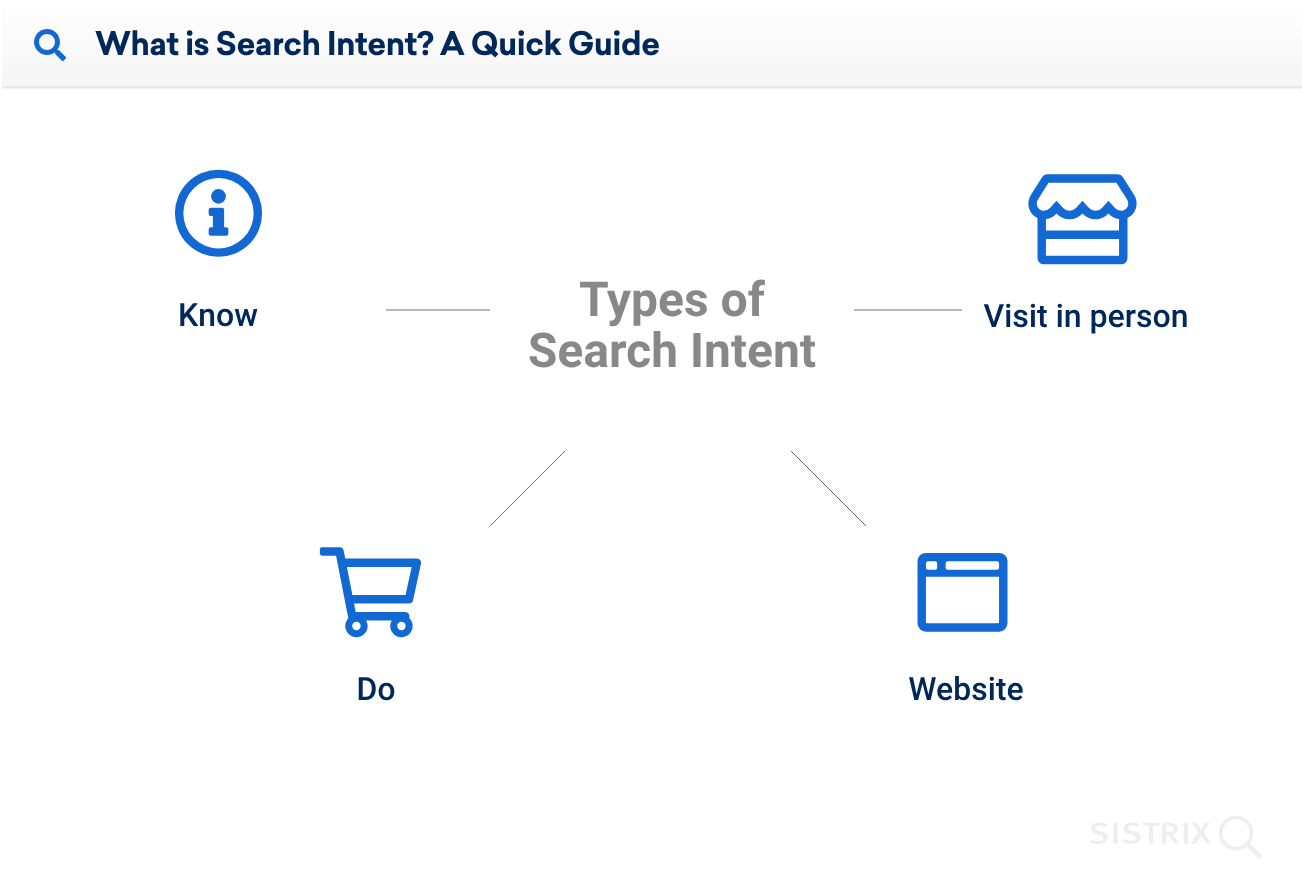
More information on search intent. We have a detailed, step-by-step article on keyword research with SISTRIX tools and data, in which you can see our list-building process.