AI chatbots such as ChatGPT, Gemini and Copilot are changing the way people search for information – so SEOs need to rethink their approach. Brands now need to be visible in prompts. But how do you find relevant prompts? Can existing keyword lists be used? And how do you evaluate the prompts you find? Find all the information you need in this tutorial.
Unlike Google Search, AI chatbots provide direct, coherent answers – eliminating the need to manually search through various websites. For brands, however, this means that visibility no longer counts only on Google. Instead of rankings, mentions and sources count.
Whereas SEOs are equipped to research relevant keywords, uncover hidden ranking potential and reveal the secrets of their competitors’ success on Google, the current changes in the industry are establishing new rules of the game.
Instead of looking at keywords and rankings as before, mentions and the corresponding context in chatbots such as ChatGPT or Gemini are now important for brands. At the same time, however, mentions in chatbot responses are significantly less frequent – a SISTRIX evaluation of 10 million prompts shows that only about one in three responses from ChatGPT, Gemini and Deepseek contains a brand name at all.
In addition, we currently have very little information about which measures have a reliable and lasting influence on chatbot responses. We have summarised all the latest information on chatbots, how they work and what changes they bring for SEOs in our own content hub, which we update regularly: sistrix.com/ai-insights/ai-chatbots.
Keywords versus prompts
However, to better understand how visible a brand is in chatbots, we developed SISTRIX for AI/chatbots. It is important to understand that people interact with chatbots differently than with Google search as we have known it for years.
When people search for a new coffee machine, they are likely to enter terms such as ‘fully automatic coffee machine’ (10,700 monthly searches) or ‘Jura fully automatic coffee machine’ (45,700 monthly searches) into the Google search bar. Google then displays various product images, shopping integrations and rankings from Mediamarkt or the Jura online shop.
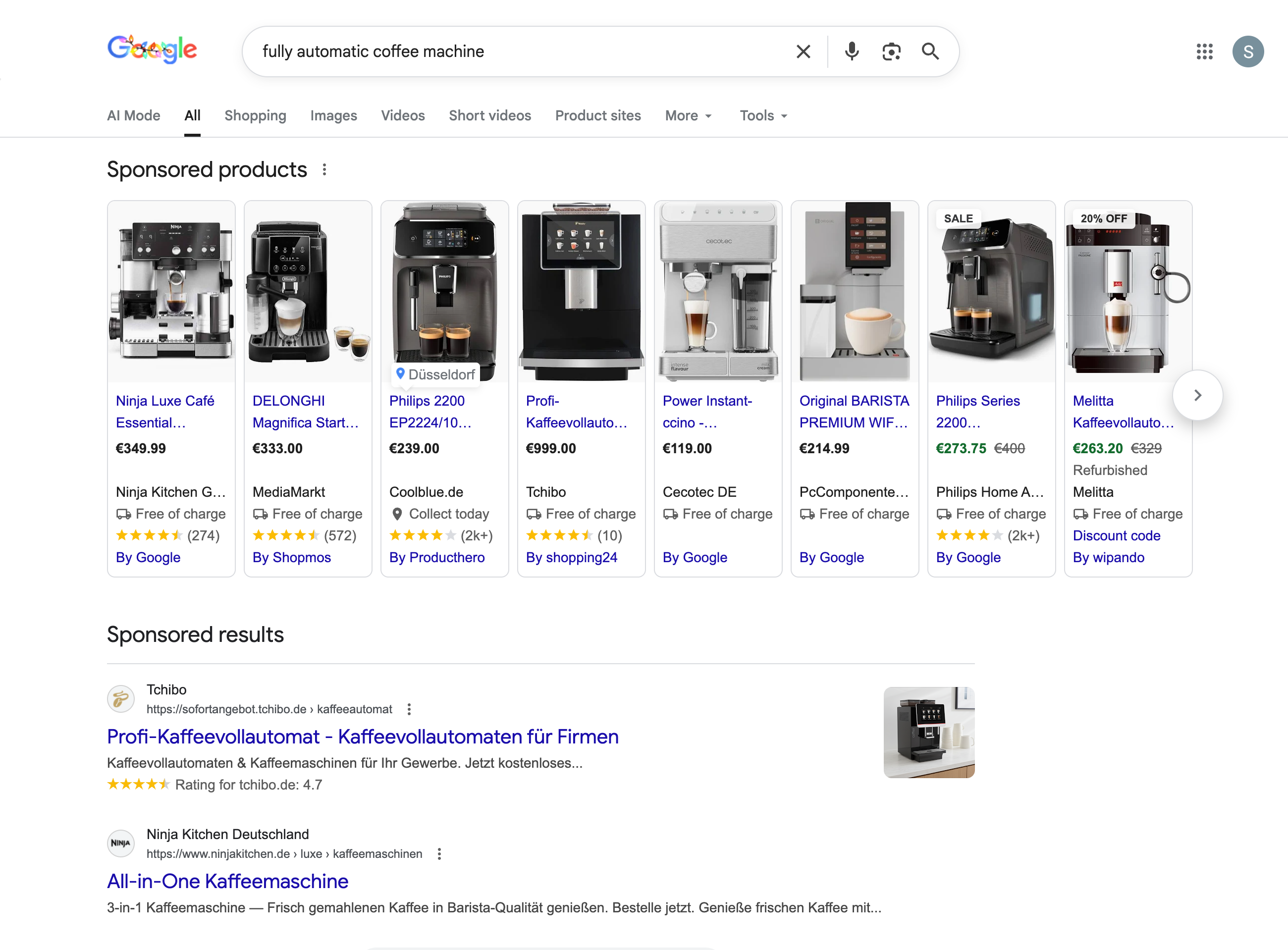
However, many people now also use chatbots such as ChatGPT for queries of this kind – according to its own figures, just under a quarter of ChatGPT queries are searches for information. However, users often enter their queries in question format, i.e. they tend to search for ‘What is the best fully automatic coffee machine?’.
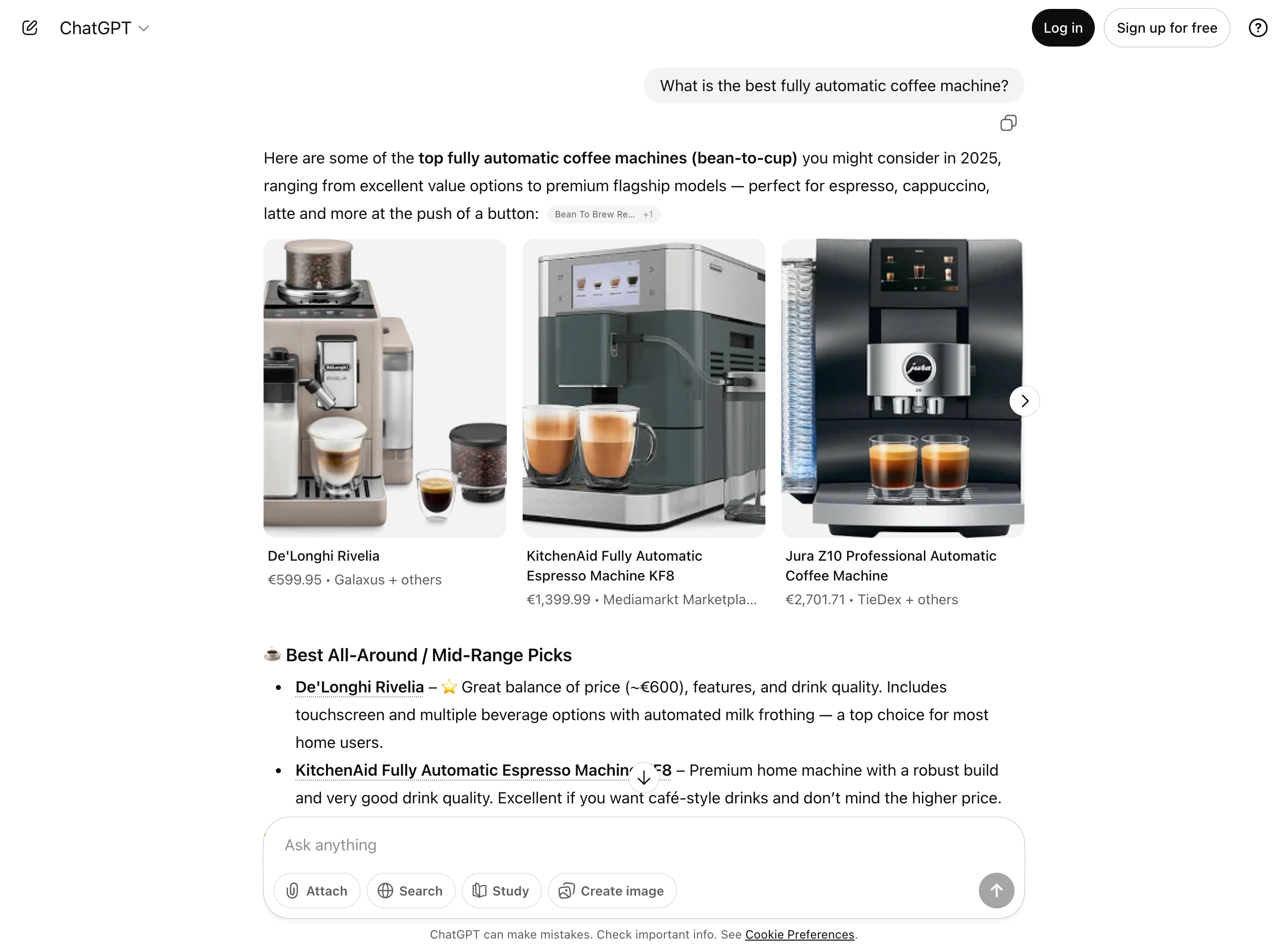
ChatGTP opens a dialogue and asks which criteria are particularly important to users and what usually matters when it comes to fully automatic coffee machines.
So, while we are used to optimising for keywords in Google searches, we need to develop a new understanding when it comes to prompts. Carefully researched keyword lists for use in both SISTRIX for Google and AI/chatbots are therefore the wrong approach.
Researching relevant prompts
Let’s stick with our coffee machine example and imagine we are a shop for coffee machines and currently have good visibility on Google with good rankings for relevant keywords. If we now want to be visible in chatbots as well, a good place to start is to look at ChatGPT, for example, to see what answers usually look like and what information users expect.
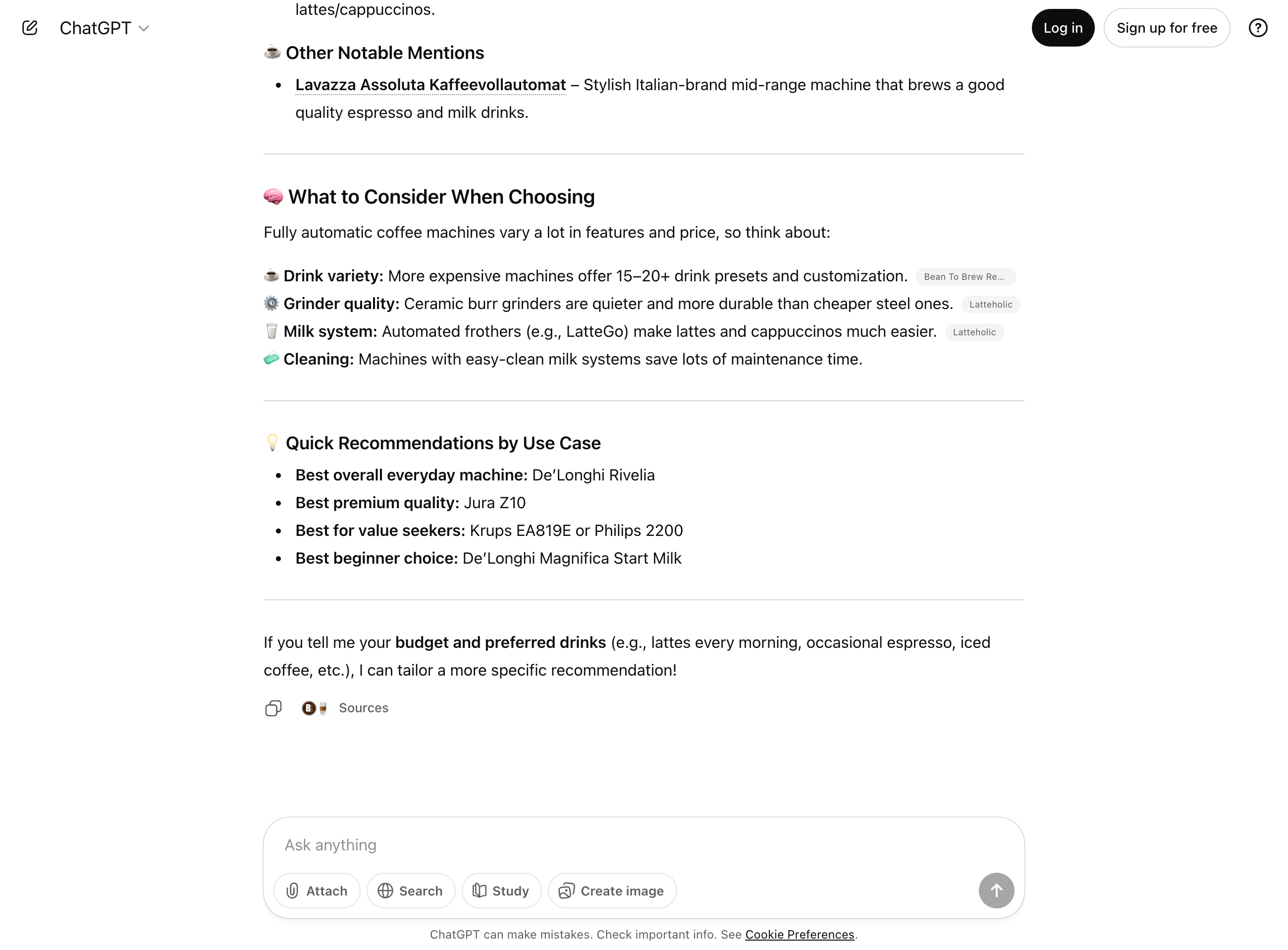
For example, we note that ChatGPT first explains what criteria to look for when making a purchase, or rather, what users should decide is particularly important to them. A particularly high-quality grinder, an easy-to-clean milk system, or a wide variety of coffee specialities to choose from.
These are all criteria that manufacturers or online shops should address when presenting their products. At the same time, we learn more about the decisions users make on their way to purchasing a product.
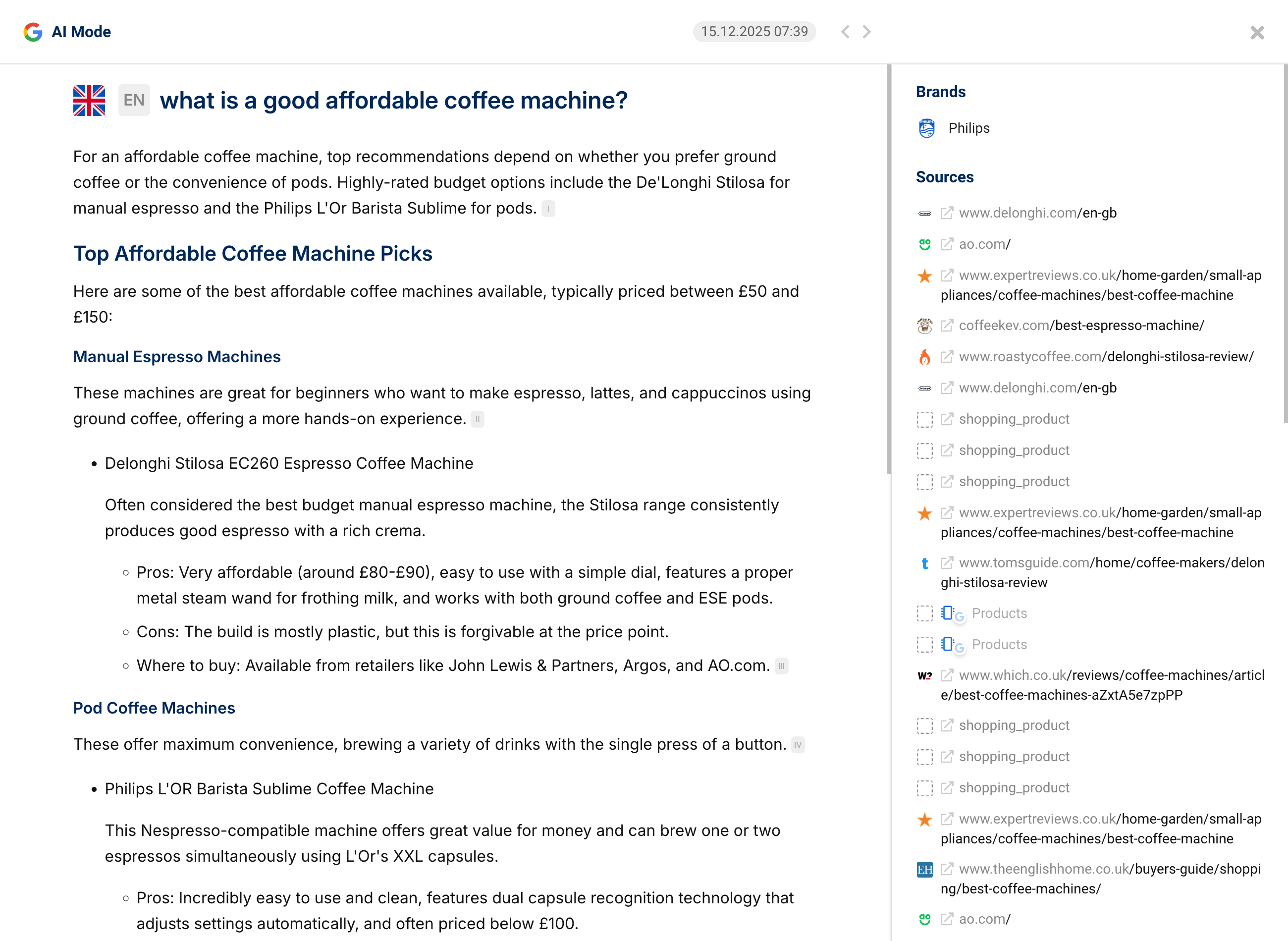
After entering the prompt in SISTRIX for AI/chatbots, you can also get an overview of which entities are mentioned in the prompt response. For example, brands can be further evaluated with a single click.
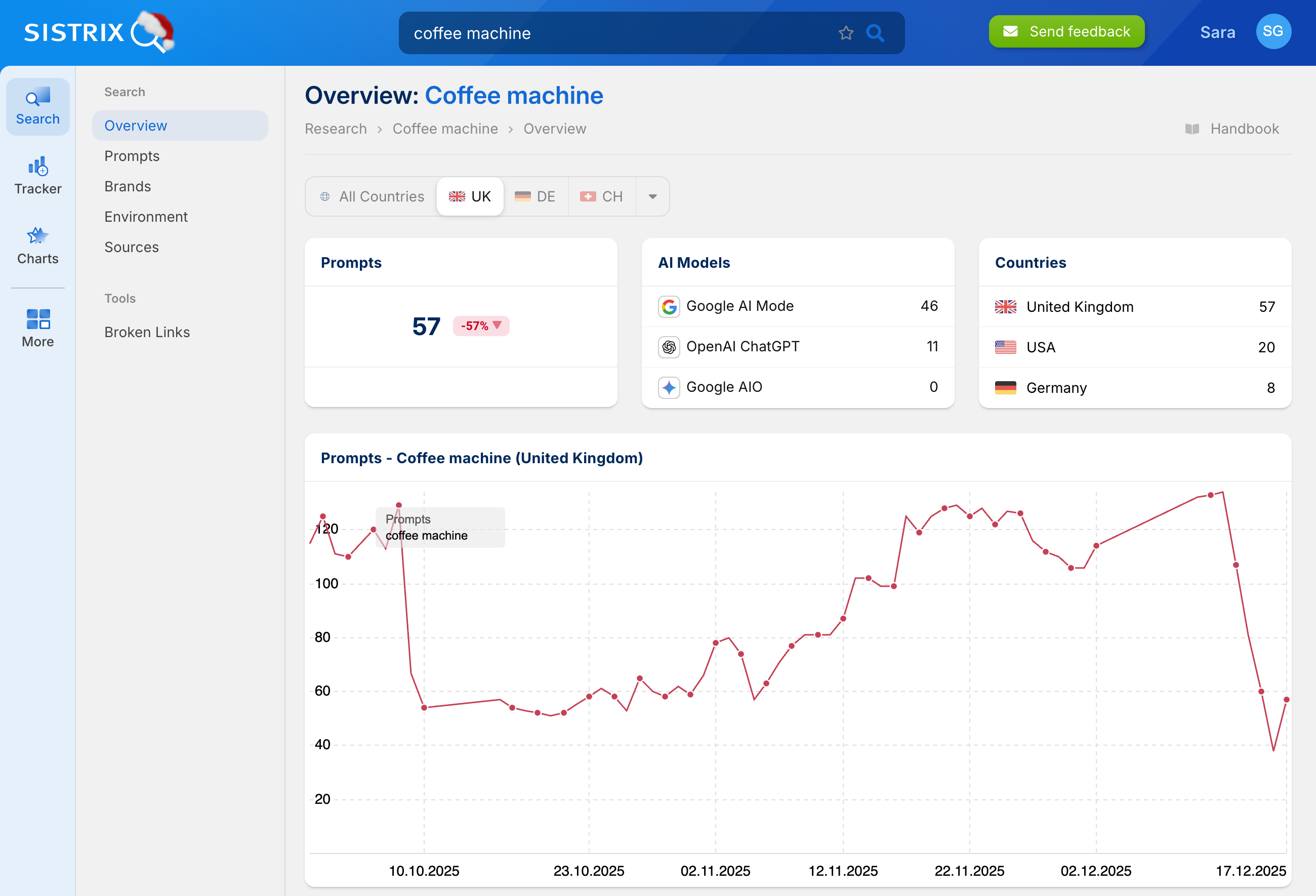
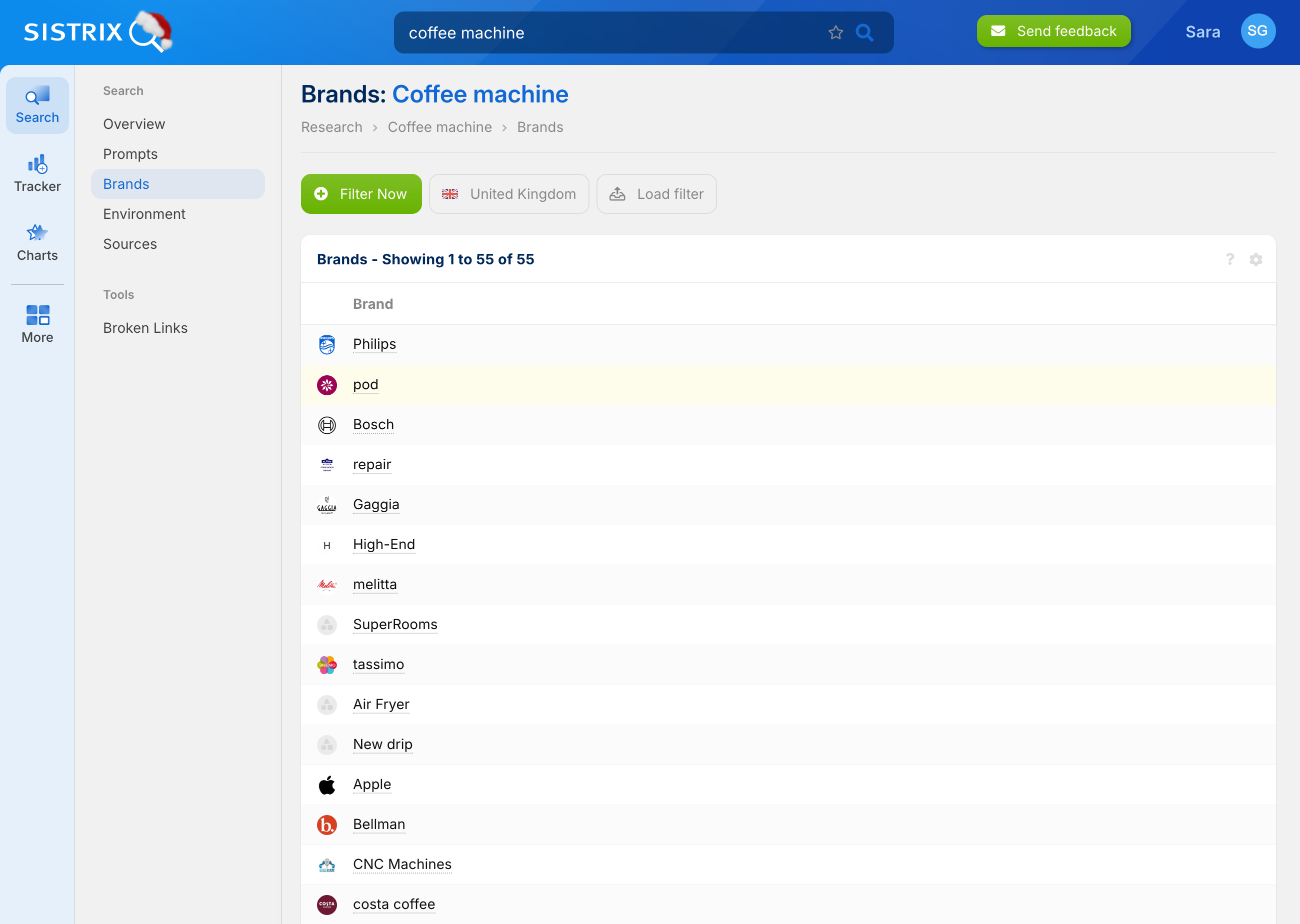
The product as an entity can also be entered. The overview page contains interesting figures and information that provide an overview of the topic. This includes, for example, the brands that are associated with it, but also interesting prompts – i.e. questions that users have in the context of fully automatic coffee machines.
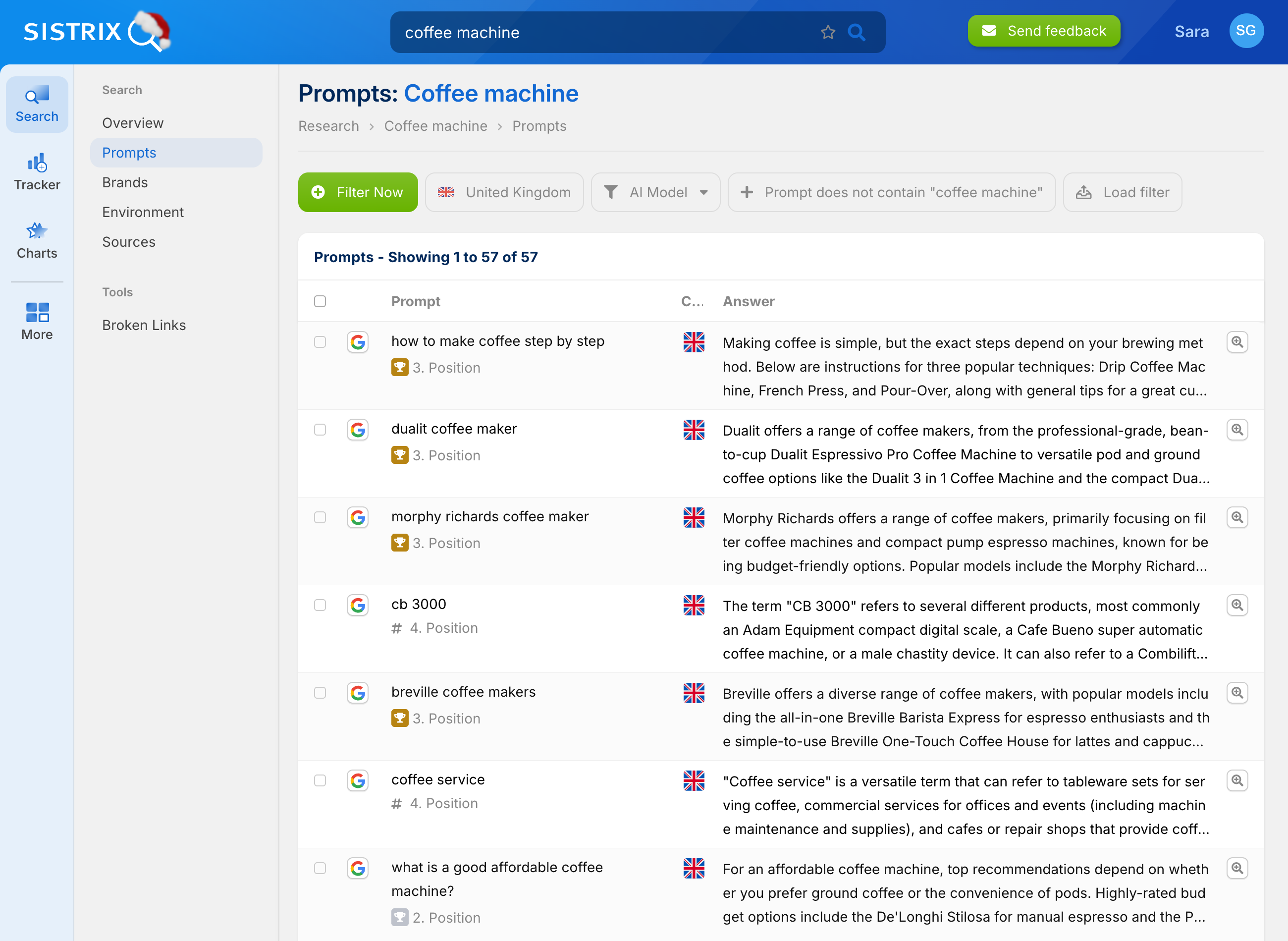
More details can be found under the ‘Prompts’ function. The prompts can be narrowed down using filters similar to those already familiar from SISTRIX for Google or Amazon. Relevant prompts can also be found for the brands mentioned.
It is already clear that there is no ‘simple’ solution for researching relevant prompts. The field of chatbots is simply too dynamic for that. On the one hand, the systems differ from one another, and on the other hand, the principle of dialogue with a system means that questions can always be answered in slightly different ways.
Analysing individual prompts
However, once relevant prompts have been identified, they can be collected within SISTRIX and saved for further evaluation. As usual, the prompts can be selected using the checkbox at the front of the line and then added to a list.
Once the most important prompts have been compiled, it is worth creating a new project. With one click, all collected prompts can be imported into the list. Similar to the on-page project area, the project area allows for more in-depth evaluation of your own prompts.
When you create a project and enter a brand name, SISTRIX automatically creates a competitor environment and adds appropriate prompts if you haven’t entered any yourself. From this point onwards, you can see when and how often the brand appears in responses.
SISTRIX also immediately calculates a Visibility Index for the brand you have entered – similar to the index already available for Google and Amazon.
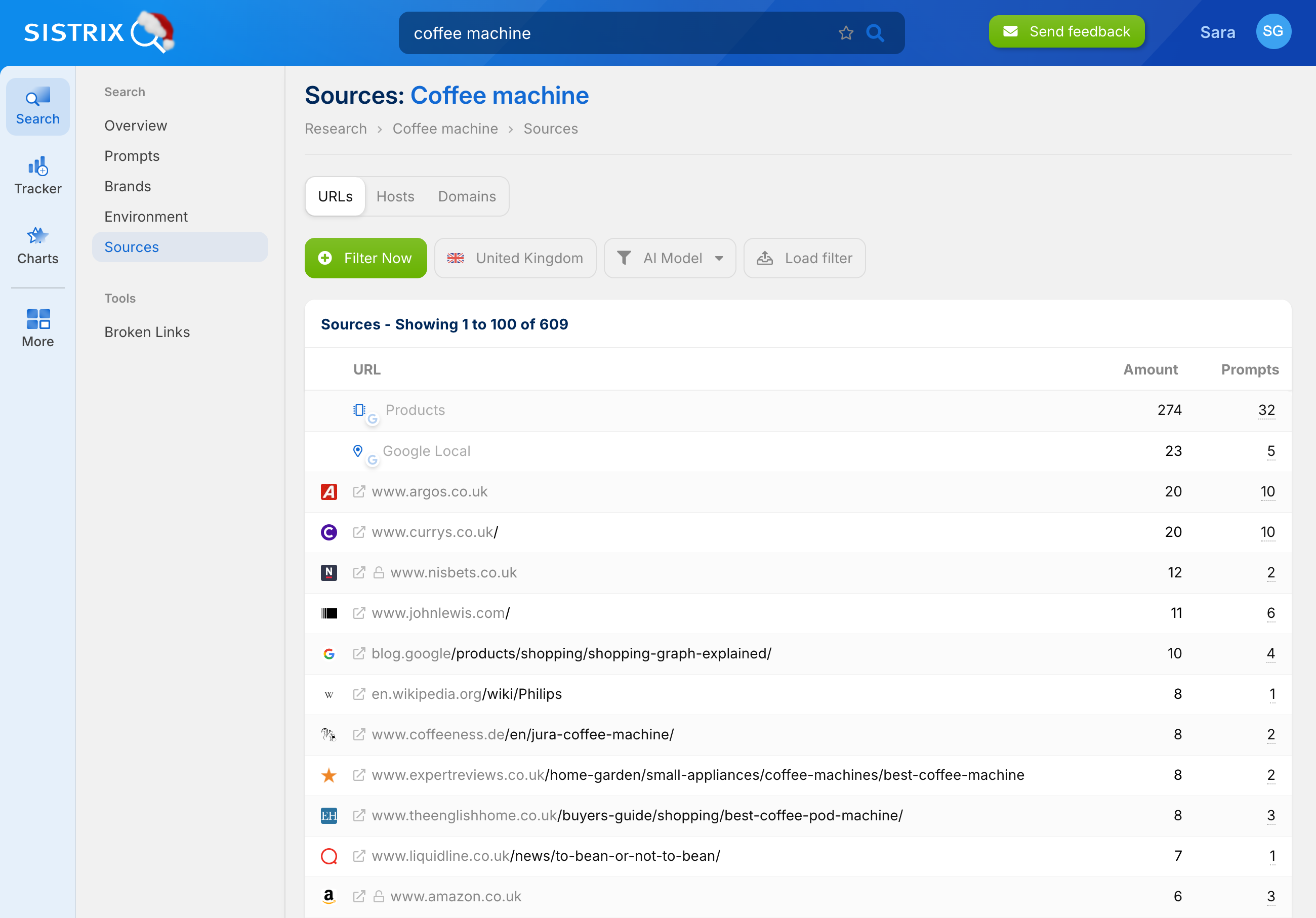
This includes the development of the AI visibility index for your own brand and competitors, including important key figures or sources (URL, host name or domain) – always based on the researched and individually compiled prompts.
Summary
Chatbots are not only changing search, but also the path to visibility. Those who continue to focus solely on traditional keywords and rankings are overlooking a growing channel. It is now crucial to understand what questions users are actually asking and in which answers brands are specifically mentioned. Identifying, collecting and systematically evaluating relevant prompts is not a one-off step, but an ongoing process.
However, with the right data, this change can be measured. Those who analyse prompts, create projects and monitor their own visibility over time will gain a clear advantage.
Test SISTRIX for Free
- Free 14-day test account
- Non-binding. No termination necessary
- Personalised on-boarding with experts