Three new analyses in AI Check show how AI systems talk about your brand, the strengths and weaknesses they attribute to it compared with the competition, and in which purchasing scenarios it is recommended or absent. Each statement is backed up by the original quote and prompt, and is available for every brand without the need to set up your own project.
Whether a brand is chosen, recommended or overlooked is increasingly determined by AI responses. This presents a new challenge for marketing: no longer measuring brand perception solely through surveys or social media, but also in the very places where AI systems are constantly redefining it. How do the models talk about the brand? What characteristics do they attribute to it, and which to the competition? And in which purchasing situations is it recommended? Three new analyses for AI/chatbots are now available in SISTRIX specifically for this process.
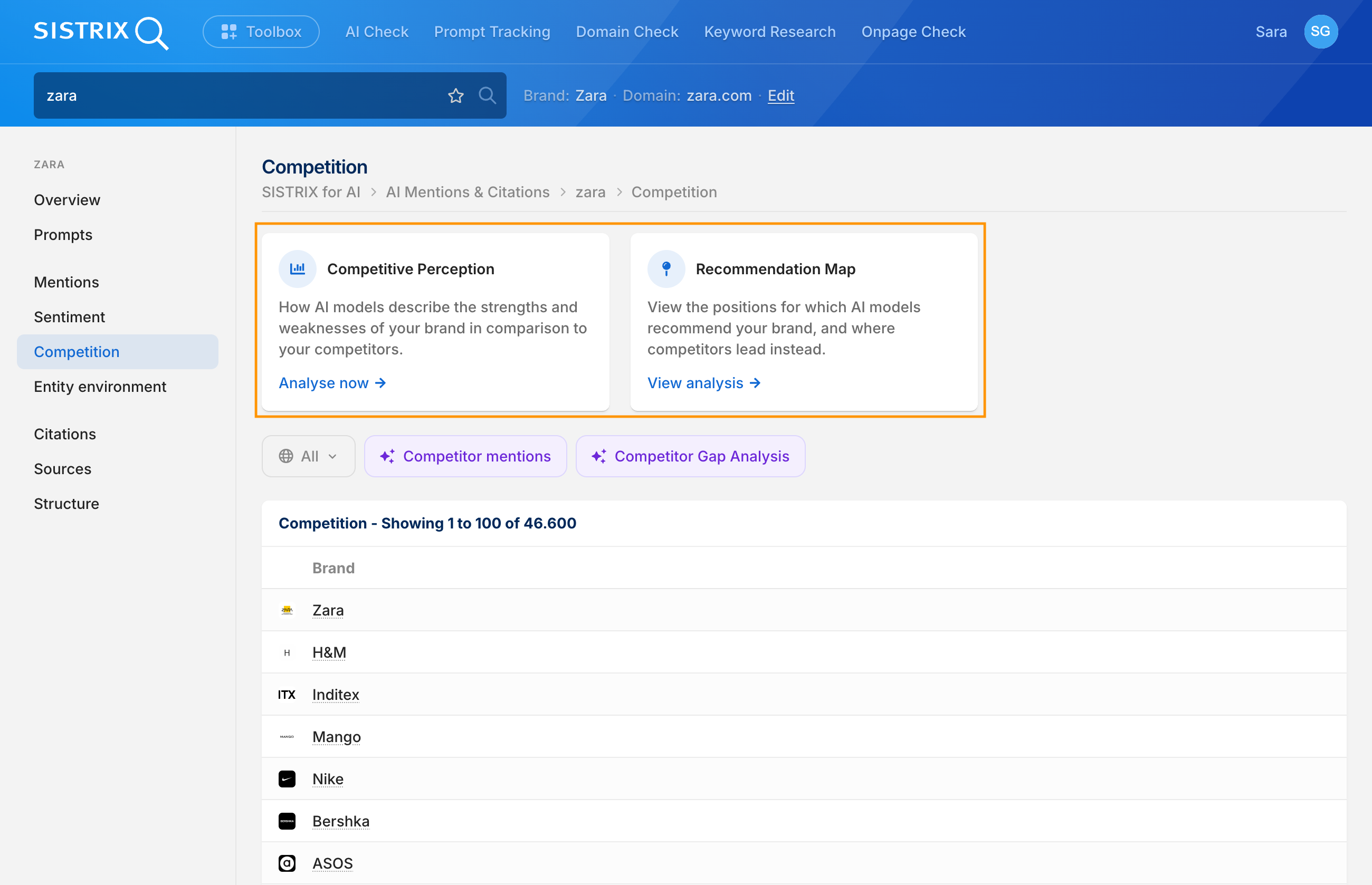
These analyses can be found in the AI Check, the section where, after entering a domain or brand, you can immediately see the prompts in which it is mentioned or quoted in AI responses. Sentiment analysis is a separate section in the navigation menu there, whilst competitive perception and the recommendation map are available in the ‘Competitors’ section.
The Brand Gap Analysis Tutorial takes you step by step through the entire workflow, from the initial assessment to the action plan.
Real answers rather than a model’s opinion
All three analyses operate on the same principle: none of the statements originate ‘from the LLM’. This is not the same as asking an AI model how it views a brand and trusting its response.
Instead, the data is based on genuine AI responses to genuine user queries. For example, if a user asks about the best email software and ChatGPT lists several providers in its response, these brands are identified in that response, as well as in many thousands of others. Every evaluative statement is extracted and evaluated deterministically; in other words, the AI model does not perform the counting itself. And for every statement in the analyses, the prompt and the text block from which it originates can be displayed.
Sentiment: How do AI systems talk about the brand?
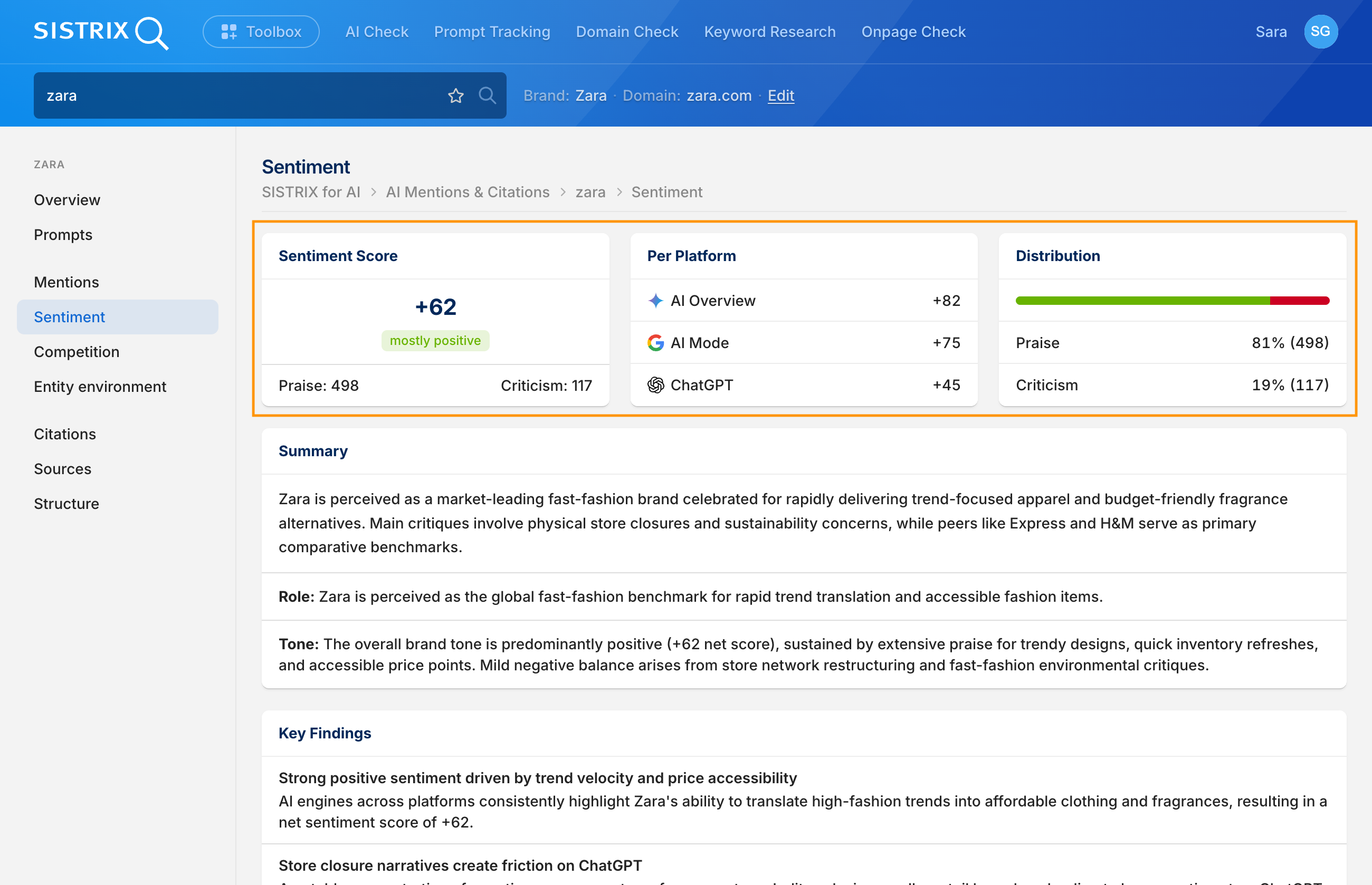
We’ll start with the sentiment score: the net balance of praise and criticism across all AI responses in which the brand appears, broken down by platform. The scale ranges from -100 to +100, although the actual midpoint is significantly higher: AI systems tend to express themselves in a predominantly positive manner, and across many brands the average tends to be around +50. The benchmark classification therefore shows where a score really stands in comparison with other brands.
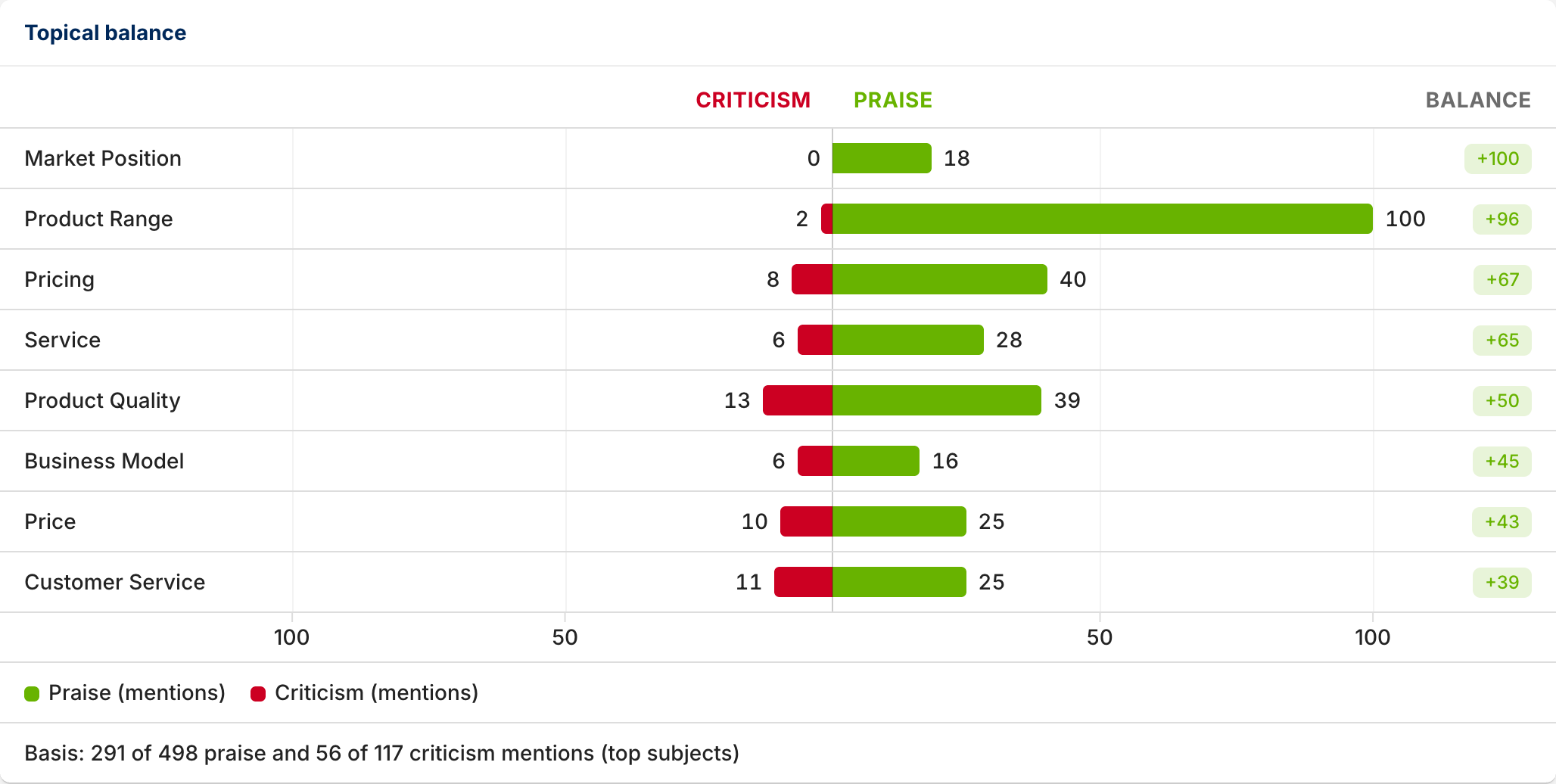
Below this, the topic-based analysis breaks down sentiment by the topics relevant to the respective brand. For each topic, it shows the ratio of praise to criticism, thereby highlighting which topics contribute to the overall positive score and which hold it back.
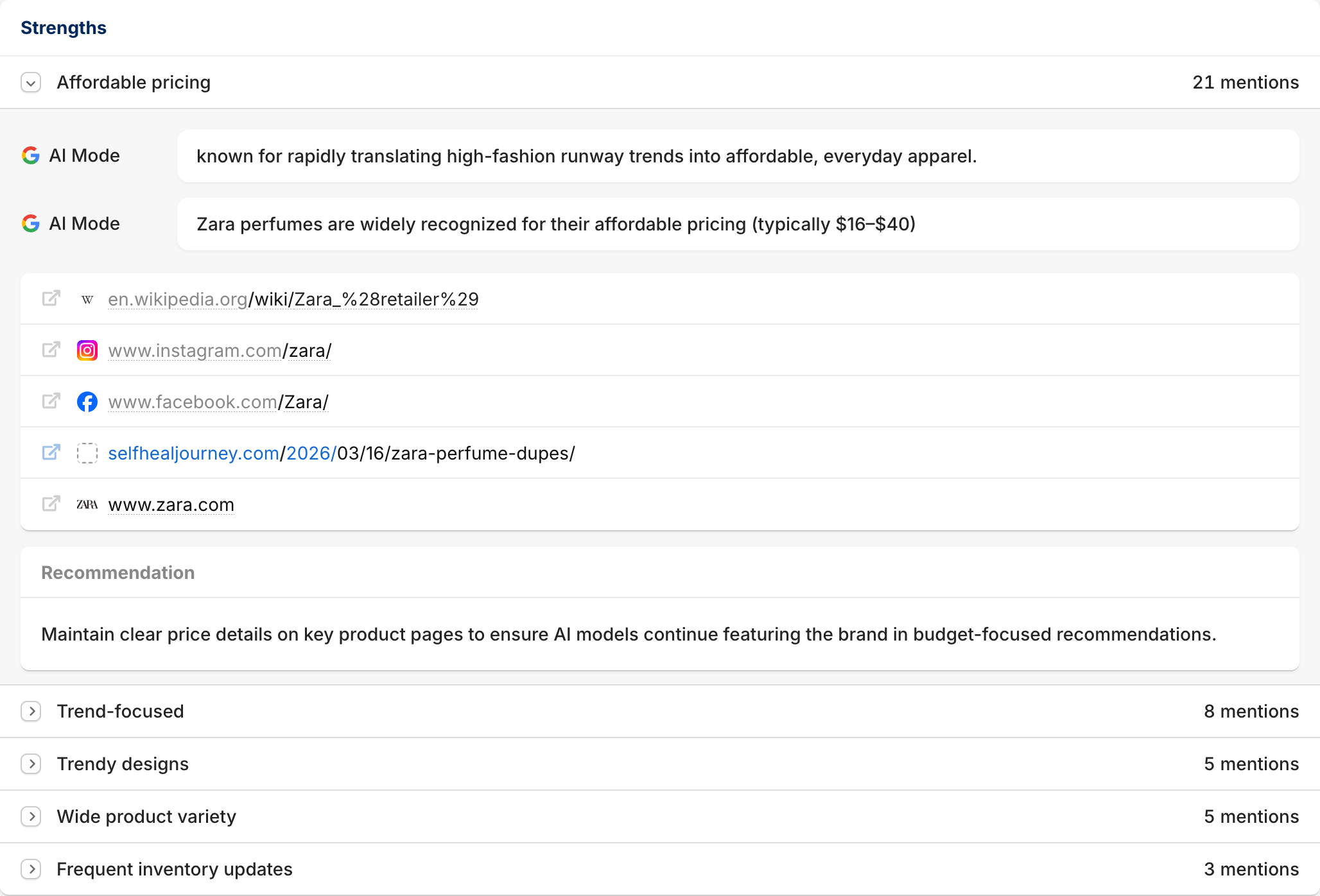
The brand’s strengths and weaknesses can be expanded individually. For each one, the page shows what the individual AI systems say verbatim, the sources from which they draw their assessment (the brand’s own pages, the media, forums, each with the number of mentions) and a specific recommendation as to what can be inferred from this.
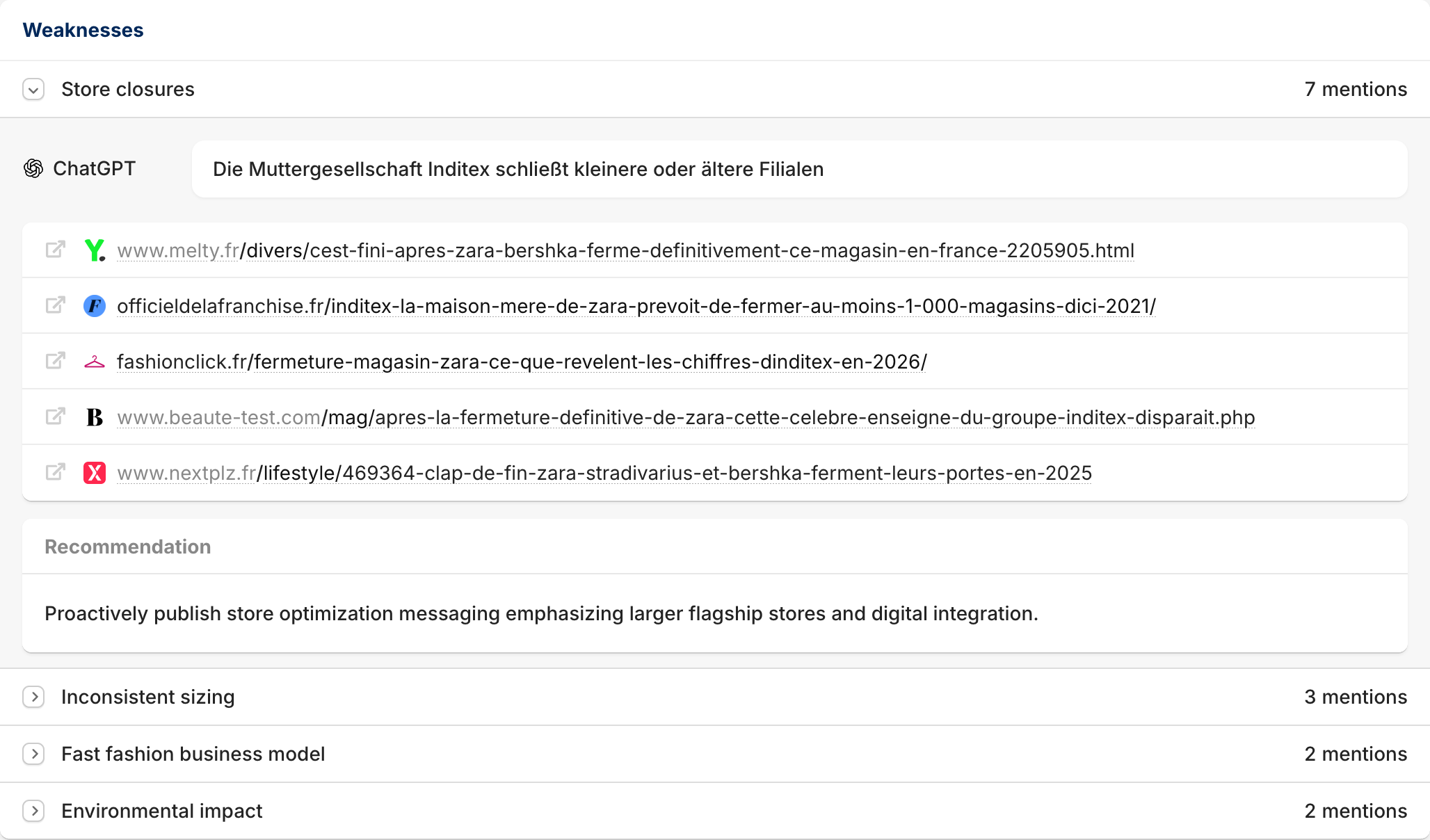
The section concludes with an overview of the tone for each AI platform, set in its typical context, along with verbatim examples of quotes and their sources. This highlights the image the models paint of the brand, where the areas for improvement lie, and on which platform the sentiment shifts. The second step in the tutorial shows you how to apply sentiment analysis in practice: Brand Gap Analysis Tutorial.
Perception in a competitive environment: What is attributed to whom?
Whether an attributed strength is particularly valuable only becomes clear when compared: perhaps the models praise exactly the same thing about a competitor’s brand, just more frequently. The new Competitive Perception analysis therefore compares the attributes of all relevant brands side by side.
To do this, it analyses not only the AI responses in which your brand appears, but also all responses relating to your direct competitors, consolidated and with duplicates removed. Competitors are identified in two stages: in the first stage, the brands that are also mentioned in the AI responses relating to your brand are identified. In the second stage, these very brands are then analysed. This has an important effect: competitors become visible even where they are criticised.
The result is the perception matrix: for each brand, the perceived strengths and weaknesses are counted and aggregated, with each statement backed up by the original quote and the prompt that triggered it.
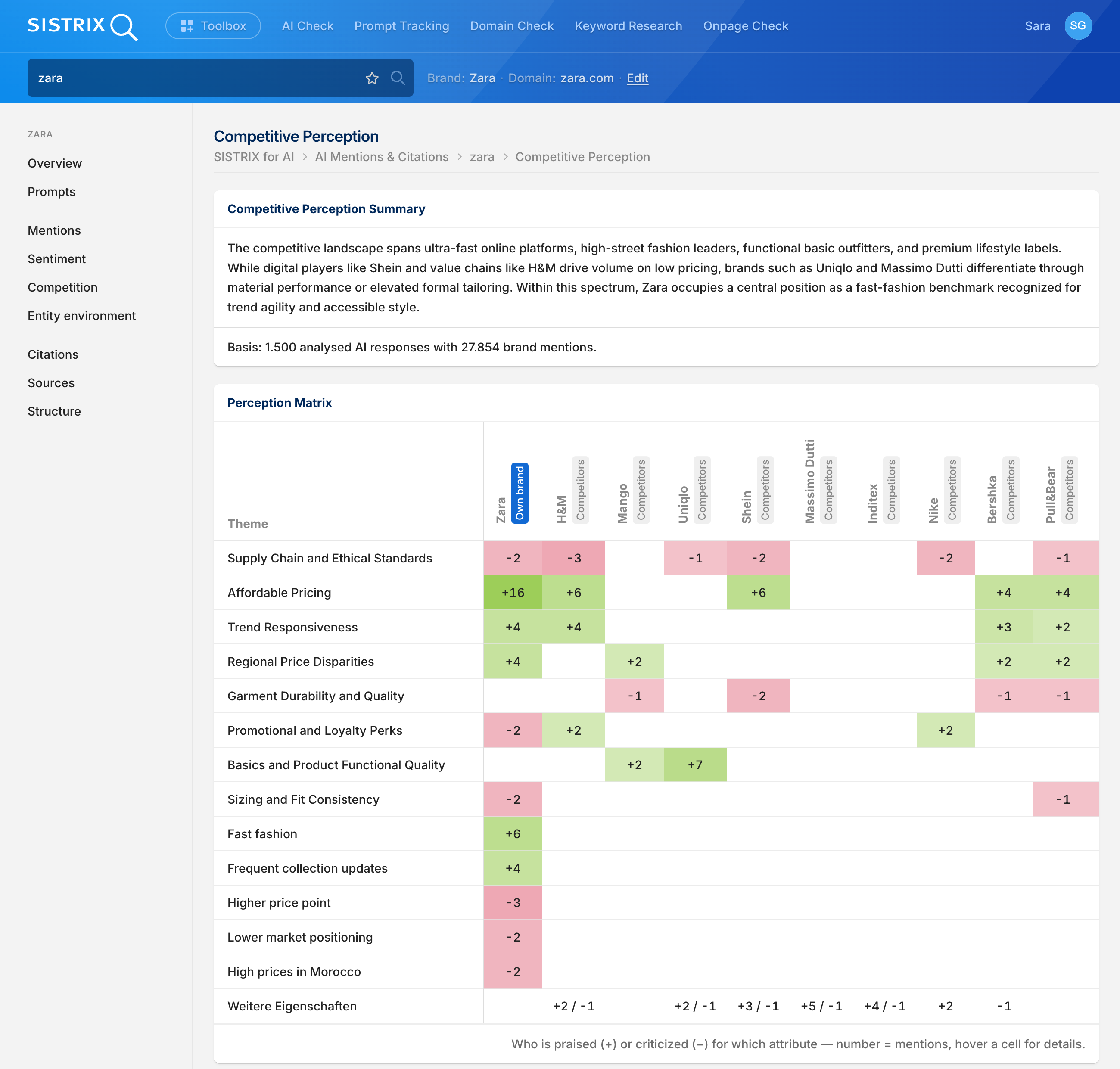
The number of AI responses and brand mentions included is shown directly above the matrix. Below this, the analysis summarises where your own brand leads, where competitors score highly but your brand does not yet, and uses this to identify the next steps: specific starting points for communication and content.
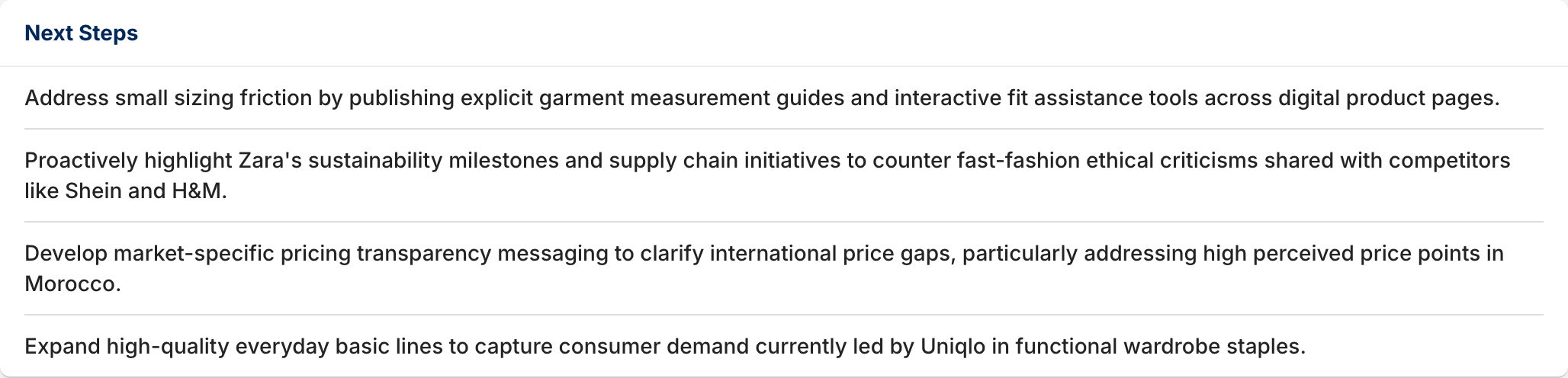
This helps answer the following questions: What do I stand for, what do my competitors stand for, and which attributes am I losing out on compared to the competition? The third step in the Brand Gap Analysis tutorial shows you how to identify the attributes your brand is lacking.
Recommendation Map: When is who recommended?
A high number of mentions and positive sentiment do not necessarily indicate whether a brand is recommended at the crucial moments: when a user is faced with a specific purchasing decision. The Recommendation Map answers precisely this question.
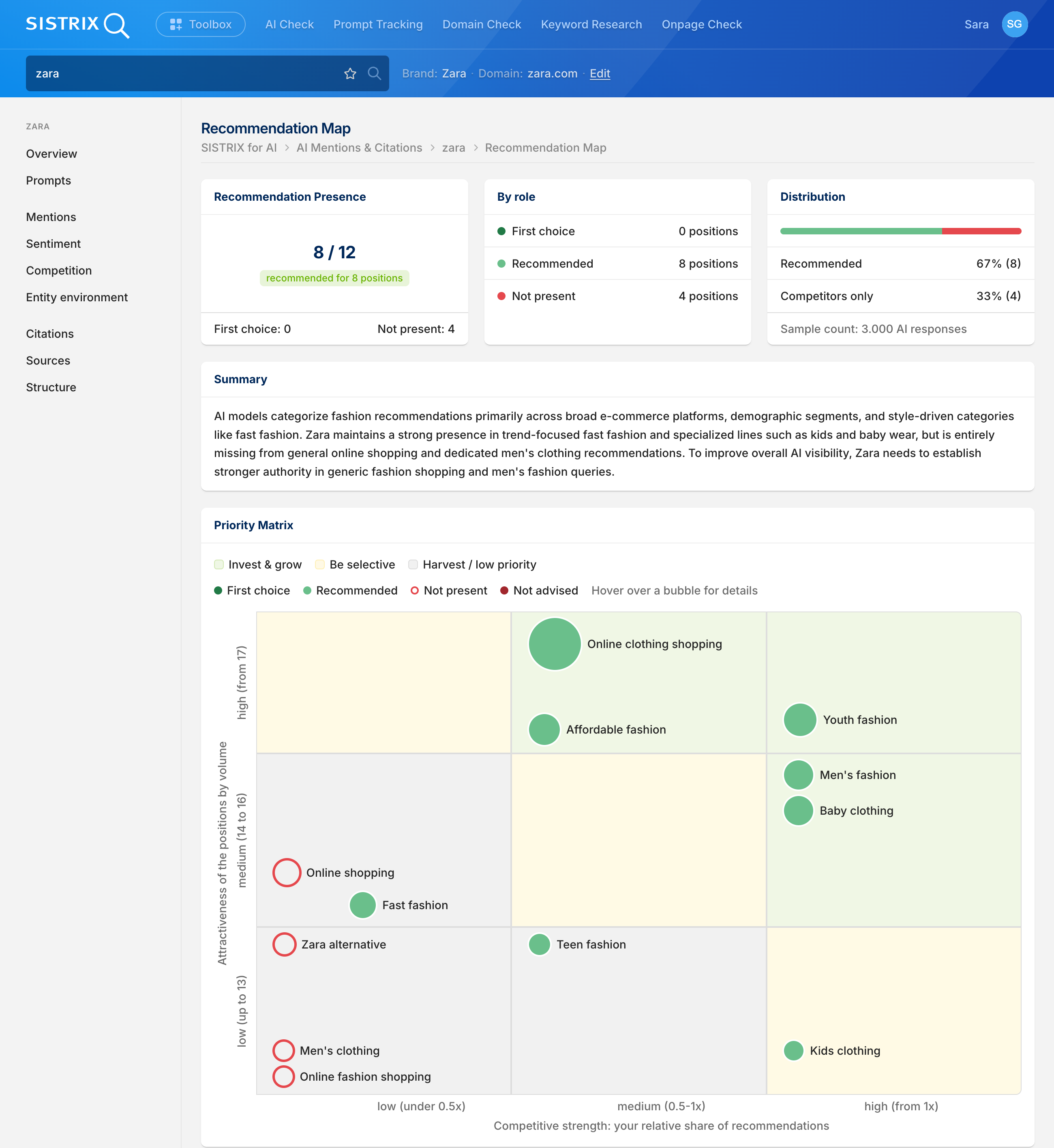
To this end, for each AI response, the system records which brand is recommended for which purchasing situation or touch-point, and in what capacity: as the first choice, as one of several options, not at all, or whether the AI actually advises against it. The result is an overview of all relevant purchasing stages in your industry and the brands that occupy them. The recommendation presence shows at a glance how many of these potential touch-points your own brand is recommended for, and the priority matrix ranks all situations according to attractiveness and your own competitive strength, including recommendations for action in each field: expand, select selectively or low priority.
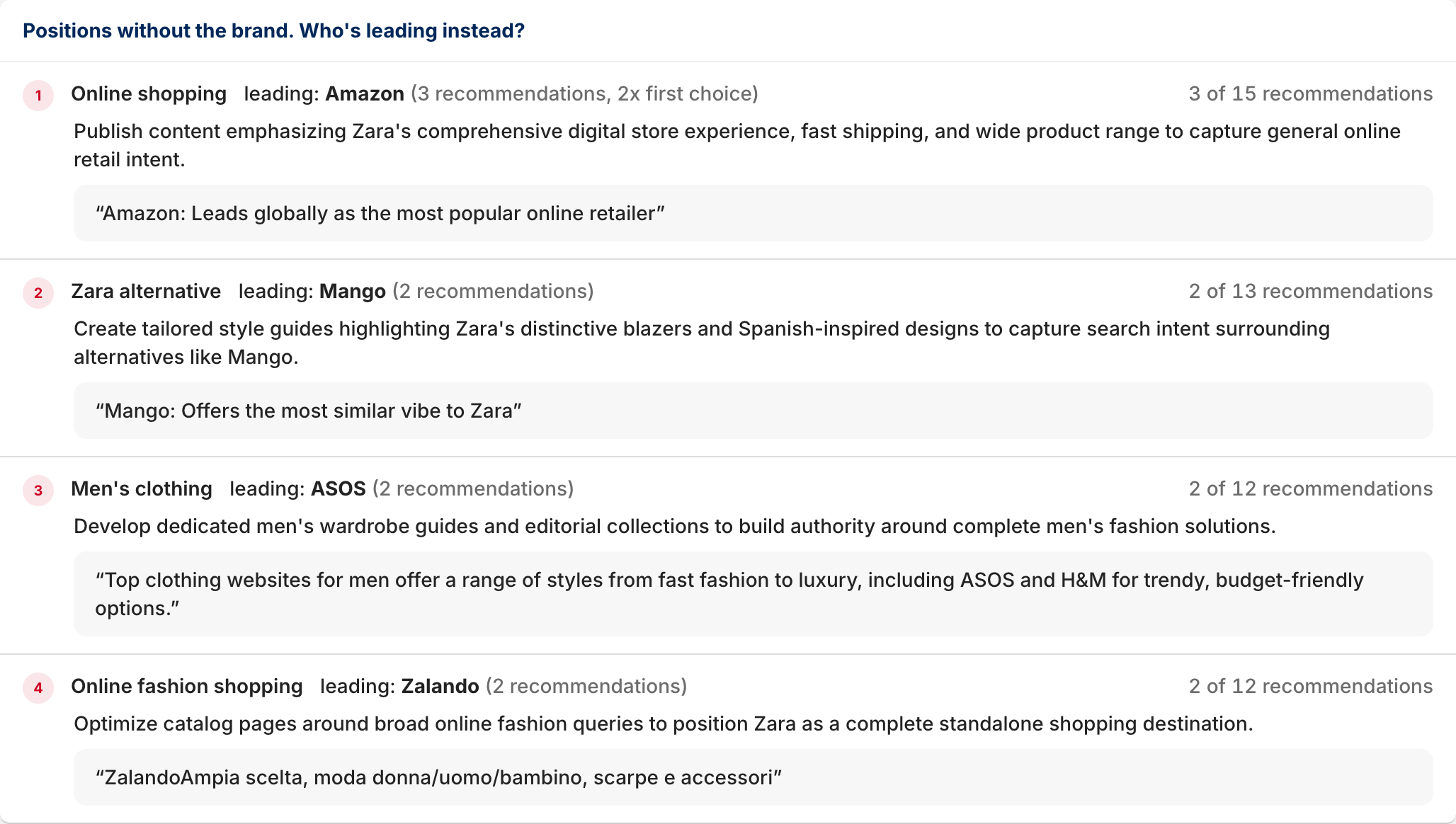
At the heart of it all are the gaps: purchasing stages or touch-points where only competitors are recommended, each accompanied by the leading brand, the original quote from the AI response, and the content strategy that would close the gap. This helps answer the following questions: In which purchasing situations does your own brand not exist for the AI systems, who is occupying that space instead, and what needs to be published to appear there? How to prioritise these gaps and translate them into a content plan is the fourth step in the Brand Gap Analysis tutorial.
Free in the AI/Chatbot beta
Together, the three analyses comprehensively cover how a brand is perceived by AI systems: its tone, the attributes attributed to it, and the purchasing situations. They build on one another, ranging from description and comparison to specific content gaps with commercial significance. Brand gap analyses, comparing a brand’s self-image with the image that AI systems paint of it, can also be carried out directly within the tool, a task that previously required time-consuming manual work.
All three analyses are part of the SISTRIX AI/Chatbot Beta and are now available in all packages. As always, we welcome both positive and critical feedback at support@sistrix.com.
Have fun trying it out!
Test SISTRIX for Free
- Free 14-day test account
- Non-binding. No termination necessary
- Personalised on-boarding with experts